


Mia Barnes
You’re based in LA, but what was life like growing up?
I’m originally from Ohio and lived there until I was 20. I love being from Ohio, and I think my childhood there still influences a lot of my creative choices. The Midwest can feel mundane on the surface, but I find it really dreamy in ways people might not expect.
While they both had day jobs, my parents are innately creative, and I credit them with starting it all by putting a green Polaroid OneStep Express in my hands when I was six. They influenced me in different ways. My mom inspired much of my interest in femininity and the different ways you can subvert it. She used to pick me up from preschool in a huge van blasting AC/DC so loudly it would scare my friends. She gets tattoos of scribble drawings my sister and I made as kids, and she is the craftiest person I know. My dad had a darkroom in our basement and is a fine art and portrait photographer on the side. He handed down all my first equipment, and that’s where everything began.
Columbus was home base, and we split a lot of time between there and my grandparents’ very different Ohio towns. On my dad’s side, we’d spend weekends on Ohio farmland at my grandma’s house, riding four-wheelers and painting watercolors with her. On my mom’s side, we’d go to Youngstown to be with our Italian family, having huge family reunions in someone’s garage, making pasta and eating nonstop.
But our home away from home was New Orleans, another creative touchstone for me. My parents honeymooned there and then subjected us to yearly Southern odysseys until it became our favorite place in the world. The smells, sounds and general sensory overload of the city definitely found their way into my work too.
I still feel most creative writing in my parents’ backyard in Ohio in the summer. I recently went back and shot a photo series there, inspired by the almost-divine, nearly spiritual nature of the place, and by the feeling of being simultaneously an adult and a kid again.
Sabrina Carpenter
Was there a single spark, or a series of moments, that made you want to work in the creative industries?
I think from day one it was always going to be this. I was really lucky to grow up in an environment that supported it. I was surrounded by friends whose parents were artists, and attended an elementary school where we had dance instead of gym and sometimes turned in sculptures instead of papers.
Once I had a camera, I started shooting my friends for fun, which turned into a pseudo-business in high school doing senior portraits, weddings and events. My sister and I also had a YouTube channel where we made comedy skits and got hate comments like “please never make another video again.”
I documented my life like crazy and would go home and edit supercuts of my summers with friends set to Lorde songs. I also made and starred in my own music videos. I have a killer one-take of Umbrella by Rihanna, complete with choreography and camouflage gauchos.
Every group project at school turned into me directing my friends in some sort of video, taking it way too seriously. I remember writing in a time capsule freshman year that I wanted to be a director, so it was never really a question. There was no plan B. I just kept trying to make my work better, and once it started to feel like it had legs, I knew I was going to end up in either LA or New York.

You work across film, photography and creative direction. What draws you to a project, and how does your process differ across formats?
As I evolve as an artist, I’ve noticed a consistency in what I’m drawn to. When I was younger, I couldn’t quite pinpoint what attracted me or put into words the themes that compelled me. The more work I make, the more obvious the patterns become.
I’m drawn to projects with a strong POV. I can usually tell pretty quickly when something lacks one because it has such a negative trickle-down effect on the work. If a strong perspective comes from the artist or the idea itself, I cling to it like glue.
I tend to start from meaning: theme, purpose, intent. I’ve tried to become looser about that, but it’s just not how my brain works. I’m extremely precise and detail-oriented, and I like to understand why we’re doing something and what we’re trying to say. Once I know that, the ideas come very easily.
Beyond a strong POV, I like creative work that’s subversive or contradictory. I find a lot of meaning in the collision between opposites. I like things that have to be described two ways: soft and hard, sexy and ridiculous, beautiful and monstrous, childlike and adult, elegant and trashy.
More broadly, I’m interested in people behaving a little incorrectly. There’s usually some tension between who you’re supposed to be and who you actually are, and I like the moment where that breaks open.
My process is fairly similar across formats, although the entry point changes. Sometimes it’s the cinematic look, sometimes a higher concept, and sometimes the deeper meaning underneath it. When I’m being briefed, I usually see the project’s “aura” in my head, and then translate that into a legible treatment.
My process is almost collage-like. I have all these pieces, and I’m putting them together to see what feels right. I do a lot of visual research and tend to exhaust every version of what something could be before landing on the one I think is best. Often I’ll start writing an idea and realize by the end that it has morphed into what it was actually supposed to be all along.
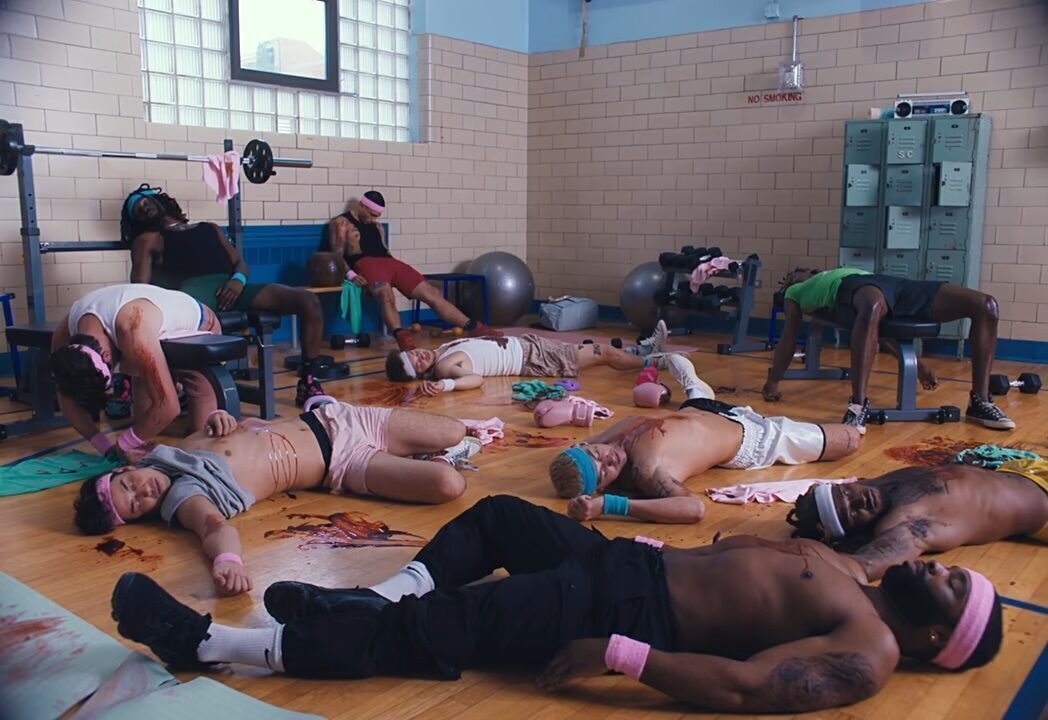
From Sabrina Carpenter’s Feather
Your work is often surreal, sometimes unsettling. Is there an influence behind it that might surprise people?
There is! When I was in college, I took an English class called “Monstrous Femininity,” based around Barbara Creed’s concept of the “monstrous-feminine.”
We watched films like Monster (Charlize Theron), read the original Little Mermaid fairy tales (the fucked-up ones) and pieces like “The Yellow Wallpaper,” and looked at how femininity inspires fear, with women portrayed as terrifying, evil or monstrous in media.
The contradictory nature of the class’s name alone was why I signed up. It goes back to that idea of contradictions. The class spurred countless photo series in which I began exploring these themes, and the term has followed me ever since.
Of course, this influence doesn’t apply directly to every job. If I’m doing a car commercial, for example, it may show its face less, but I do think it’s one of the core influences behind my work. It makes its way into lots of my personal projects and, whenever I can sneak it in, my commercial work too. Whether or not a project literally adheres to that framework, it gave a name to something I’d already been doing without realizing it.
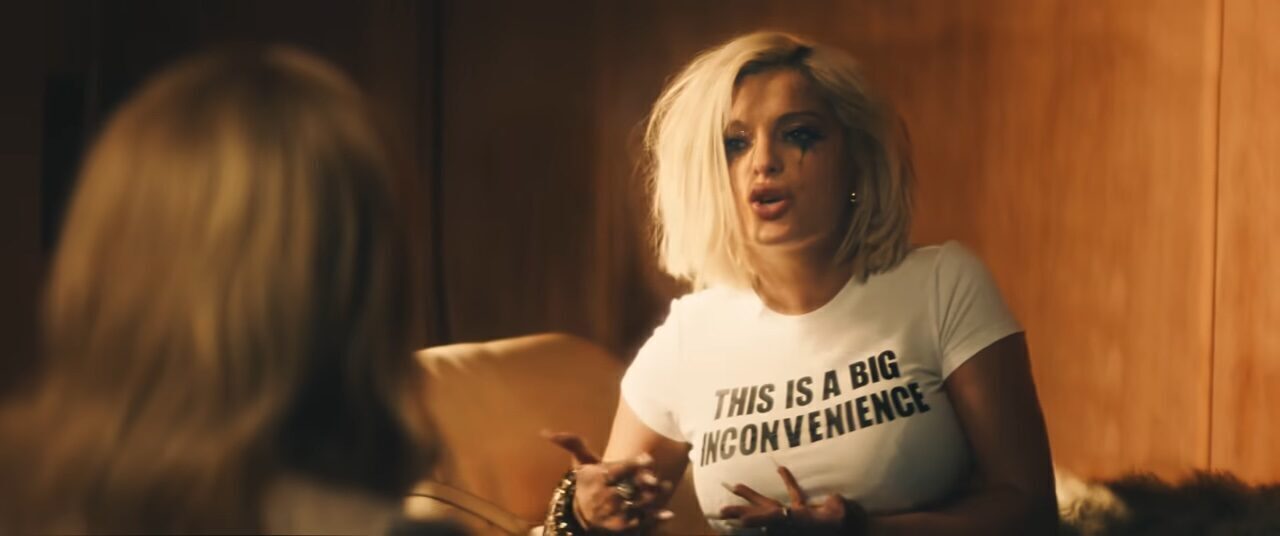
Bebe Rexha
You were creative director for Bebe Rexha’s latest album, which seems to mark a new chapter for her. What was the brief, and how did it evolve as you worked together?
Doing creative direction for Bebe was a really exciting experience. What initially drew me to the project was the invitation to try something new with her while getting closer to the core of who she already was.
She’s not a new artist, so there were years of visual history to consider, but it also felt like there was room to build a world that reflected this particular era of hers. The person I was talking to and working with was funny, bold and outspoken, and I immediately felt there was so much there creatively.
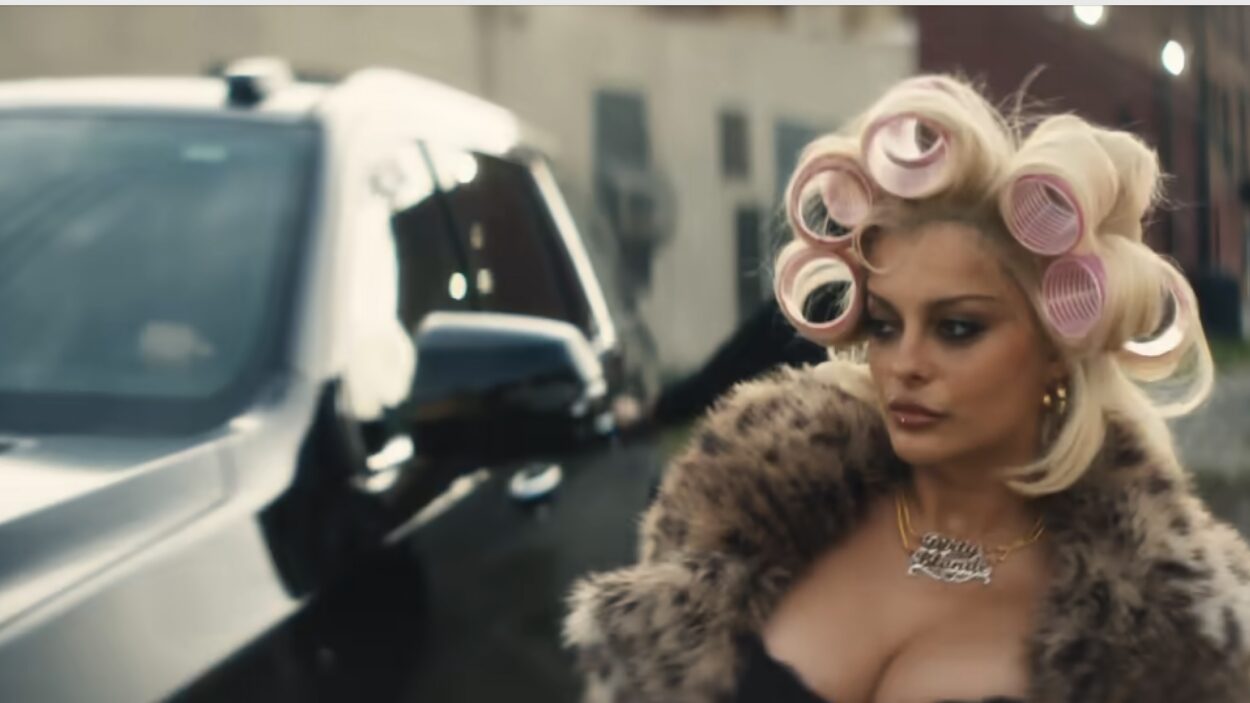
The brief became very heavy on world-building: creating a consistent visual language, styling and set of references that felt undeniably HER. What’s the Halloween costume? What’s the color palette? What’s the consistent vibe?
We built that world out of things that already existed in her personality: her New York roots, her love of high and low, the fact that she can be a pop diva while also being messy, funny and completely unfiltered.
I saw those dualities in her and was able to translate them into a creative world where you can wear Balenciaga while sitting on a curb next to a trash can full of pink lighters and crushed eyeshadow. Or wear a floor-length leopard fur with last night’s makeup still on.
The only thing that really changed throughout the process was getting to know her better. My earliest ideas were a little less diva, less glam, more minimalist and edgy alternative. But after getting to know her and the music, it became clear that rawness was only half of it. She’s also maximalist and glamorous. The goal became letting all of those things coexist rather than reducing her to one version of herself.

Tree Hut for Super Bowl
The Tree Hut campaign you co-directed with Dave Meyers premiered at the Super Bowl. How did your creative collaboration begin?
My creative journey with Dave began when I was still in college, and what started as a sort of mentorship has developed into some really fulfilling creative collaborations.
Tree Hut was far from the first time we’d worked together — we’re going on about eight years now — so it felt like a natural evolution of our previous collaborations.
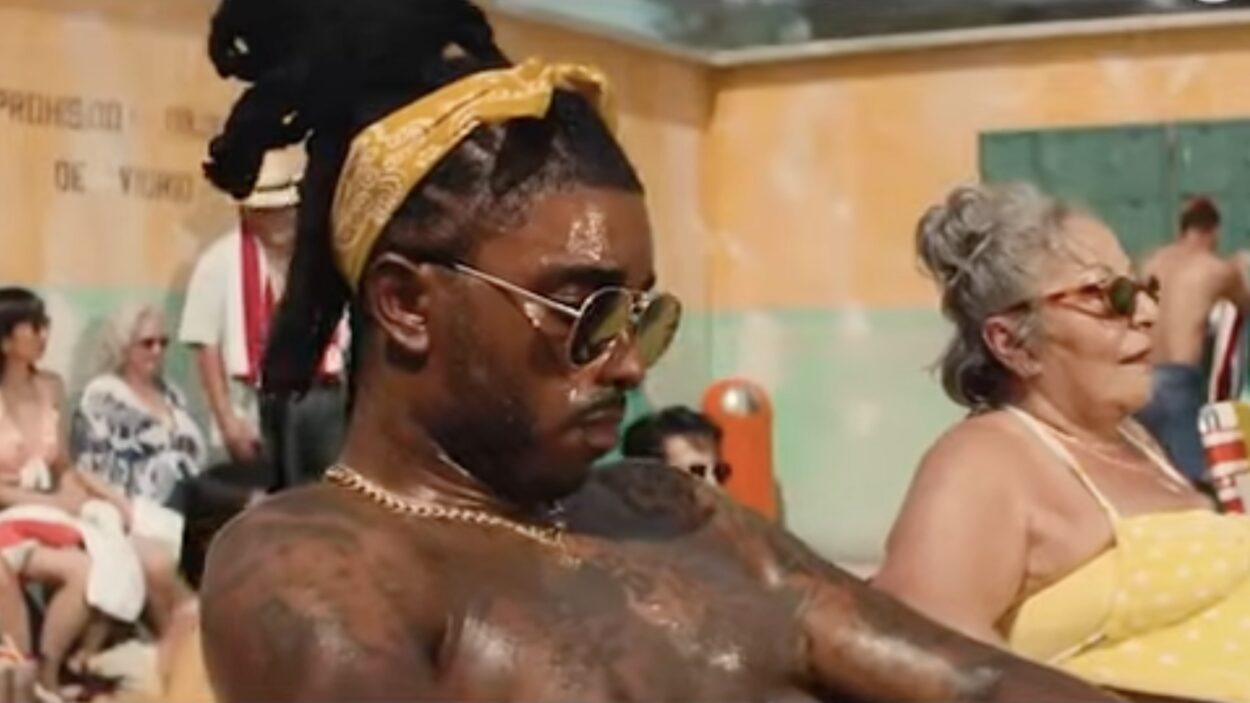
We like to work together when a job genuinely benefits from the different strengths we each bring to the table. Tree Hut was a big job, and doing it together allowed us to give 100% to every aspect — not only the technical and logistical challenges of a big cast, moco and VFX, but also the aesthetic side: the color palettes, production design and all the tiny visual details.
We divide and conquer while working under one cohesive vision.

Tree Hut
Is there a passion project you’ve always wanted to make? What might that look like?
I have a few, and I’m sure I’ll be making them one way or another. I used to feel a huge rush to get everything out, but I’m trying to become more comfortable taking things one at a time, making sure that when I do get the chance to create personal work, it actually says what I want it to say.
I like to give passion projects my undivided attention, and I’m extremely precious about them, so it can take me forever to get one out.
I’m currently working on a script that I can see myself making within the next decade, and it contains basically everything I’ve mentioned above that interests me. Right now it feels like if I only ever made that one movie, I wouldn’t need to make another. But I’m sure I’d immediately find something else to obsess over.
Interview by Rob Ulitski