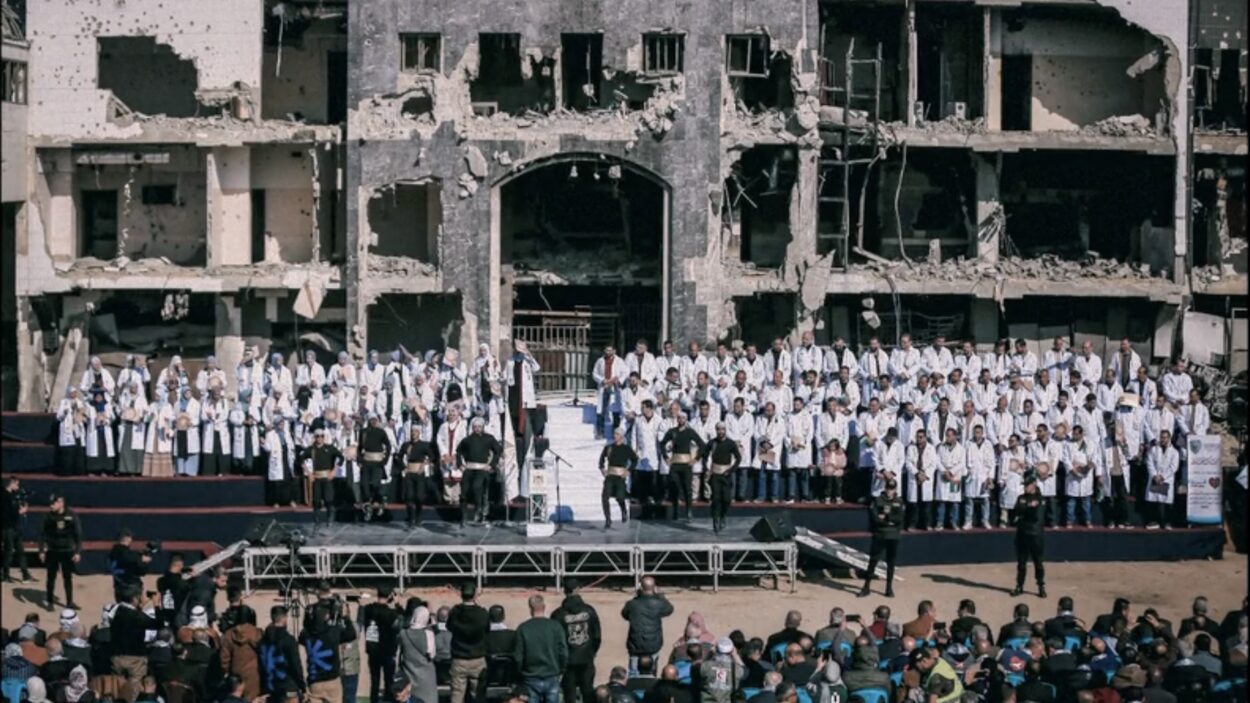
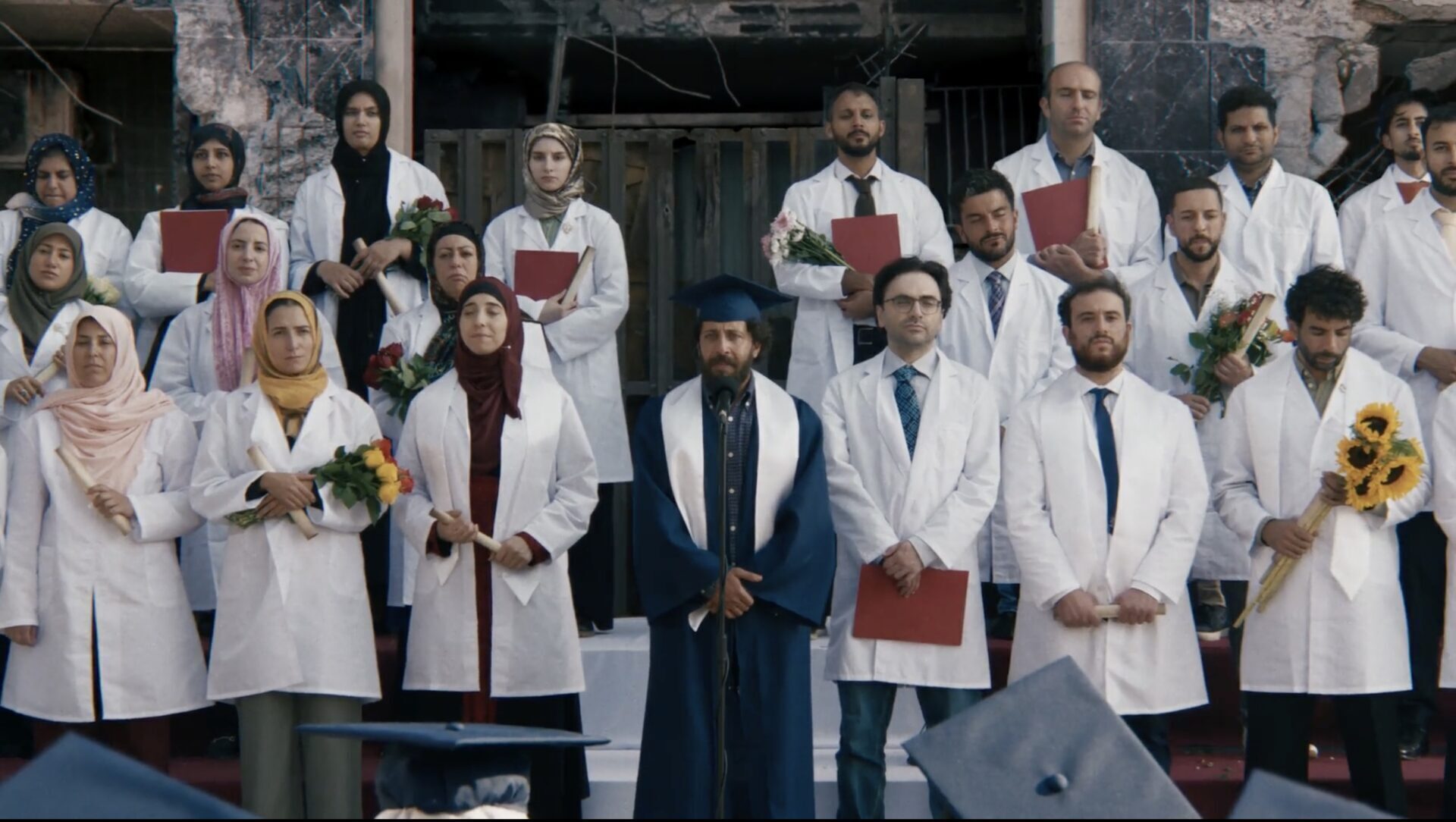
The campaign began with that extraordinary photograph of 168 doctors graduating in the ruins of Shifa Hospital. What did you see in that image as a filmmaker, and how did it shape your treatment for the film?
George McCallum: Because of the relentless rate of atrocities recurring in Palestine, images of human suffering, loss and tragedy have become commonplace.
So, when an image as striking as the one taken before Shifa Hospital pops up, it stays with you. After all, what can be more defiant than choosing to study, stay and heal people against the backdrop of a genocide?
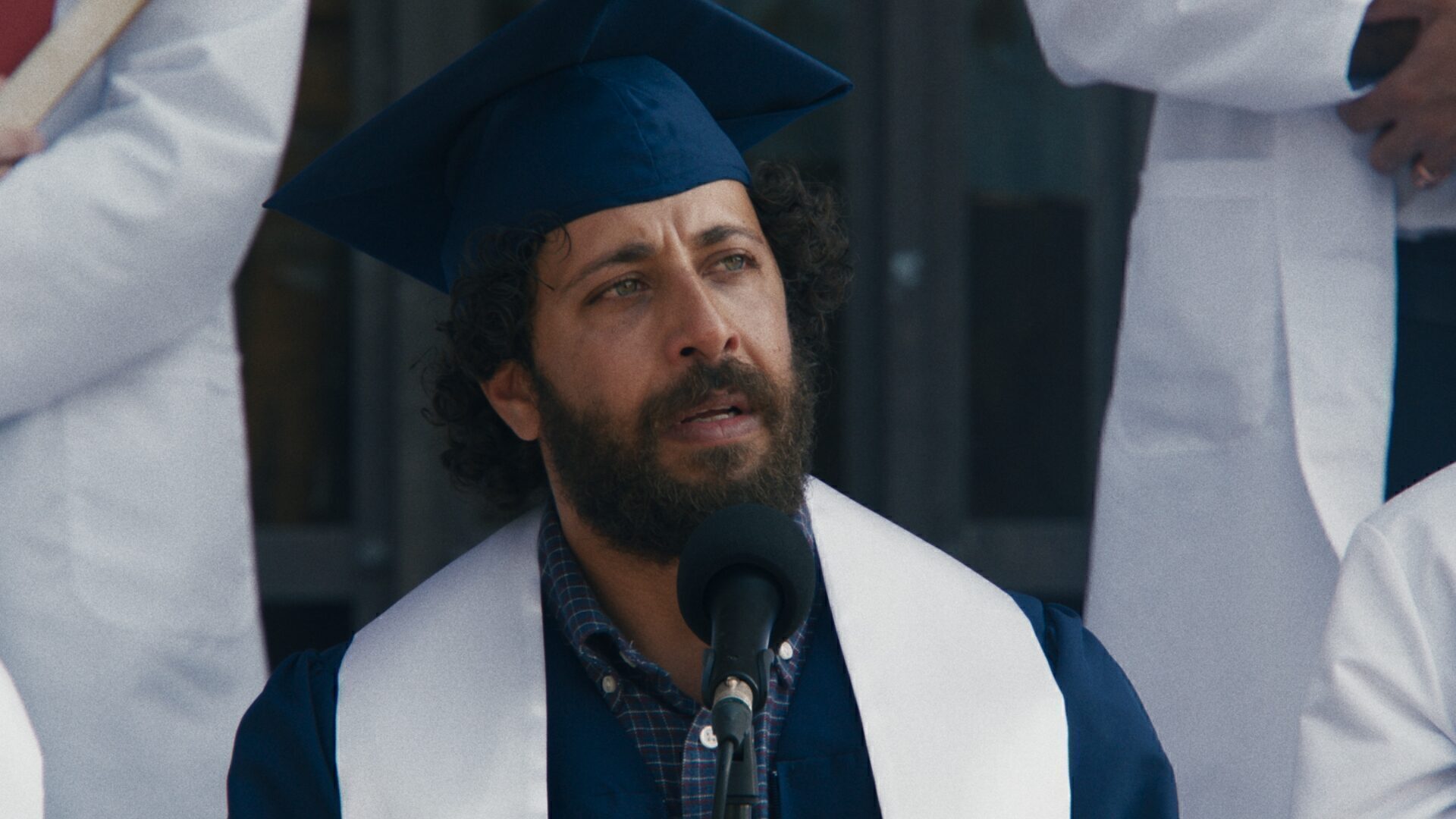
The idea of a graduation speech gave us not only a relatable visual device, but also an opportunity for one of the Palestinian graduates, who decided to do everything they could to help their people, to tell us what they have been through and why we should stand with them.
The slow track backwards is a device designed to take our perception of this person from that of a graduate to one of someone graduating in a war zone.
Molly Manning Walker: It’s such a striking image and we thought it really summarised the resilience of the medical workers in Palestine. The graduation speech at first could be anywhere in the world, but when we reveal the ruins of the hospital, the audience understands the extreme conditions in which they have been learning and working.
You’re dealing with a reality that is both devastating and still unfolding. How did you approach making something cinematic without aestheticising the suffering behind it?
GM: Don’t Panic and Molly’s team worked closely with MAP to ensure that every aspect, from wardrobe and production design to accents, was based on lived experiences. We were confident that, as long as all of our filmmaking choices were born out of those insights, we would strike the right balance between aesthetics and human truths.
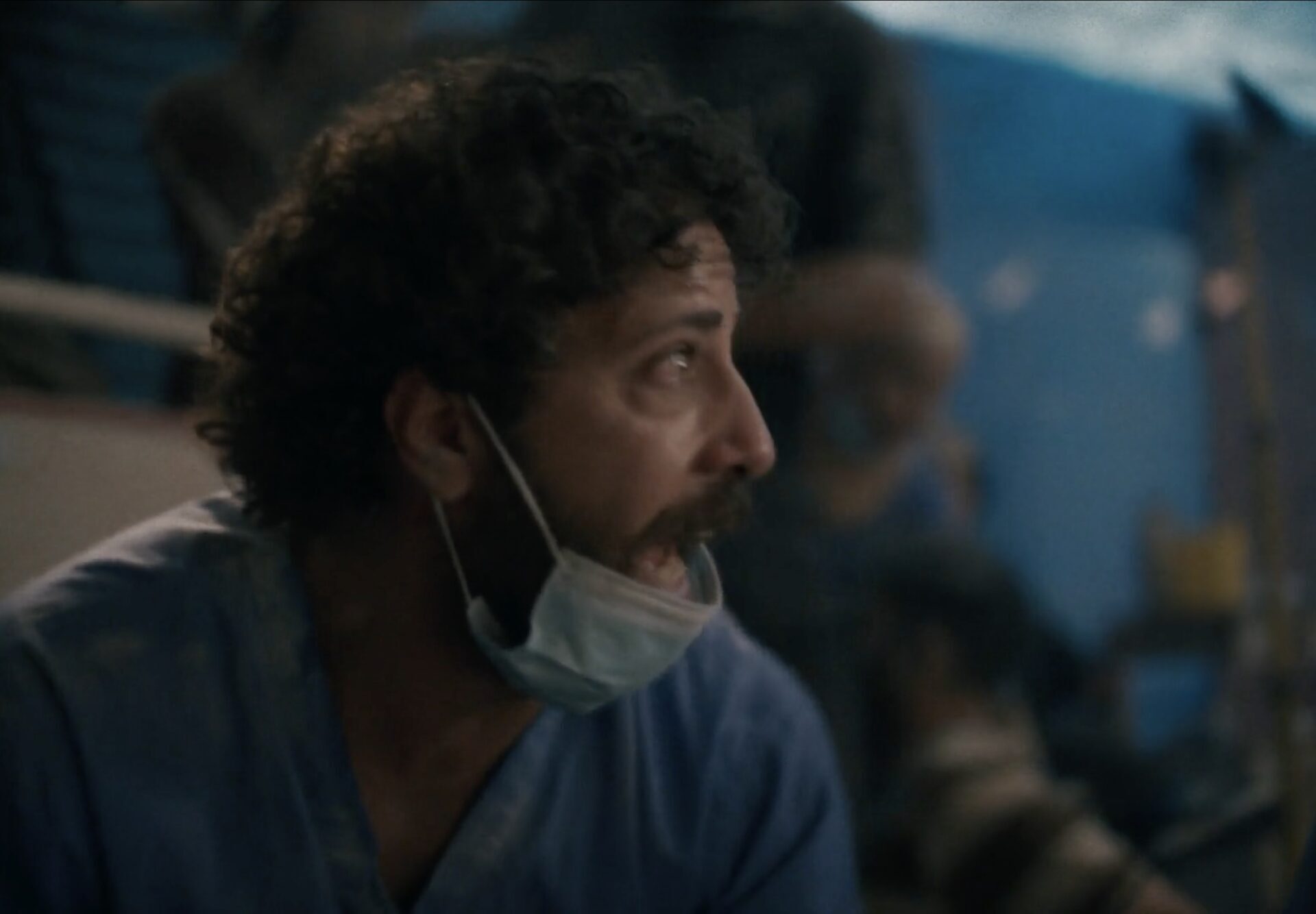
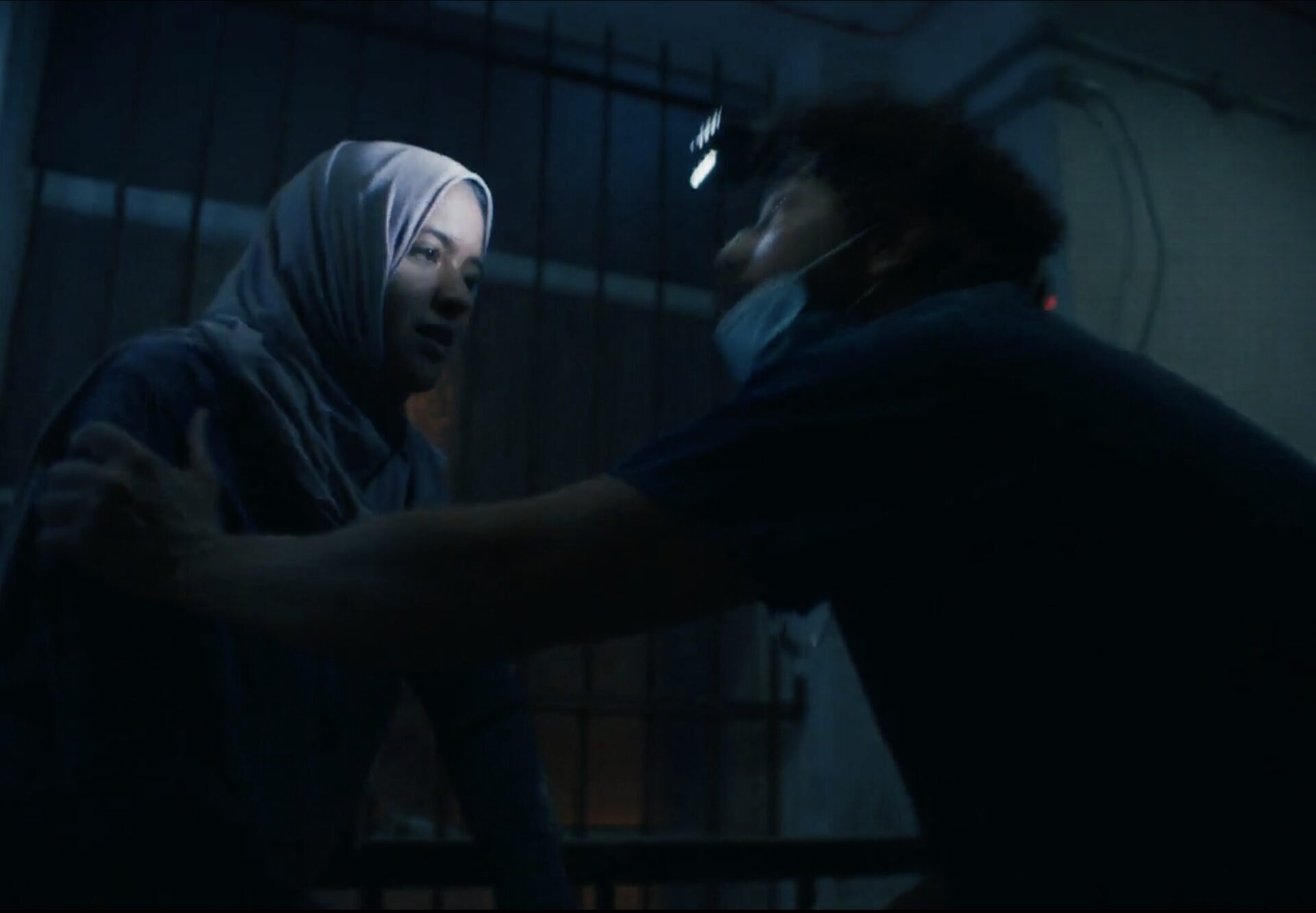
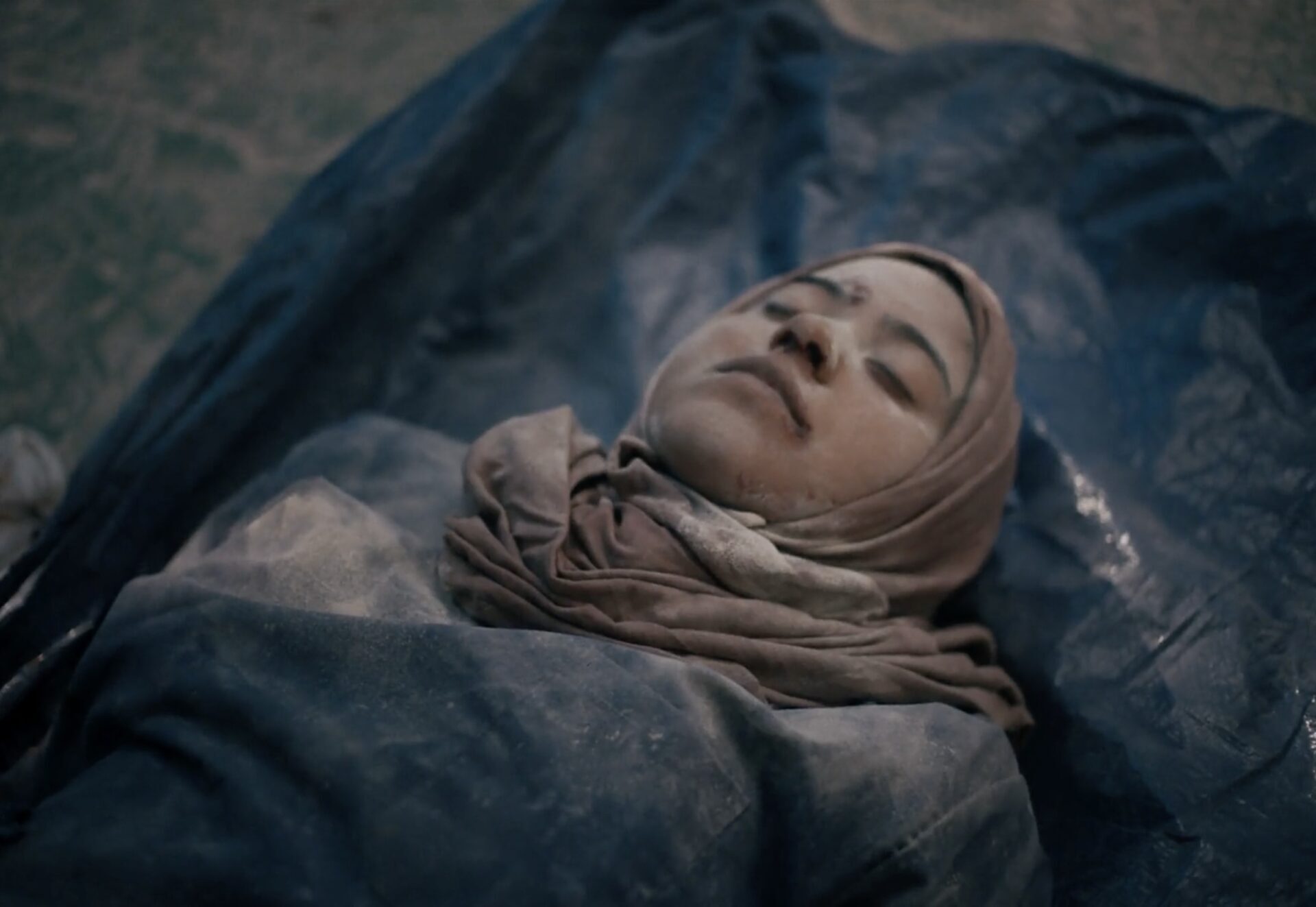
MMW: Everything we did was heavily researched with the MAP team. The combination of the graduation speech and the flashbacks allowed us to show brief moments of devastation via the doctor’s PTSD, while keeping us grounded in him as a person and in his lived experience.
The film rests heavily on actor Motaz Malhees and his address to the graduating class. What were you looking for from that performance, and how did the two of you work together to find its tone?
GM: We knew we needed a Palestinian in the role, and we knew they needed to captivate the audience within seconds. As soon as we met Motaz, we knew it had to be him.
MMW: Motaz is such an amazing actor. We worked together to find the right tone of the speech, focusing on granular details. As he recalls memories, it takes us back to the reality that the health workers have had to deal with. Motaz has such a skill to say a thousand words with his face. One glance, one flicker of sadness. Making these recall moments so impactful. And doing it all in the span of 60 seconds.
How closely did you work with MAP’s Palestinian colleagues in Gaza and the West Bank, particularly around questions of authenticity and detail? Were there things they changed or challenged in the process?
GM: It was humbling to have people who are saving lives in Gaza and the West Bank on a daily basis give their time and energy to the project. Their input shaped every aspect of the film, from the speech itself to the stories we told, with each flashback rendering a different MAP case study, as well as details such as the alarm that can be heard in the soundscape.
What conversations did you have around the visual world of the film: the location, production design, costume and cinematography, and how literally did you want to evoke Gaza?
MMW: The detail was very key for every member of the team. Set Sisters worked hard to build the hospital in a warehouse in the UK, designing it in three different states of destruction. The final stage shows it fully destroyed.
Eve Coles, the make-up designer, worked on getting the right colour of dust. Nancy Kane, the costume designer, referenced the mismatched scrubs where full scrubs aren’t available. Nick Morris, the DP, designed the moment where the electricity cuts out and the generator kicks in.
These were all things that MAP talked us through and we knew the details were super important to an authentic piece of work.
Did working with Motaz Malhees, who brings his own Palestinian experience to the film, alter anything about how you initially imagined it?
GM: We were incredibly lucky to work with Motaz, whose interrogation of the script only made it stronger, more compelling and more convincing. As with our conversations with the MAP team in Gaza and the West Bank, we were grateful that he brought so much of himself to the role.
What was the hardest decision you had to make on this film, either creatively or ethically?
GM: The decision to use the photo at the end was something we discussed at length, but ultimately, it acts as a proof point, reinforcing that what the viewer has just watched is based on real-life events.
MMW: It’s always tough when you only have 60 seconds to really hone which is the most important part of the film and how you tell it, especially when there are so many stories to tell.