You were born in Kyiv and raised in a Reform Ashkenazi community. What are your most vivid memories of this time, and how have your experiences informed your work?
I grew up with this understanding that several histories can occupy the same place at once.
Ukrainian, Jewish, Soviet and post-Soviet histories were always layered over one another, even when people did not speak about them directly. I think it took me some time to deconstruct and dissect all of that into its smaller subgroups, and to understand the ways in which one influenced or built upon another. But it ultimately taught me how to speak about post-Soviet identity, both in my writing and in collaboration with other artists from the region.
I left Kyiv when I was fifteen, so ideas of departure, inheritance and belonging entered my life quite early, although I did not understand them immediately. They continue to shape the characters I like writing: people trying to escape the structures they were born into while still carrying those structures inside themselves.
I want to write about inherited rage, complicated family loyalties and the ways political events enter private relationships. I am less interested in explaining identity than in showing how it affects behaviour, how someone grieves, seeks approval or fails another person.
A large part of your filmmaking practice has taken place in Toronto, which is your current home. What do you love about making films in Canada, and what still needs to change for immigrant filmmakers?
I was previously based in Vancouver for eight years and moved to Toronto only earlier this year, so I felt a massive shift. It’s an incredible city with a very daring independent film community. I fell in love with its people quickly, and it made me want to create films that highlight Toronto and help establish it within the larger cultural conversation.
Canada has public funding structures that make formally ambitious, non-commercial work possible, which is incredibly valuable. The Toronto scene also has a real taste and appetite for provocative and funny stories.
The industry can be difficult to enter without inherited relationships or a clear understanding of its unspoken rules. Immigrant filmmakers may arrive with experience, education and a strong artistic voice, but without permanent residency or Canadian credits, they may not qualify for funding. You are often required to prove that you belong before being given the opportunity to build that proof.
There is also a tendency in North America to support immigrant filmmakers only when our work translates our trauma into something immediately legible. I want immigrant artists to be trusted with comedy, genre, formal experimentation and stories that are not obligated to explain where we come from. We should be able to make work informed by our histories without being confined by them.
As well as writing and directing, you’re also an accomplished producer working alongside emerging voices. What do you look for in new directors?
Producing often feels like another form of co-writing, which is probably why I’m so drawn to it. My Ukrainian temperament also means I tend to come across as assertive even when I’m not trying to, which, conveniently, is a very useful producing skill.
Taste is important, but so are curiosity, self-awareness and the ability to be challenged. A director has to know the difference between protecting the heart of the project and protecting their own ego.
Producing allows me to enter someone else’s creative logic and help them protect it. My role is to understand what is essential about that voice and then build the structure, team and strategy that will allow it to survive and persevere, rather than rushing to finish the project and producing polished-looking mediocrity.
Your short film On the Line is inspired by personal experience. What happened?
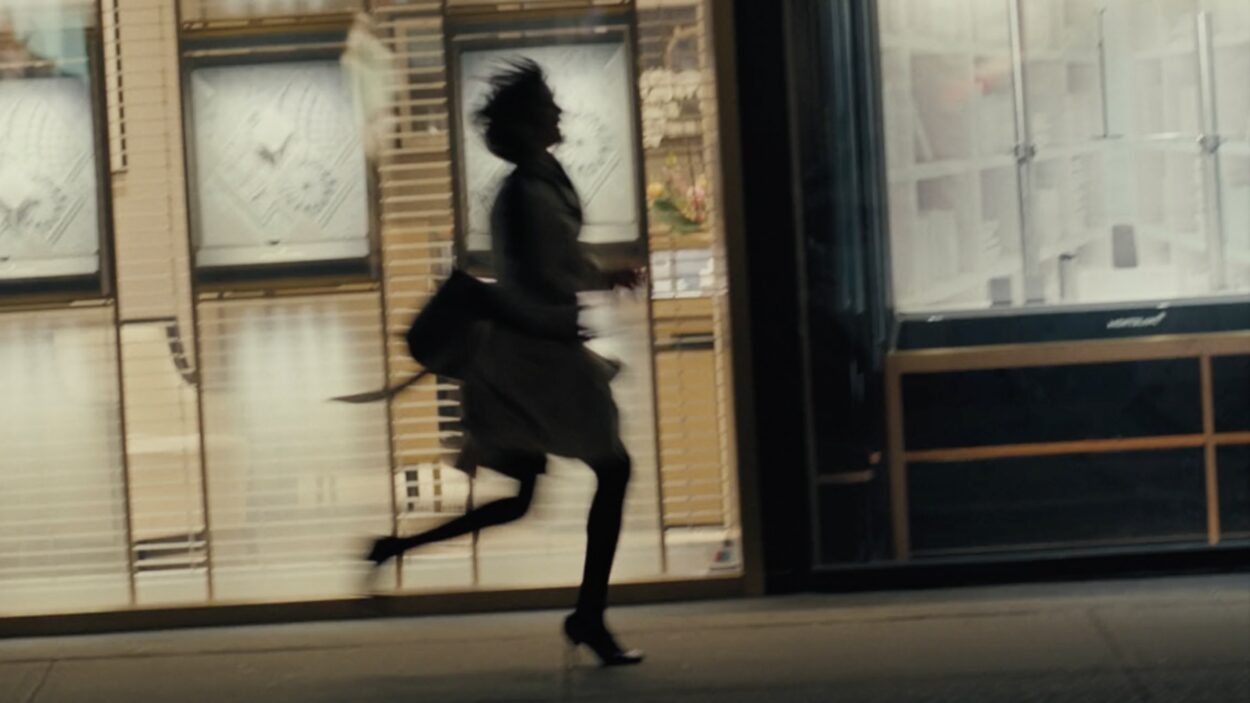
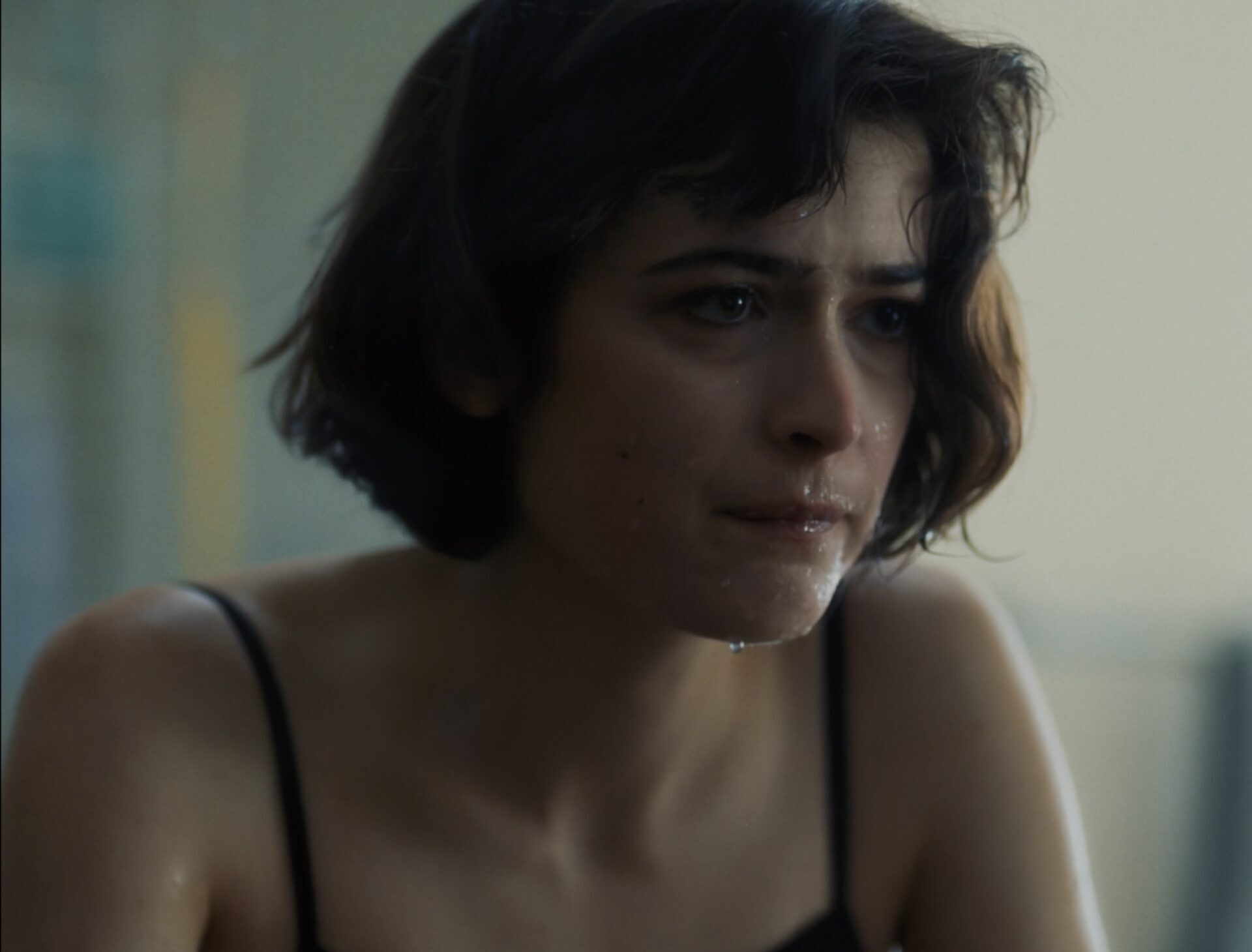
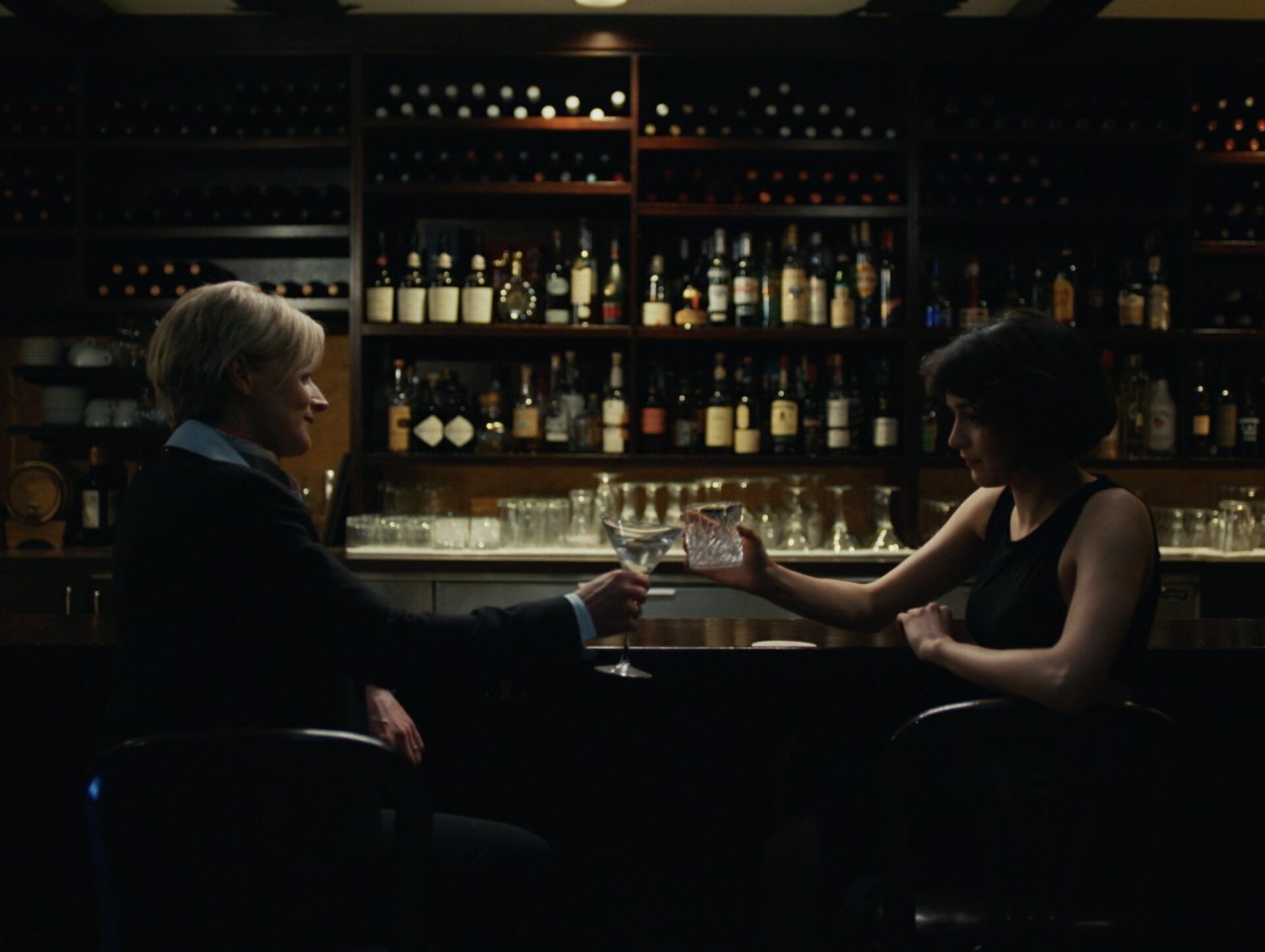
Back in 2022, I was working at a well-known French restaurant, Le Crocodile, in Vancouver to put myself through school. A few weeks after the war in Ukraine began, a young Ukrainian girl named Sophia walked into the lobby in the middle of one of the busiest nights. She was wearing a painfully uncomfortable dress, had mascara running down her face, and spoke almost no English. She handed me her resume and said she had just got here.
I fought my then-boss for two months before she let me call her back for a training shift. Sophia ended up sticking around and took over the managing position in July 2024 after Sandrine sold the restaurant.
The film ended up becoming a love letter to the people who find each other in unfamiliar cities, during the fragile beginnings of new lives, and to the small, stubborn acts of kindness that shape them.
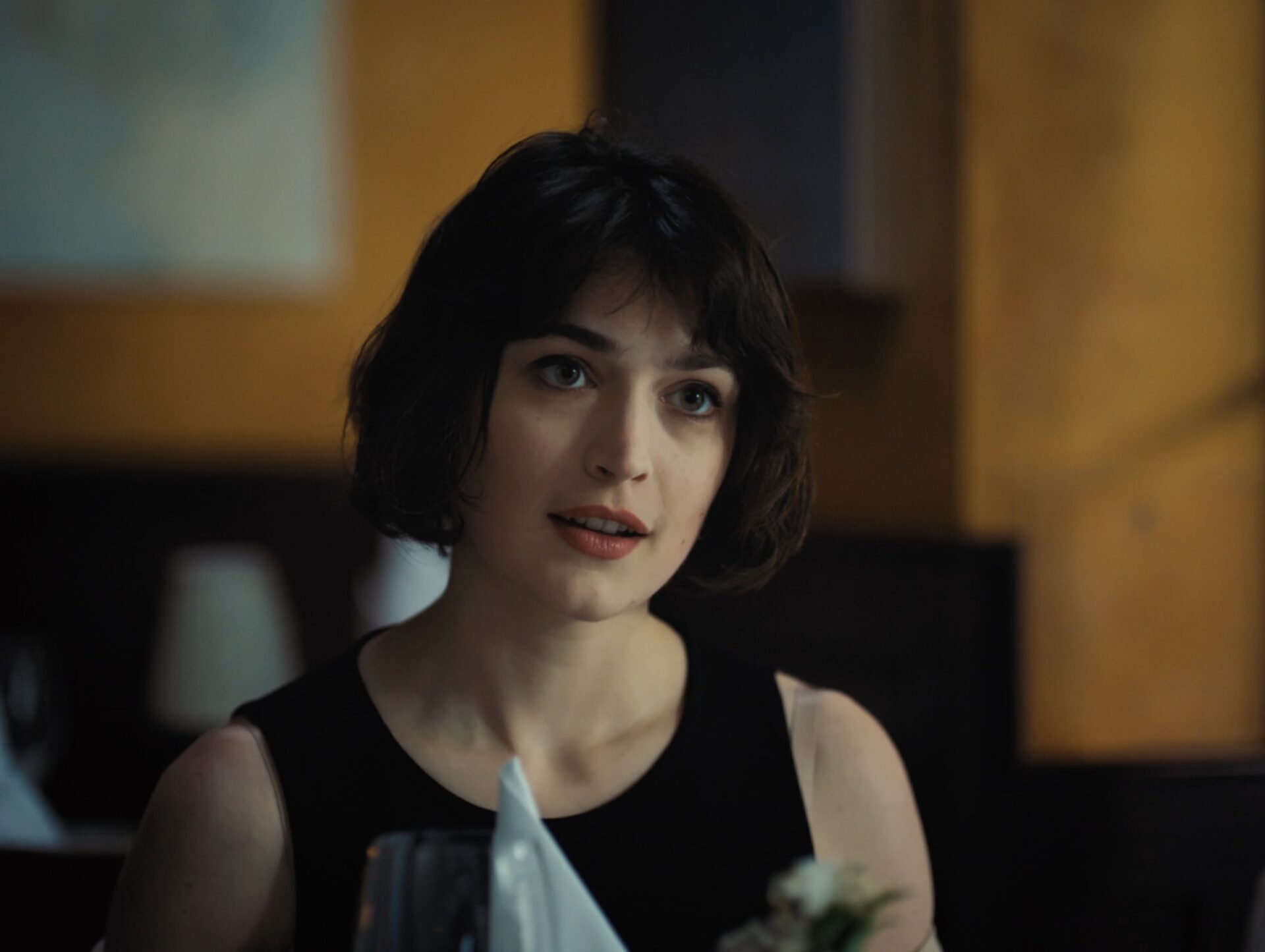
The restaurant owner in the film is played by the real Sandrine Ramoisy, who used to run the restaurant and is now a dear friend. The real Sophia also appears briefly in the film as a hostess who leads our main character to her table.
I think, at the same time, it’s important to mention that I don’t want Ukrainian filmmakers to be confined to stories about war. I hope Ukrainian filmmakers can follow in the footsteps of Iranian cinema and develop a powerful and distinct filmmaking tradition of their own, recognised for its craft, originality and range.
The film makes great use of jarring sound transitions and an editing style that contrasts stillness with overwhelming sensory experience. How much did you pre-plan the pacing and intensity, and did that change in post?
The overall architecture changed significantly in post-production, and that was where we discovered the film’s exact rhythm. From the script stage, we wanted the restaurant to express Sophia’s psychological state through sound — the cutlery, machinery, voices and constant instructions.
I worked with Andrii Borysenko and the incredible team at Sound Division Studio in Kyiv. They were amazing in how they approached the film and understood what we were trying to create, all while working through recurring electrical blackouts. They knew that stillness should not necessarily feel peaceful. The quieter moments hold their own kind of dread because they give Sophia’s memories room to surface. The film moves between external overstimulation and internal suspension, with neither state offering her much relief.
Your creative practice also extends to the Blok14 art collective. Can you tell us more about the collective?
It is an international art collective that also doubles as a boutique production company, based between Toronto and New York, with collaborators in London, Kyiv and Vienna. It grew from a desire to create an ongoing artistic community among friends and collaborators, many of whom had moved to different countries.
Blok14 takes its name from the treatment of sedition in the Hays-era censorship rules, so, as you can probably tell, the collective is rooted in artistic and political resistance. I think that, especially in North America, we live in a political climate we are not nearly critical enough of.
We are currently in post-production on God Bless the Bystanders, a project about a fractured reimagining of American archetypes. It combines archival material, photography and spatial sound and looks at once-familiar figures of national pride becoming passive and polished observers of the freedoms eroding around them.
There is a passage in one of my favourite films, The History Boys, that goes: “Our perspective on the past alters. Looking back, immediately in front of us is dead ground, and because we don’t see it, this means that there is no period so remote as the recent past.” I think it relates very closely to what art is meant to do, which is to anticipate what our perspective of that period will be.
What’s the project you most want to bring to life?
Without a doubt, it’s a series I finished writing last year called Pretty Boy Jr. It follows a gifted but arrogant young musician who, after being expelled from the Glenn Gould School of Music, is cut off by his vindictive father. With nothing left but pride and rage, Barty runs away from home in search of enough money to buy back his grandmother’s piano — and something that feels like home.
Another project I’m preparing is a proof-of-concept short called A House for Sad Old Men. It follows a young archivist at a military base who is tasked with fighting a caterpillar infestation.
Masculinity is central to both projects, especially the ways boys and men perform it for one another. I’m drawn to characters who are cruel, entitled and ridiculous but still driven by a childish need to be chosen by other men.
Are there any creative formats or skillsets you’re excited to explore in the future?
I hope I’ll get to work more extensively in long-form television. Series allow characters to contradict themselves, regress and change over time in ways that are difficult to contain within a short film. I am particularly drawn to family stories in which intimacy, power and humour are constantly colliding.
I trained as a violinist when I was younger, and that musical education still shapes the way I think about tension and pacing. I would like to bring music back into my practice, not necessarily by composing, but by treating rhythm as a central storytelling language. It is already a big part of the way Pretty Boy Jr. is written.
As a producer, I also want to continue developing international co-productions and help put more cultural heritage on the map, particularly cinema from countries like Ukraine and Georgia. These film communities have so much to offer but do not always have the infrastructure or access needed to bring their work to an international audience.
Interview by Rob Ulitski