Director's Works
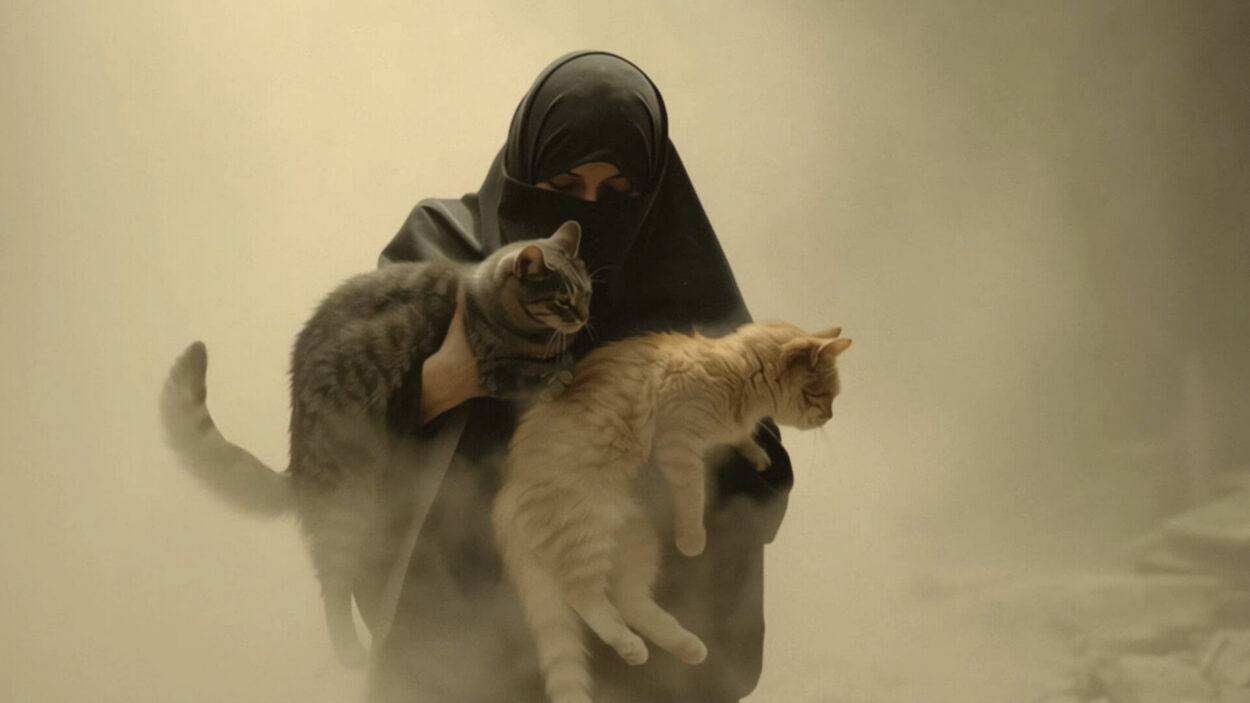
The Decisive Moment: Midnight Drop Samir Mallal, Bouha Kazmi
OneDay is a director-led entertainment studio built on taste, craft, and the belief that great stories deserve new ways of being told.
Founded by filmmakers Samir Mallal and Bouha Kazmi, OneDay draws on decades of directing experience - from Sundance-recognized documentary work to billion-view music videos - to forge a bold, modern approach to filmmaking.
Since launching, the studio has produced over 20 minutes of original AI narrative content, featured in The New York Times, The Guardian, BBC, and Variety, underscoring how strongly this new model is resonating.
Collectively, the team’s work spans Cannes Lions, Clios, Webbys, selections to the Saatchi & Saatchi New Directors’ Showcase, a Best Young Director win and two nominations, and MTV and BRIT Award nominations. The founders have also set up TV shows at Hulu and HBO Canada, and their thought leadership has landed them on major panels at BBC Global News, Content London, MIT, and CES.
At its core, OneDay is a story-first studio where technology amplifies imagination, and filmmakers remain at the center of everything.
Midnight Drop explores the intimate, persistent routines that give a person shape and purpose amid chaos. Though set in a city under siege, it is not a traditional war film. At its centre is an old woman who holds fast to the structure of her days. Her rituals are imperfect but essential. They are her way of asserting that life, real, meaningful life, continues even as disorder encroaches on her surroundings.
Her intimacy and rootedness stand in sharp contrast to the distant precision of two B-2 fighter pilots, sealed inside a cockpit for more than fifty hours, whose mission looms far above the paths she follows each day. Two humans in two sealed worlds. Two boxes. Two extremes. Their worlds converge at a moment where personal routine meets the machinery of destruction.
The initial seed came from a single, strange detail in the news. I was reading about civilians coping with the Tehran bombings when one line stopped me. A woman who visited bomb sites every day, not to document damage or search for belongings, but to feed stray cats who no longer had anyone else to care for them.
That sentence held grief, resilience, tenderness, and a refusal to let chaos dictate the fabric of one’s humanity. It revealed how an ordinary act can become a form of quiet resistance. I kept wondering, what is that life? What does she see? Why does she do this?
At the same time, I was reading about the longest bombing mission ever flown. Pilots sealed inside a B-2 cockpit, unable to move freely, eat properly, or even use the bathroom normally. The contrast felt unavoidable. Two forms of endurance. Two routines. Two systems of survival destined to collide.
That was the seed.
The deeper inspiration is my mother. The emotional core of Midnight Drop comes from the small, daily moments I grew up witnessing and still witness, moments that once felt unremarkable but now reveal themselves as profoundly meaningful.
She could be described as a caretaker of many cats, but that description barely scratches the surface. She embodies a resilience that doesn’t announce itself. Calm, persistent, sometimes stubborn, always rooted in care. She moves through adversity with humour, certainty, and an unwavering sense of purpose. She speaks her mind, stands her ground, and refuses to be diminished by circumstance. She simply acts. And in those acts, compassion becomes strength.
Many of the film’s details come directly from watching her morning and night, feeding cats at home and venturing out to tend to the dozens of strays that became part of her life across the neighbourhood. These are not invented behaviours. They are inherited memories, lived in rhythms that shaped the emotional spine of the story. They reflect a deeper truth, that care can be an anchor, that ritual creates meaning when everything else feels unsteady, and that someone who appears ordinary can possess extraordinary will.
Midnight Drop is not a biography, but it is deeply personal. It honours a quiet heroism, the strength it takes to keep caring and to keep being oneself in the face of overwhelming forces.
This is always our first question. Why AI?
If a story can be shot traditionally, then using AI would only be decoration. Here, the answer was clear. We can’t film in Tehran. We can’t access a classified B-2 cockpit. We can’t recreate these worlds with conventional production.
AI wasn’t a shortcut. It was the only tool that could make this story exist. And so it should be for every AI project.
AI allowed us to portray two places we could never physically reach, Tehran and a B-2 bomber, and the humans caught in the strange gravitational pull between them. But the story itself remains unchanged. AI expands where stories can go. It does not replace storytelling.
When the idea was first pitched, the personal connection deepened immediately. “My mother is a cat lady,” was the response. Not figuratively, literally. Hundreds of cats. An entire house overtaken. Those sharp, sarcastic, chaotic exchanges became a treasure trove of tone and rhythm. They formed the backbone of the domestic scenes, alongside the dark humour and dry wit often found in Iranian cinema, not cultural replication, but emotional resonance.
Before generating a single frame, we worked like filmmakers. We defined tone before tools. Moods before prompts. We built moodboards, references, and an outline that formed the emotional spine of the film. Only once that blueprint existed did we begin generating.
We always begin with stills. Hundreds, sometimes thousands per scene. It’s our equivalent of casting and location scouting. As images emerge, we ask basic storytelling questions. What does the character want? What’s in their way? How do they move through this world? Lighting becomes psychology. Space becomes subtext.
From there, we assemble an early AI-matic, an emotional sketch paired with early sound ideas. We screen it, critique it, argue over it. Each image has to earn its place. We move two steps forward, one step back, regenerating what doesn’t work until the emotional spine is solid. Only then do we generate video.
Sound begins at the beginning. Unlike traditional workflows where sound comes last, sound design informed our visual decisions from the treatment stage onward. The music, “The Sun Rose Into View” by Sarah Neufeld, struck the exact balance of ominous and quietly optimistic. A rare case where the first choice was the perfect choice.
Once enough material existed, the process became traditional. Editing AI is just editing. We treated the footage like rushes, sorting, selecting, shaping rhythm, layering sound, music, and emotion. The tools changed. The craft did not.
Ultimately, Midnight Drop is about holding onto a stubborn sense of purpose. Seeing care as an act of defiance. Habit as a kind of armour. Finding the small order we can still control when everything else is falling apart.
As the world breaks, something inside persists.
The story is still the story. Characters still need wants and obstacles. Scenes still need conflict. Worlds still need emotional truth.
Tell the story only you can tell.