Director's Works
Radheya Jang is an Oscar-qualified Australian director based in London. His works spans across animation, documentary and live action, and have garnered 44 Academy Award-qualifying Festival selections, including works recognised by Sony and the World Health Organisation. He has also collaborated with internationally recognised brands including Dyson and WaterAid. Radheya is passionate about film, and the value of using film and animation in educational and social development contexts. He has also animated and contributed to various large-scale multimedia installations and public projects, and performed animation and VFX work on Lynette Wallworth's ‘How to Live...’ which premiered at the Sundance Film Festival.
In Trading Cards, I explore the psychological aspects of my lived experience with Obsessive Compulsive Disorder.
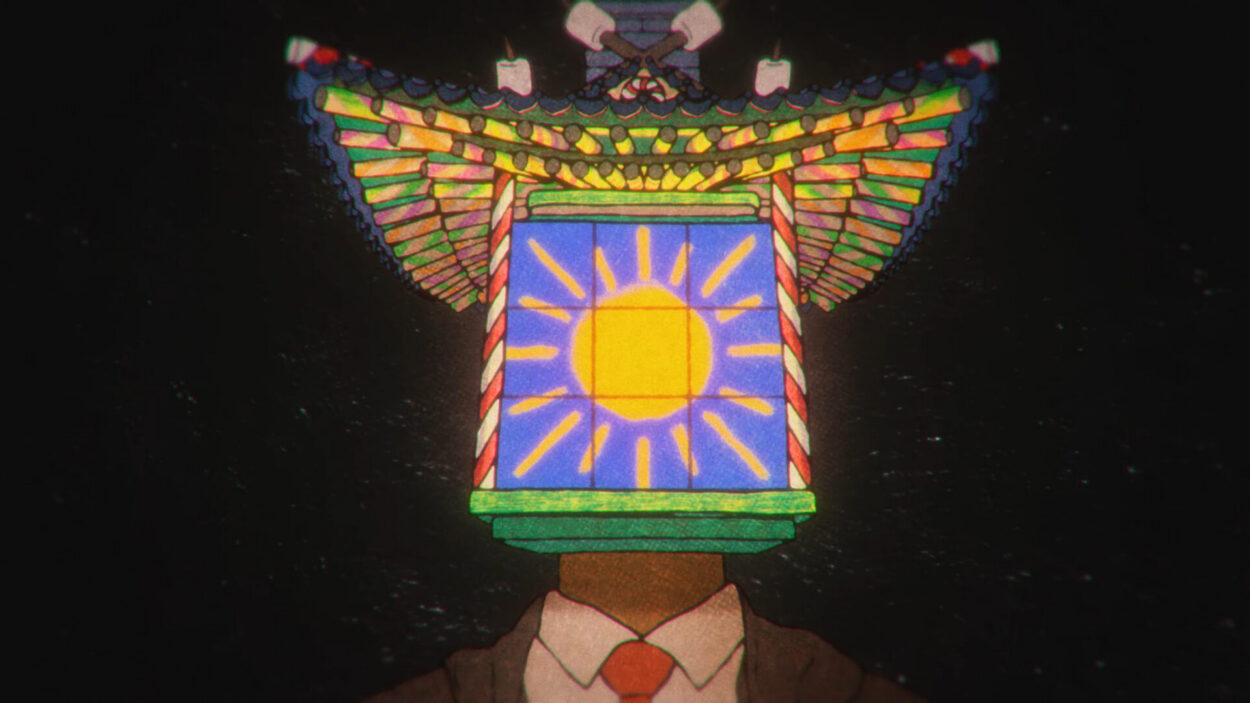
The film is about the horror of uncertainty, and yearning for the mind you once had as a child - so carefree, living in the moment with no worries. Since imagination and creativity is such a huge aspect of childhood, I envisioned Trading Cards as an animated dark fantasy film that is a poetic and abstract expression of my experiences and feelings in regards to my mental health struggles.
Part of the reason why I am making this film is to open the discussion about OCD, because I think there’s a wide misunderstanding on what it is. Many people (including myself prior to my diagnosis) are not aware that OCD is very complex with a multitude of types / subtypes which manifest in different ways. For me, a significant part of this includes mental compulsions, obsessive thoughts and rumination.
In the film I also explore the evolution of identity as we grow older, and embracing certain aspects of ourselves that our younger selves have yet to take in, such as cultural identity and celebrating one’s multicultural heritage.
Trading Cards is an eclectic story, with a range of real-world inspirations. I draw upon my own South Korean cultural heritage, including traditional Korean ‘Hanok’ architecture and references to Korean folklore. Throughout the film there are inspirations from various folk tales and fairy tales from around the world.
Tarot cards play a significant role in the film. Throughout the film, there is imagery based on and inspired by Pamela Colman Smith's artworks from the 1909 tarot deck conceptualised by A. E. Waite (original artwork in public domain). Tarot cards are often used for either fortune-telling or self-reflection, both of which are relevant to the thoughts and concerns of the narrator in the film. They also serve as a counterpart to the boy’s own trading cards, which he is enamoured by, and directly based on my own obsession with collecting and playing with trading cards as a child.