 Nike, Roughstock
Owhadi and Elias Ben Dahhou
Nike, Roughstock
Owhadi and Elias Ben Dahhou
House of Owhadi
OWHADI: Born in Texas to Iranian and Mexican heritage, Owhadi explores the layered histories of migration, identity, and belonging in America. His work resists singular narratives, weaving forms often from the turbulence and resilience of the immigrant experience. Owhadi reframes overlooked stories, crafting a language that is both intimate and rebellious yet formally precise. An emerging fresh voice in contemporary moving image. He was recently shortlisted for New Talent/Cultural Impact/Spec at the Berlin Commerical Awards.
Elias Ben Dahhou: Raised in Southern Germany, Elias developed an early passion for moving images. After finishing school, he moved to Cape Town, where he directed the short film “Dazed.” Driven by his experiences, he began studying Media Design near Frankfurt. After working for a production company in Hamburg, he started his directing studies at the Filmakademie Baden-Württemberg in 2020. Bronze for “new director of the year” at Shots Award in London, his films have been awarded the Cannes YDA, Ciclope Award, Golden Nail, the AICP Award, and the Young One's Award, among others.
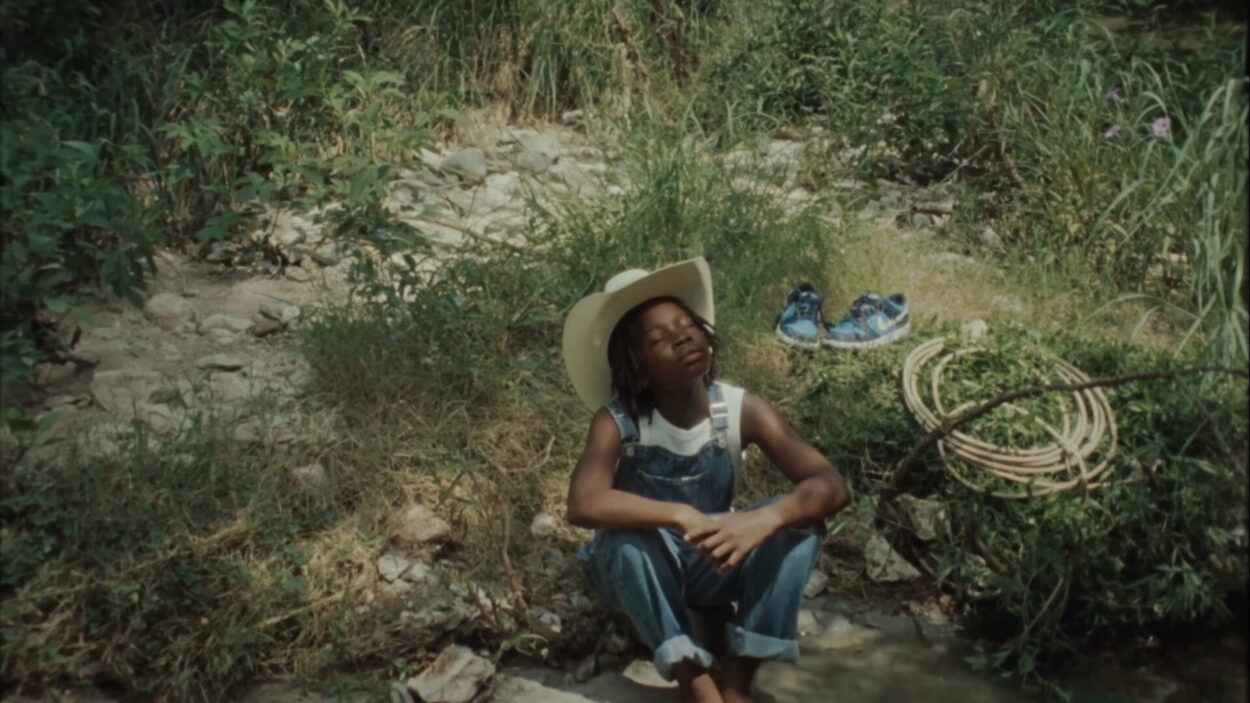
Roughstock is a work about intention as much as legacy. It follows a young girl who discovers her voice not in grand declarations, but in metaphor and daydream- through quiet moments where history and imagination intertwine. Unbothered by difference, she thrives in it. Her identity is forged in unique tension: between the city that surrounds her and the open country that still echoes on its edges, between the weight of displacement and the freedom of her mind.
Her lineage is traced across violent geographies: ancestors torn from their homelands, thrust into bondage, and made to inhabit land that shifted names, similar to the people, when taken— Comancheria, then colonial Tejas, and now Texas. Each renaming marked another act of conquest and dispossession. Austin, the backdrop of this work, carries its own fracture. In 1928, city officials imposed a Jim Crow–era “Master Plan,” displacing colored residents of all ancestry to the Eastside— the very neighborhood where Roughstock unfolds. Nearly a century later, gentrification continues the cycle, displacing the descendants of those who had already been forceable displaced.
For the film’s protagonist, these histories are not abstractions but lived conditions. Tragedy and indifference shadow her daily life. Yet she does not yield. Instead, she reimagines. She transforms sites of loss into stages of possibility, places where identity can be reclaimed. By thriving in the thresholds— city streets and running creeks, movement and dream— she crafts a freedom larger than circumstance, steeped in heritage but shaped by imagination.
Her story also reframes a suppressed lineage. Historians estimate that one in four working cowboys in the post–Civil War West were Black, yet their presence has been largely erased from textbooks and the cinematic mythology of the frontier. Roughstock refuses that erasure. It does not treat history as a closed archive, but as a living inheritance, embodied in a modern cowgirl whose very existence insists on presence.
In this sense, Roughstock is a new Western told through cultural archaeology and imagination. It excavates what has been overlooked while envisioning what has been denied. By weaving character with history and the present, this film insists that identity is not fixed but emergent— formed in the spaces between the hood and the wild, between displacement and belonging, between what was taken and what cannot be taken away.
Through its cowgirl’s gaze, we witness how difference becomes strength, how fracture becomes form, how a silenced voice can claim both the land beneath her Dunks and the infinite sky above.
OWHADI + Elias Ben Dahhou