
Starting at the beginning, when did you first want to become a filmmaker? What inspired you growing up?
My careers adviser suggested a promising future in retail, seeing as I was already flogging halal chicken legs at my dad’s butcher’s shop.
By night, though, I was sneaking into clubs with a trolley full of UK garage records and a middle-aged man’s moustache for fake ID.
After a family member was wrongfully imprisoned, DJing became my unlikely escape plan, funding my way through architecture school and getting me as far away from the naughty boys in BMWs as possible.
At uni, I found myself playing catch-up in ways that went well beyond the coursework. Being called a ‘chav’ by someone who’d later spend a fortune dressing like one was all the motivation I needed to stick it to the system, albeit via storytelling!
Touring exposed me to a world of unlikely influences, and somewhere down that rabbit hole of curiosity, I stumbled upon filmmaking and Eisenstein’s montage theory. 💡 Cutting shots instead of records to move minds instead of feet!
No cinephile upbringing, no DP uncle, no artist for a mum, let alone one who spoke English. But I had something to say. After years of trying to fit into other people’s worlds, I realised I could just build my own. Maybe that’s why I never wanted to make films just for filmmakers, but the kind that made an immigrant kid from Finsbury Park feel seen too. Spielberg’s wonder, Beetlejuice’s madness, Pixar’s magic, with something meaningful hiding behind the smile.
I guess I knew a thing or two about that 🙂

Your short film Peanut Head screens on 28 October. Having worked across commercials, music videos and short films, what makes this project particularly special to you? Link to Peanut Head Screening here
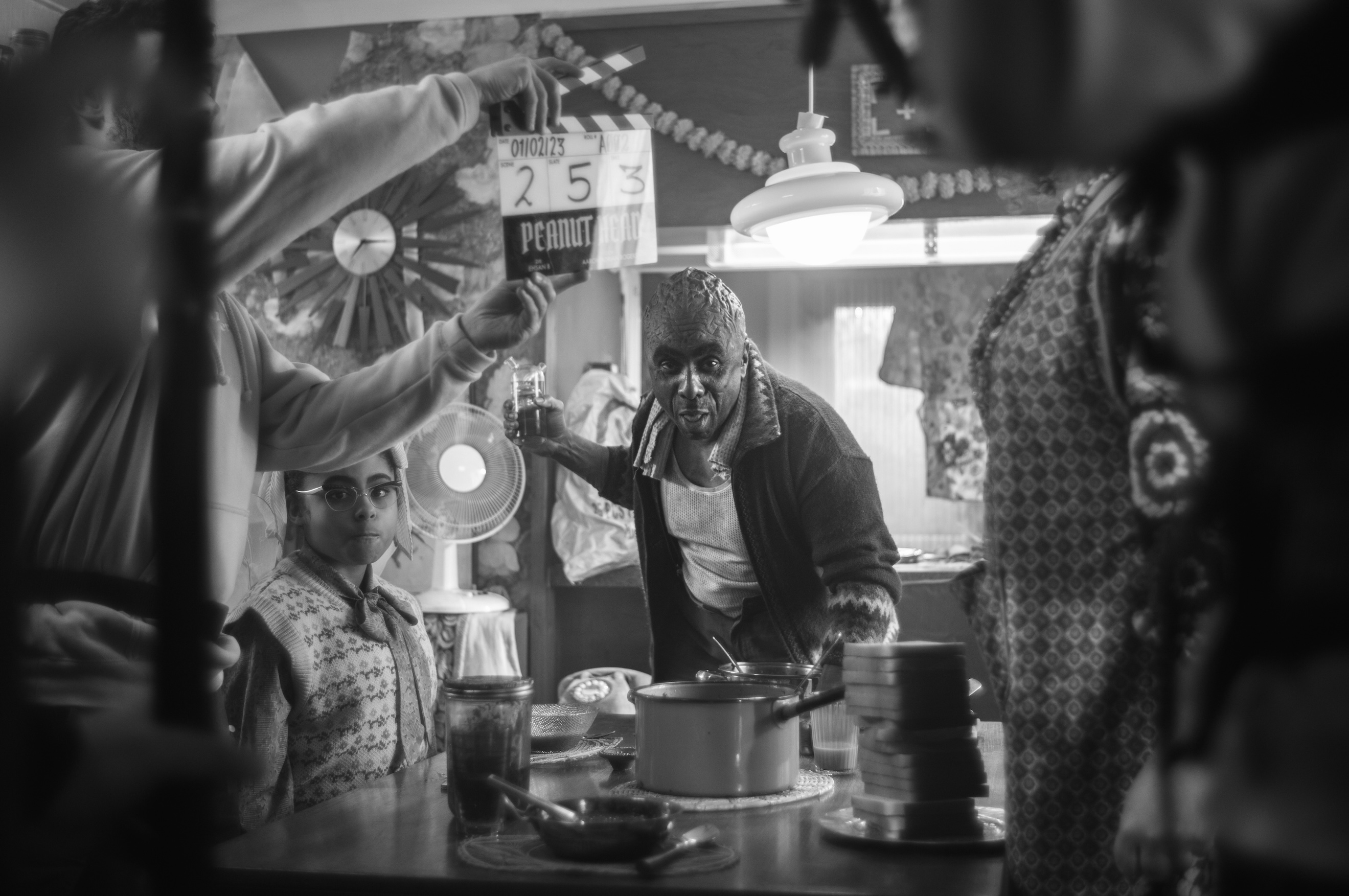
I mean, the title says it all, right? Peanut Head?! Half the time I couldn’t tell whether we were making a film or finding expensive ways to crack each other up. We’re still doing impressions of ‘Big Unc’, who punctuates every insult with a polite “please” for absolutely no reason.
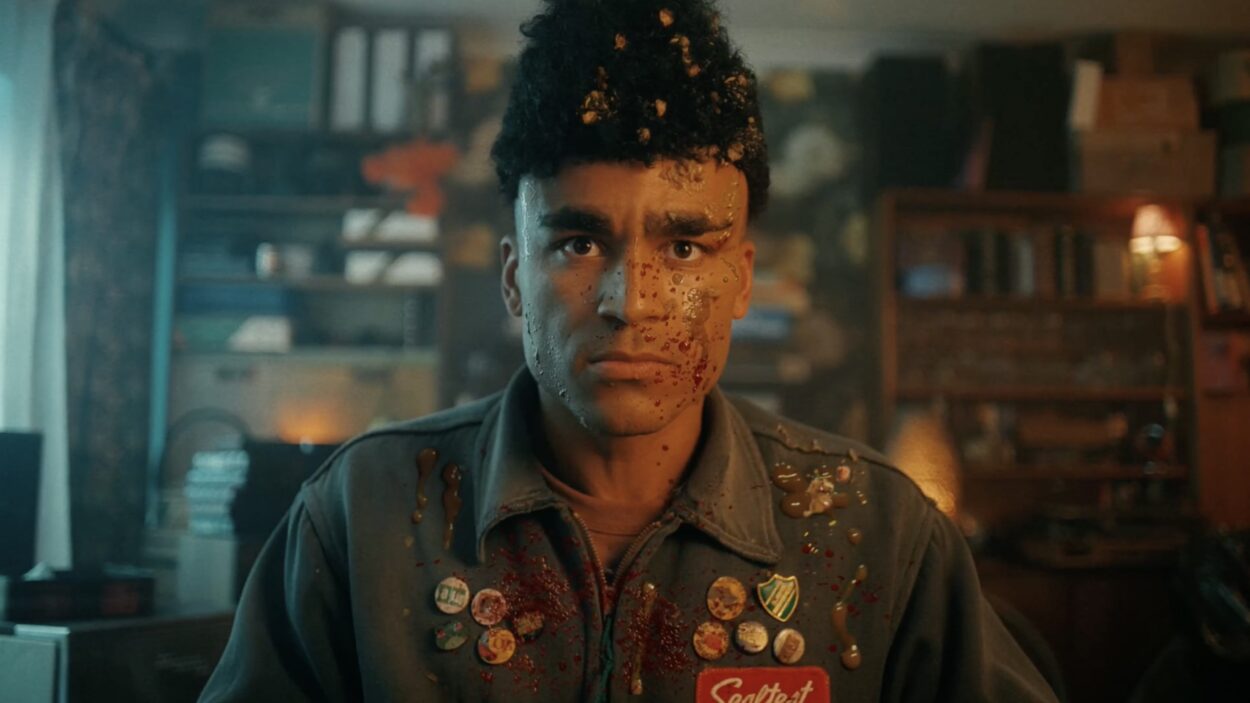
Peanut Head is a darkly surreal coming-of-age comedy about growing up between cultures and the absurd lengths we go to belong.
Not chasing commercial viability or artistic accolades; sometimes you just gotta laugh at things that weren’t funny at the time… starting with my packed lunch. Daal curry between two slices of Hovis?! My mum couldn’t give a shit about my reputation. My classmates thought she’d packed me exactly that in my sandwiches!
The film grew out of these bonkers little culture clashes. Far too much for one therapist, so I assembled an entire film crew instead, with one simple brief: ‘Let’s get weird.’
What I love most is that Peanut Head does whatever the hell it wants, much like those childhood demons that pop up uninvited. And perhaps that’s the real joy of it: giving a bunch of talented grown-ups an excuse to be kids again. Playtime, baby!

Food becomes a symbol of otherness and the immigrant experience in Peanut Head. What do you hope audiences, particularly those with similar backgrounds, will take away from the film?
You are what you eat, right? Well, 11-year-old me was basically a walking pot of curry. We ate it every SINGLE day and I hated it! Burgers and pizzas were the height of cool, practically rebellious. Eating those with your hands was fine, but curry? Apparently savage! I’d swallowed that hypocrisy whole.
Food is such an expression of culture, but it turns out I wasn’t the only kid embarrassed by his family’s pungent little secrets. Jamaican saltfish and Polish pickled herring attracted the same suspicious sniffs. And the cultural confusion didn’t stop at school. I remember coming home raving about this exotic delicacy called spaghetti. ‘Umi’ wasn’t about to be outdone. Slaps last night’s curry on a bed of noodles. More Bismillah than Bellissimo!
So for Peanut Head, we threw all those immigrant food insecurities into one revolting bowl of self-loathing and called it Ning-Ning, a grotesque, bubbling concoction that looks ready to crawl off your plate.
And we didn’t stop there. Cluttered kitchens, elaborate dinner prayers, dodgy ethnic radio crackling in the background. All the peculiar rituals of working-class immigrant households became one gloriously maximalist alien universe, peppered with little Easter eggs of authenticity, making those in on the joke feel seen for once.
All that shame over a bloody bowl of lentils, now trending as a Dishoom fave on Deliveroo. You couldn’t write it. Oh, actually…

I love how you’ve stripped Peanut Head of a specific time or place through anachronism. Why was that important, and how did it shape the film’s visual world?
I didn’t want to make another sob story about marginalisation or a graphic retelling of my aunties making us dance for dinner (ffs). Those stories matter, but social-agenda labels can make audiences switch off before they’ve tuned in. All preach, less reach, innit 🙂
I love how adult cartoons tackle divisive subjects through absurdity, getting everyone laughing, even when they’re the butt of the joke.
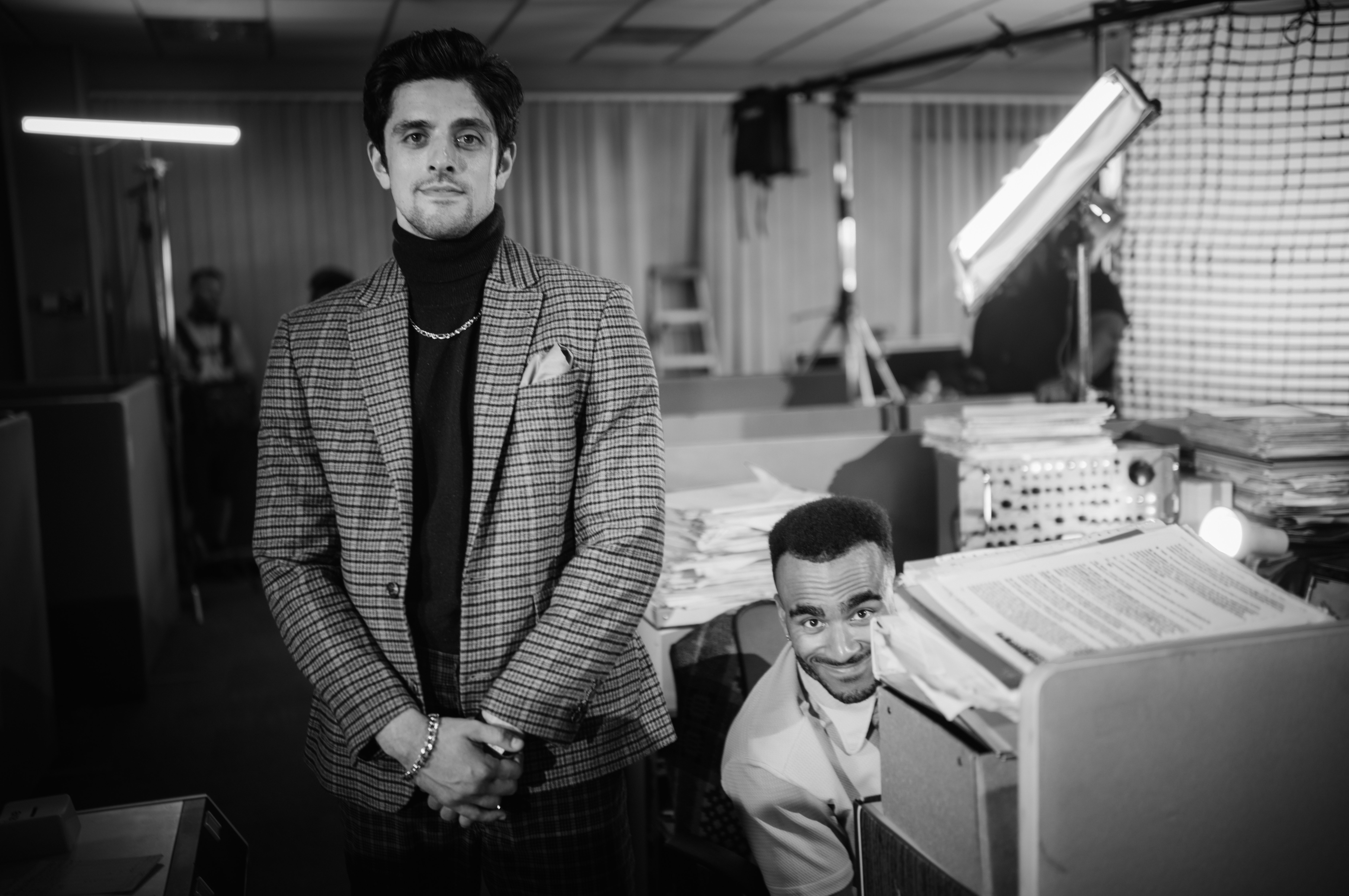
Peanut Head is personal, but the notion of ‘fitting in’ is universal, and that was the premise for stripping away the obvious markers of a particular race or place. The decision to use generic transatlantic ‘movie accents’ was a tricky one when working with British actors, especially a local icon like Munya Chawawa, but we couldn’t risk adding another layer of cultural context that might confuse the tougher themes beneath its fairy-tale veneer.
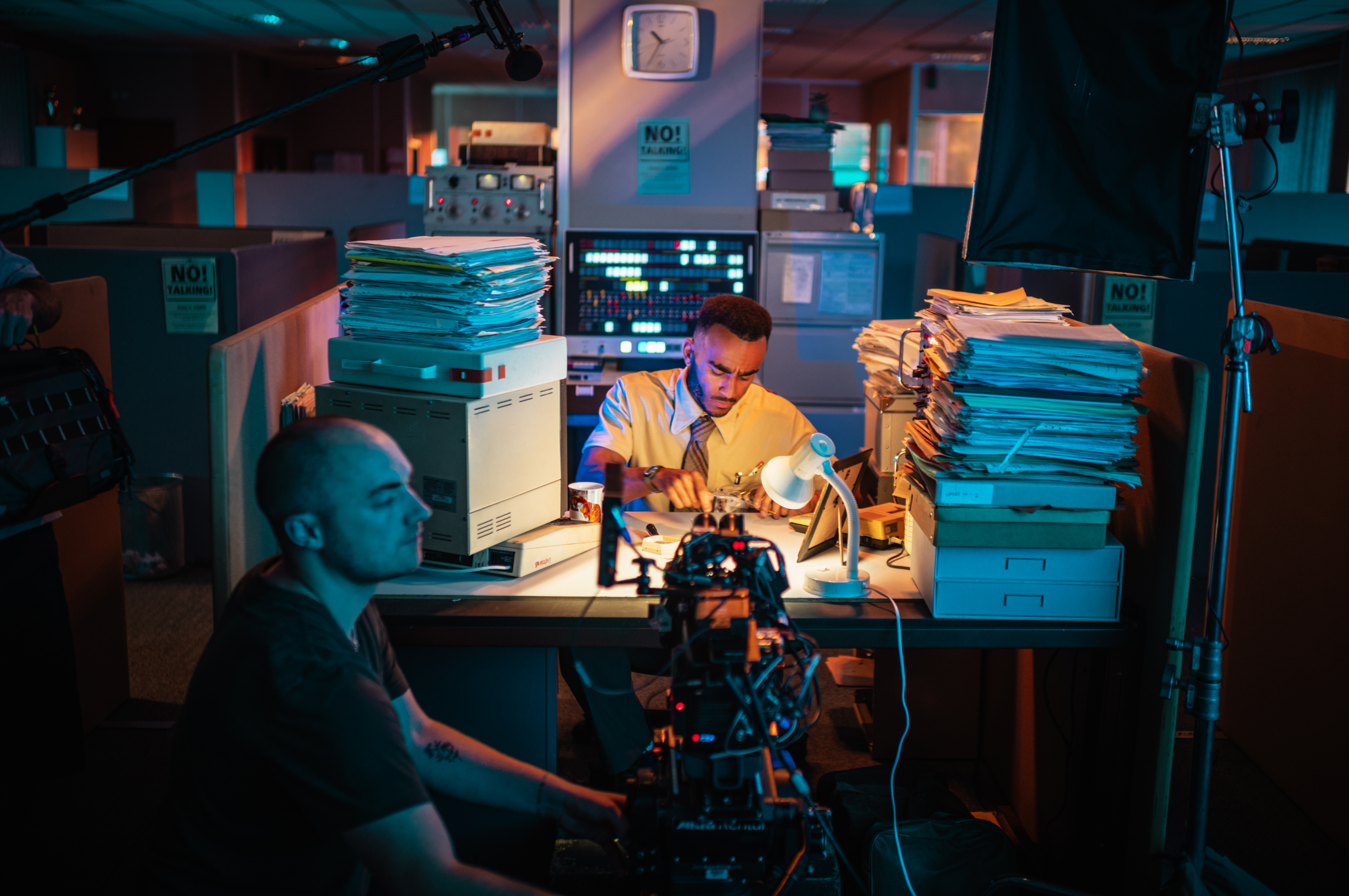
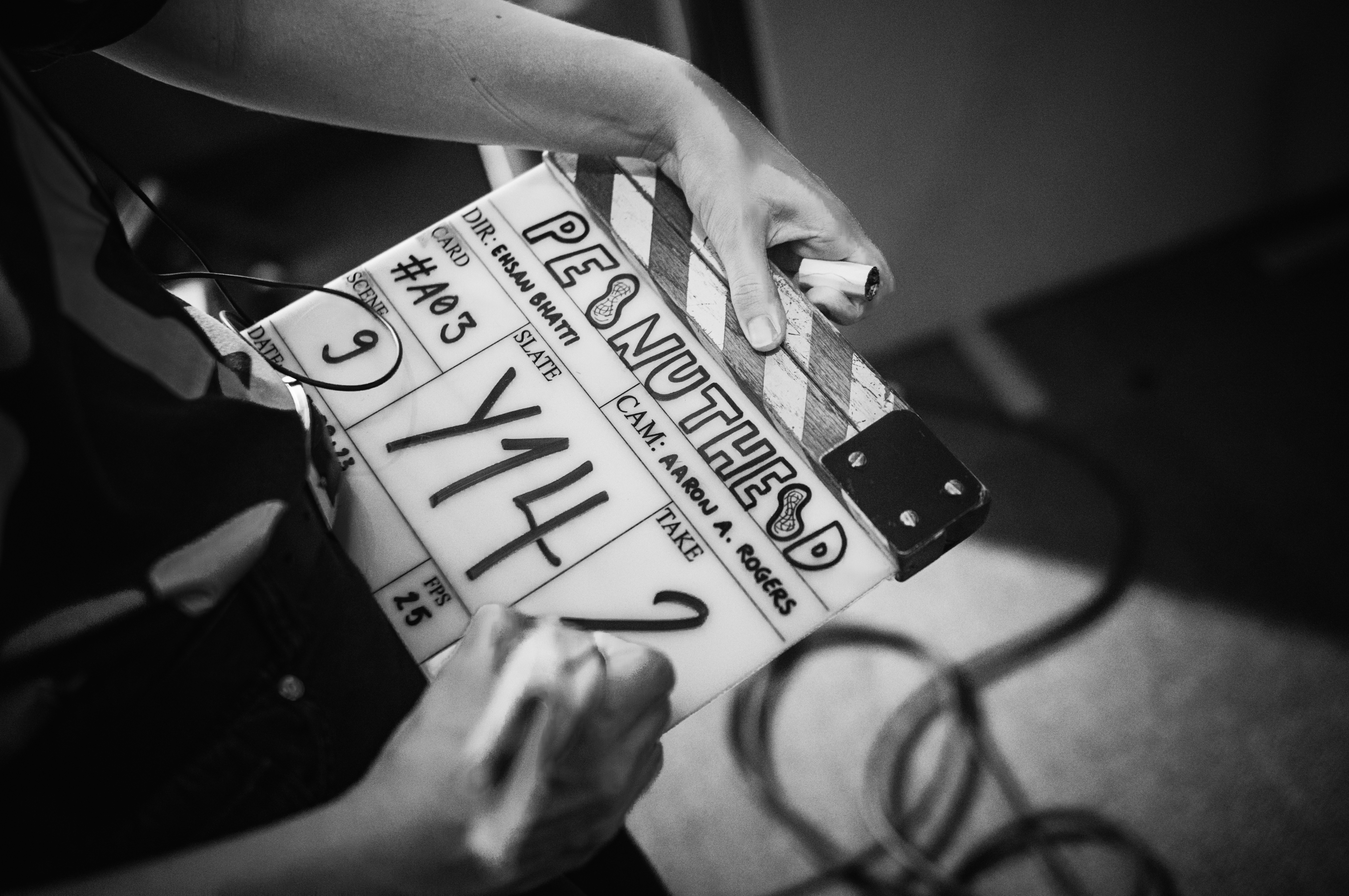
I even suggested shooting the dang thing in black and white to dial back the connection to skin colour entirely and focus on asking the question of what even deems something ‘weird’. Instead, my DP, Aaron Rogers, and I cranked up the colour and theatricality. We’re seeing the world through the eyes of a delirious kid having an almighty identity meltdown, so reality could become a UV-neon, psychedelic fever dream.
Peanut Land didn’t need to make sense historically or geographically, just emotionally. We didn’t need to explain the weirdness, just make sure our protagonist couldn’t hide his… Enter one huge-ass peanut-shaped head.

Peanut Head combines live action, claymation and VFX in a wonderfully chaotic visual world. How did these techniques come together, and what were the biggest challenges of bringing the film to life?
Making a film is a minor miracle, let alone a passion project held together by favours and goodwill! We squeezed a four-day shoot into three, then waited a year to finish it in between gaps in everyone’s schedules, with a partially different crew. Post-production was much the same, squeezing shots in between everyone’s paying gigs. The film’s been sitting on the shelf for another year, so it’s a huge relief to finally put it out there!
The claymation wasn’t originally planned in the script. Our editor, Lucian Barnard, started experimenting with the first cut, so we roped in Wicked Pixels to bring it to life. There’s freedom in keeping things loose, but an open sandbox can quickly become a bottomless pit.
Biggest lesson? Strike while the iron’s hot. Embrace the chaos, make the decisions and get the bloody thing finished. Otherwise, you risk spending so long making a film about an identity crisis that you end up having another one.

You’ve directed everything from fashion and automotive films to comedy. How has moving between these genres shaped your filmmaking?
No two filmmakers have quite the same journey, but I sometimes wonder if I played mine the wrong way round. I needed to make a living before entertaining the idea of finding my voice. I blagged my way into fashion films, shooting behind the scenes, eventually pitching a ‘spot-the-difference’ concept for Louis Vuitton’s Yayoi Kusama collaboration, letting a little of my quirk cut through all that blue steel.
Fashion was highly photographic, so shooting cars felt like a natural progression of that slick, still-life style of filmmaking. I’m a massive petrolhead, so the toys got considerably bigger, allowing me to earn some serious technical and visual stripes. But there was a mismatch between all that glossy luxury work and the cheeky sod behind the camera.
Humour had always been my way of tackling uncomfortable subjects, while I championed equality through activism, mentorship, etc., but that part of me wasn’t showing up in my work. I learned to nail a brief, but the major unlock was when I started putting more of myself into what I made. I pitched NFL UK a script idea that subverted street culture’s gritty aesthetic in favour of something warmer.
Growing up, representation meant Dhalsim in Street Fighter or Apu behind the Kwik-E-Mart counter. Not exactly spoilt for choice! I owe a lot to the agencies and clients who took a punt on me, changing my family’s fortunes and giving me the chance to open life-changing doors for others. That means more than any shiny film.
Commercials have a captive audience, and even small things can shift perceptions. I reckon Daisy Ridley swinging a lightsaber has done more to break gender stereotypes than we realise. She’s just a Jedi, and millions of kids grow up never questioning whether a woman can be the hero.

What’s the passion project you’d most love to make next, and why?
Peanut Head was conceived during Covid, a slightly deranged love child of writing as therapy and the super-stylised wave of commercials I was riding at the time. It was wildly unfiltered, a chance to get the chaos out of my system. Since then, entertainment has become more artificial, making the messy, authentic human stuff feel all the more valuable.
AI might have the datasets to conjure up the perfect superhero film, yet a janky Jim Henson puppet can move us in ways a million perfectly rendered pixels never could. We’re getting better at seeing through the plastic, perhaps even developing an ick for it. My favourite bits of Peanut Head are the fingerprints left in the making of it: my mum’s cooking, cobbled-together practical effects that made heads pulse, and self-aware bloopers that let a little personality peek through the madness. That’s the dirt-under-my-fingernails spirit I want to take forward.
Alongside working with other writers, I’m developing Mad World, a satirical anthology somewhere between Black Mirror and Damián Szifron’s Wild Tales, exploring our collective struggle to keep it together in a world that’s losing its bloody mind!
It trades Peanut Head’s stylised psychedelia for awkward but grounded human truths as we try to make sense of it all. The stranger the systems we’ve built become, and the more they divide us, the more convinced I am that laughing at the insanity of it all might just be our best chance of survival.
PEANUT HEAD screens at Curzon Soho on 28 October, followed by a special Q&A with Munya Chawawa.
Link to London Screening here