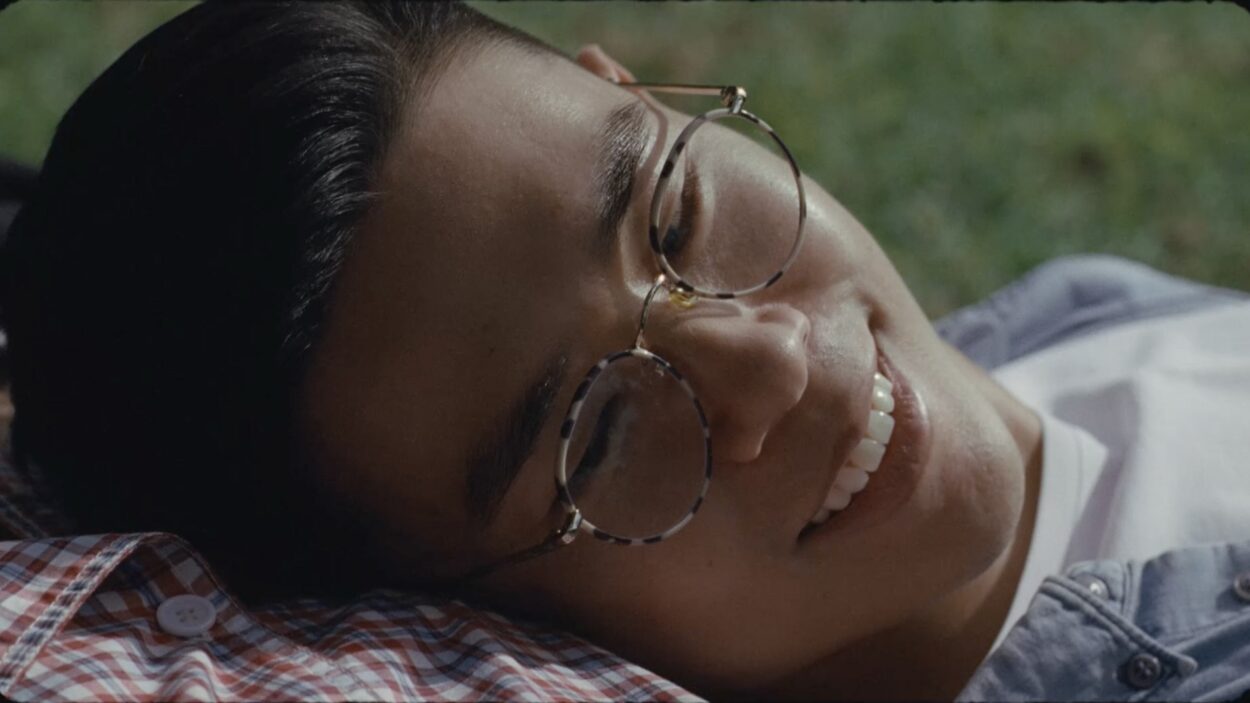


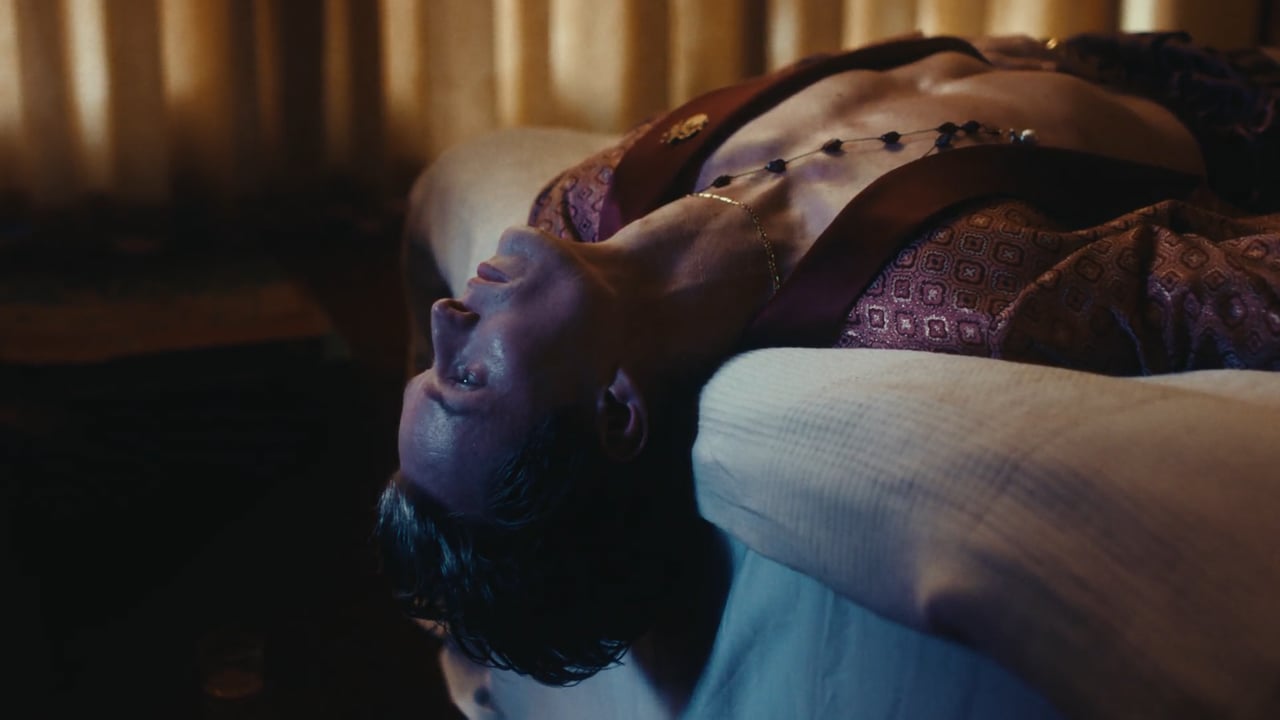

Australian musician Andy (aka ANDY) came to the project with a very personal idea rooted in growing up around Catholic school and rugby culture. What was your first reaction to the concept, and where did you immediately see your own way into it?
This came about very serendipitously. Cooki, my dear friend and producer at DIVISION, lives with Andy. When she said ‘my roommate is a musician and wants to make a music video’ my initial reaction was ‘okay Cooki that sounds very nice’. Not entirely convinced. I’ve heard such a statement before, and I know how rare it is that said roommate is someone like Andy. Then I met him, he saw my film Holy Father, and we more or less creatively fell in love. From his initial story & brief, I built a treatment and script, and explained my vision to him. The opening page of my treatment became somewhat of a mantra: ‘YOU CAN’T SPELL SCRUM WITHOUT C*M’

The film begins in the familiar visual language of Australian sport, then gradually slips into something more sensual and fantastical. You’ve talked about borrowing from sports commercials and fashion films, but giving them a sweaty, dirty edge. What did you want to take from that polished language and what did you want to subvert?
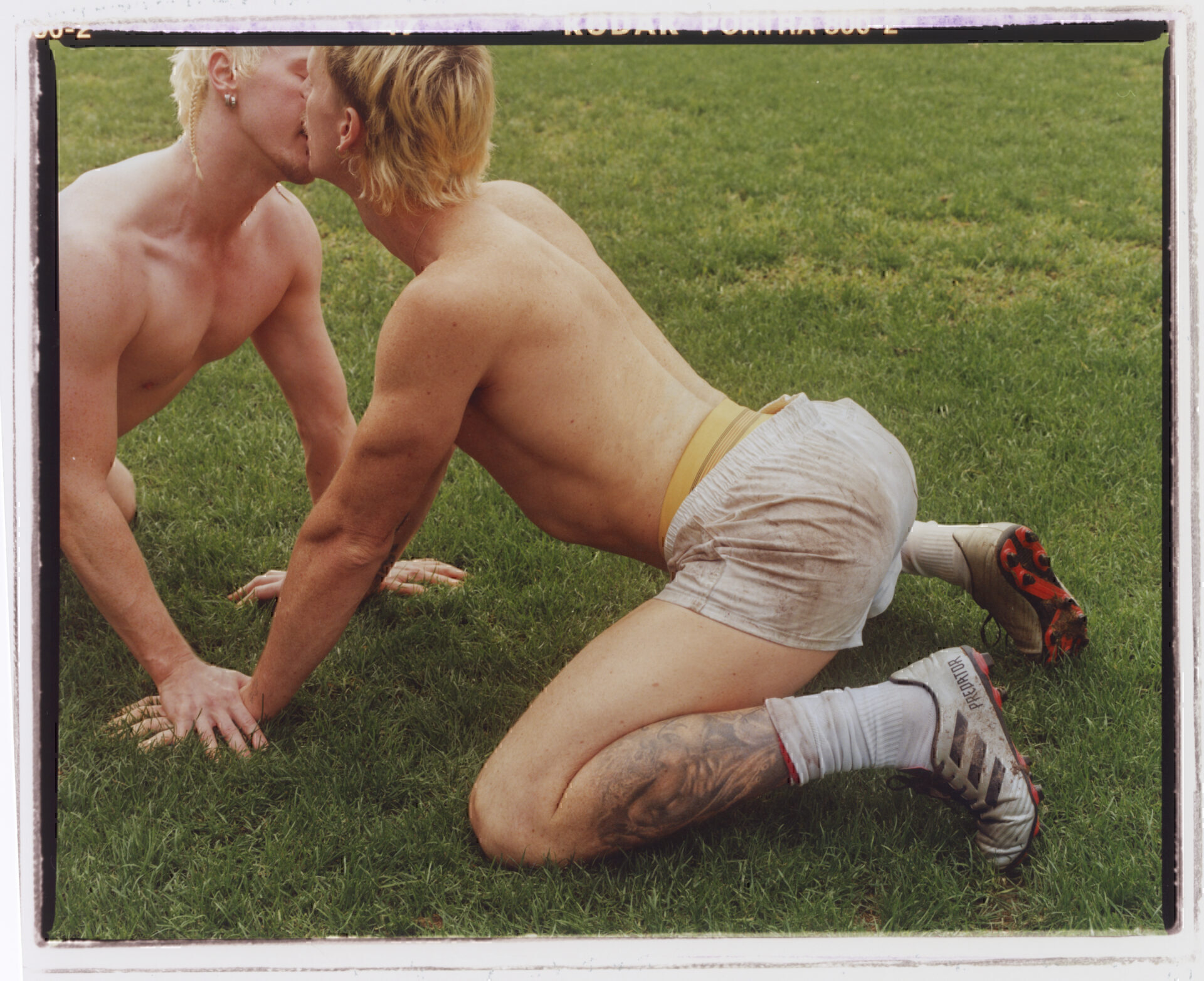
I think there’s one shot in particular that illustrates what we wanted to subvert. It’s the climactic post-scrum pretzel-form of all the boys together, licking and grappling at each other. The smoke, the spray, the lighting, the colour of the grass – to me, that aesthetic is very NRL GRAND FINAL PROMO. Or maybe a Gatorade commercial. But it speaks volumes to what our entire goal was – to take this world that’s ubiquitous in Australian sport, and reveal a truth hidden within it that is just gagging to be said out loud.

There’s a brilliant escalation to it: glances become touches, touches become fantasy, and eventually the whole thing erupts. How did you control that build without showing your hand too soon?
Geri Docherty, our marvelous editor, is to thank for this. Version after version, we tried to finesse the escalation, making sure we didn’t give away too much too early, or leave everything to the end. The initial script was much more sport/narrative-focused, right up until the final act, so we had to discover a new path where each sporting moment was met with an intimate counterweight, which in turn communicated something a little more profound.
The humour is quite crucial. It’s sexy and provocative, but also knowingly funny. How difficult was it to find that balance without tipping into parody?
This was tricky. The first cut was a lot heavier on the comedy. It even featured these shots of spectators in the stands, an entire new set up that looked fantastic and made me laugh a lot. They’d get super mad when the footy was no good, then get euphorically happy when homoeroticism was embraced. It was really funny, but tonally off. So we scrapped it entirely.
That helped balance the humour immensely, even though it was difficult to say goodbye to.
Physicality does so much of the storytelling: tackles, stretching, grappling, the scrum. How much of that physical interaction was carefully choreographed, and how much emerged once you had the cast together?
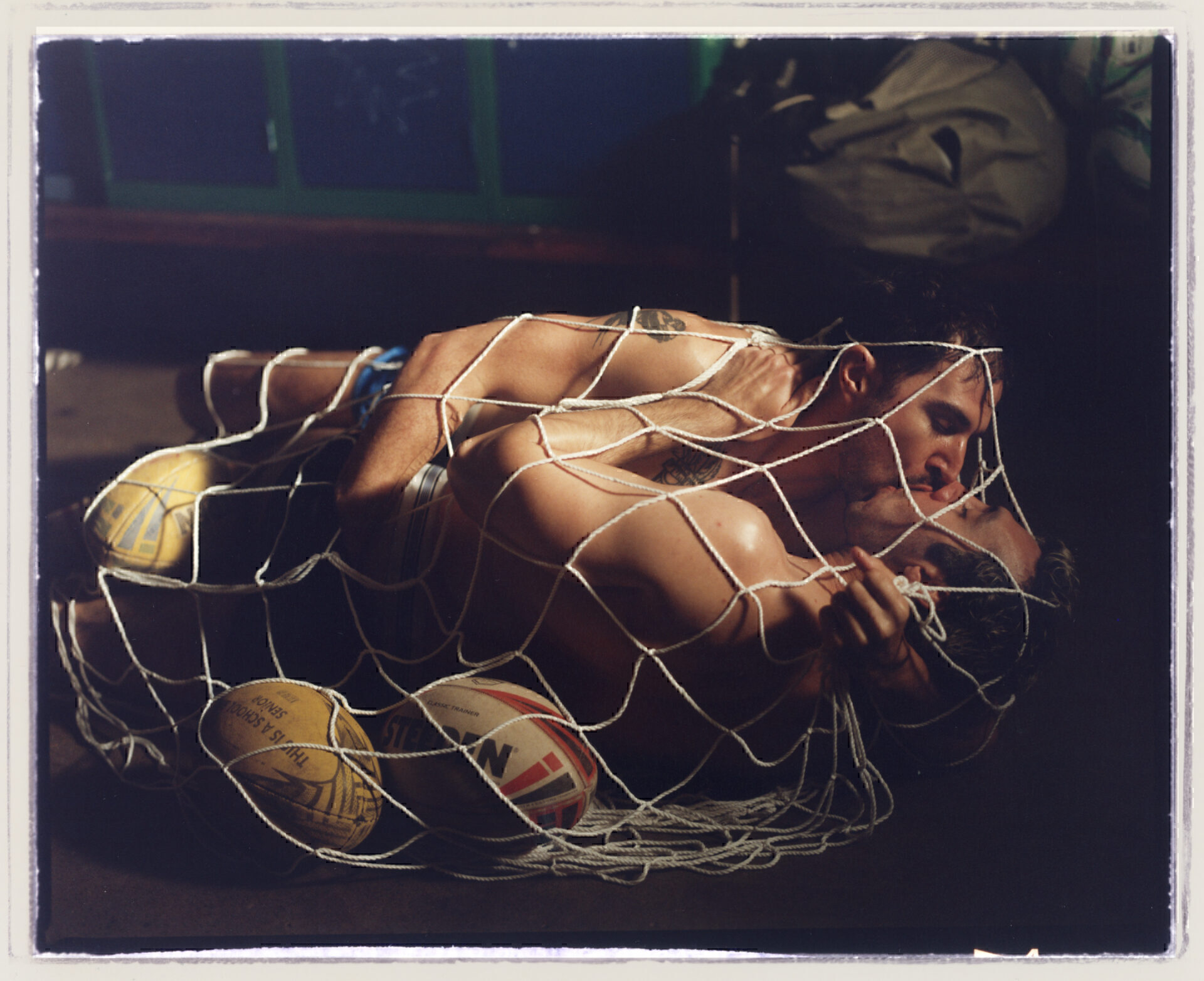
We rehearsed! We talked! We FELT. Our incredible protagonist/choreographer Tiggy Treloar was onboard early, and was essential to discovering the physicality of the clip. He and Andy developed sketches that played with footy training drills and more intimate movements, and we refined the sketches until we discovered what felt right. One thing worth mentioning is that final climactic tableau. We did a little rehearsal to figure that out, but what you see on screen is just Tiggy, in the moment, discovering a form of men that spoke to what we were doing. He built that in like seven minutes, rain coming down, steadicam standing by. It was very impressive.

NRL legend Ian Roberts and AFL’s Mitch Brown bring a history and weight to the film before they’ve even done anything on screen. How did they become involved, and did their presence change what you felt the film could say? You’ve said you watched Mitch and Andy “bloom like flowers in the scrum”. Was there a moment on set when your sense of what you were making suddenly shifted?
Andy was already speaking to Mitch and Ian by the time I came onboard. That’s all him. He’s magnetic like that. So I think I underestimated the gravity of their involvement at first, as they were just part of the production.
But at the end of day 1, in the pouring rain, when Mitch and Andy kissed in the scrum, something changed. Mitch’s story, his activism, it felt alive in that scene, actively colliding with Andy’s own story. I saw two men who had grappled with a sporting culture that alienated them, that had rejected countless others like them, and they flipped it on its head. They were taking an oppressive environment and turning it into the most sexy, tender and intimate space. The same goes for Ian, as he was strapped down into the weight-bench, licking his silver whistle as Andy lowered it into the back of his mouth. That felt like history.
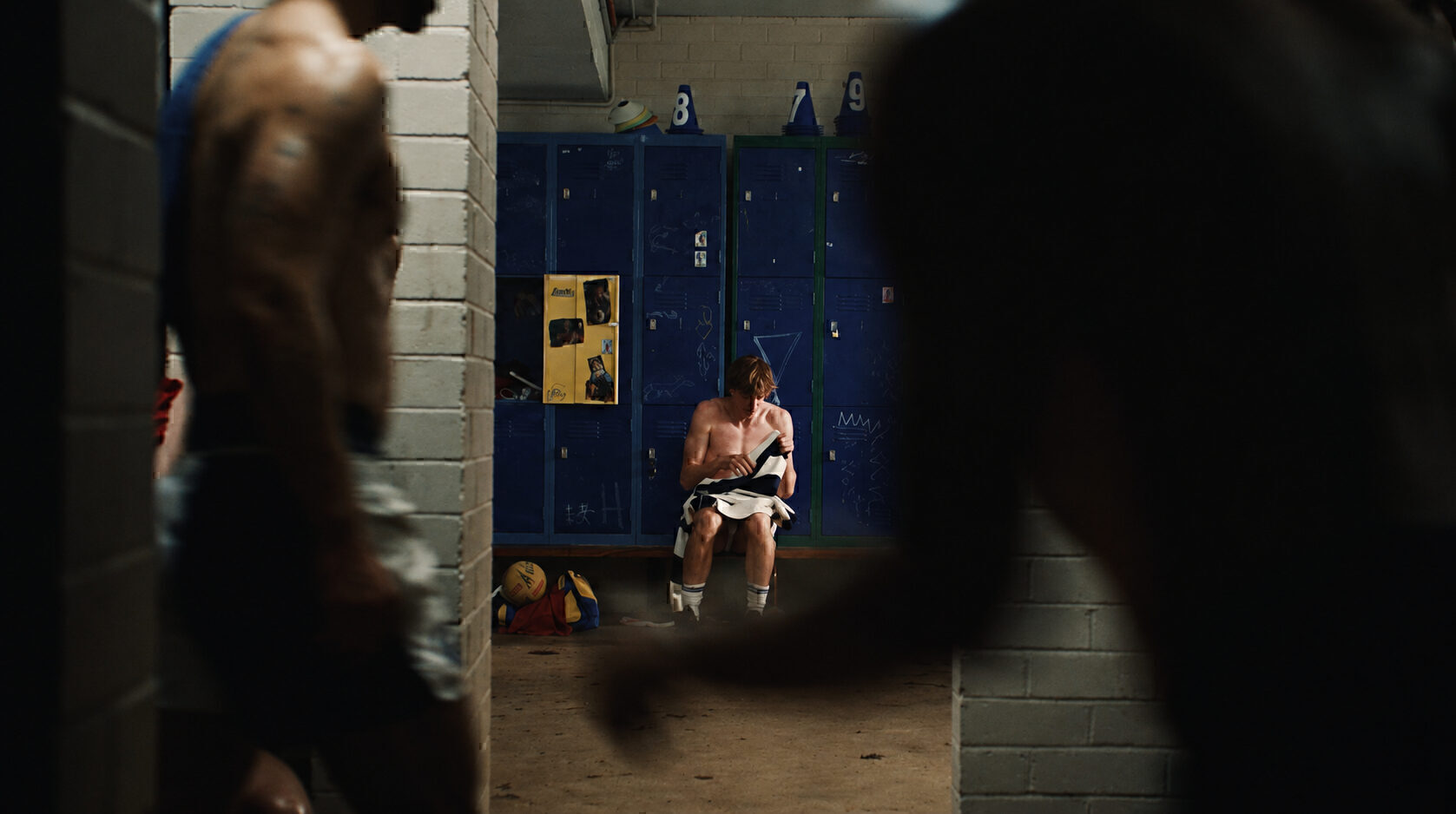
The film eventually snaps back to the locker room as though none of the fantasy has happened. Why was it important not to give us a straight-forward happy ending?
I think a happy ending would cheapen the reality of this story, of Mitch’s, Ian’s or Andy’s. We realised that in the edit, because we had shot something that was a little more straight-forward and happy. But it was actually Andy who suggested we take the opening scene and replay another take. And it clicked instantly. I still think this clip is optimistic, but it certainly isn’t naive.
There seems to be something in your work about finding tenderness, absurdity or discomfort inside traditionally masculine spaces. Do you recognise that thread yourself?
I find the performance of masculinity to be endlessly compelling. It is all at once very funny and deeply disturbing. It can be so destructive and detrimental to society, whilst being simultaneously so silly or tender. As a cis-gendered het I get access to seeing how they behave behind closed doors (both in my own behaviour and in others), and it’s fascinating. That maybe comes from the old idiom of ‘writing what you know’, but maybe also because men have dominated the storytelling world for so long, and it’s about time we dismantled the archetypes they’ve been building up for all this time.

Your work moves between commercial, music and narrative, from something as warm and intimate as emen8 to the dark comedy of Lyka’s The Brutal Pick-Up. Do you think there’s a recognisable Harry Welsh sensibility connecting those very different worlds?
I hope that sensibility is just that they are entertaining! But I think the Lyka job upset a lot of people. At least it’s making them feel something. Maybe that’s the sensibility. I’d settle for that.
But ultimately it’s probably that they were shot by darling DOP Jack Birtles.

From Holy Father to Emen8 and now Can’t Wait, performance feels very central to what you do. Are you particularly drawn to actors and real people who can bring something unpredictable into your visual world?
I think acting is magical. I think I probably want to be one. I did a lot of it in my youth, and it led me to talking about performance with actors way too much, as if it was something that required a lot of discussion to get right. It wasn’t until my second short (Youthlessness), where I was lucky enough to cast Tom Weatherall and Zoe Terakes, that I realised I was doing it wrong. It’s a little different when doing something like emen8, with a large cast of non-actors, but the intention remains the same. Doesn’t matter if it’s a comedy, a drama or a gay-footy-fantasy. I want to draw something that feels true out of them, whether they bring it organically or we work together in finding it.
You’re still relatively early in your directing career, but the work already moves comfortably between music, commercials and narrative. What are you beginning to understand about the director you want to become?
Follow instinct. Be nice. Don’t worry about what any other directors are doing. I think that’s what is becoming clear to me in my work.