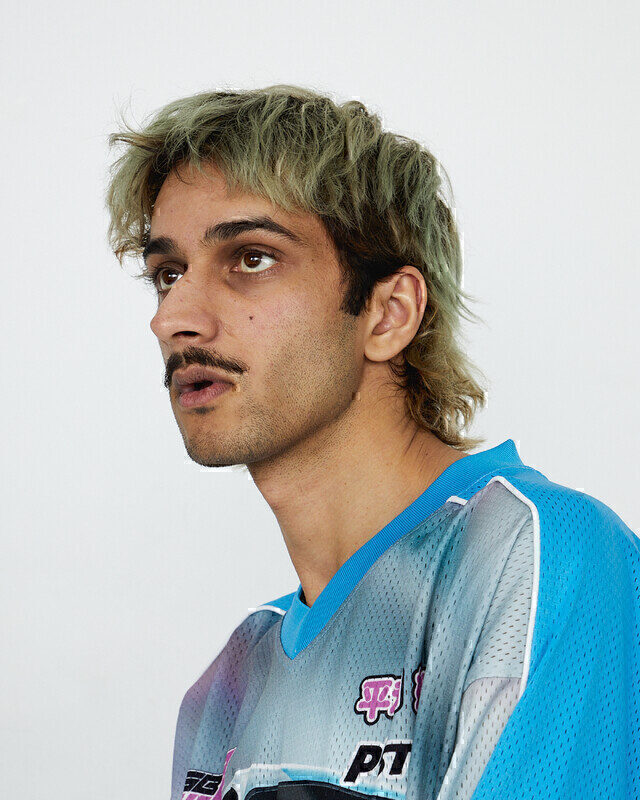
Naddash Khalid
Please tell us about your childhood in Manchester — was your home environment particularly creative or academic?
Naqqash: Not really, no. I was the first person in my family to go to university. I read a lot as a kid though. I was really obsessed with Lemony Snicket’s A Series of Unfortunate Events. I think that got me into reading when I was really young.
I remember my mum buying me a little DV camera for my birthday — she used to work in Dixon’s, the electronics shop — and I would make little films with my cousins. I was always creative.
For some reason, it didn’t really click till I got to University that you could be an artist. I had no access to the film industry, but I did a lot of fringe theatre. I had friends who were actors and I’d write/direct plays for them. That was a really good way to understand how to build something, how to communicate an idea with very few resources, and how to use who/what was around you to make something a reality.
Did you learn on the job, or was film/art school a formative part of your development?
Just by doing it. I was doing a PhD in English, and I made a really scrappy short film with people I knew. In Camera really was my first time on a professional film set. At the beginning, I used to think that was quite an exposing thing, but now I’d say that after making In Camera — and now FLINT — I’m holding onto my naivety as much as possible.
I really do think when you enter a medium, it’s on you to interrogate all of the tools you’re inheriting. In hindsight, I’m really grateful I didn’t go to film school. I’m very interested in how young cinema is as a medium, and how we’re still only just figuring it out — so sometimes the ideas that come out of naivety, or just not knowing, feel exciting. It’s an interesting viewpoint: to challenge some of the things you inherit when you step into a medium like cinema.
You said FLINT began with a dream you had while making In Camera. What was that first spark? Did it begin as a feeling?
At the beginning of In Camera, I started having really vivid dreams, and I told everyone I was working with to write their dreams down too and report them back to me.
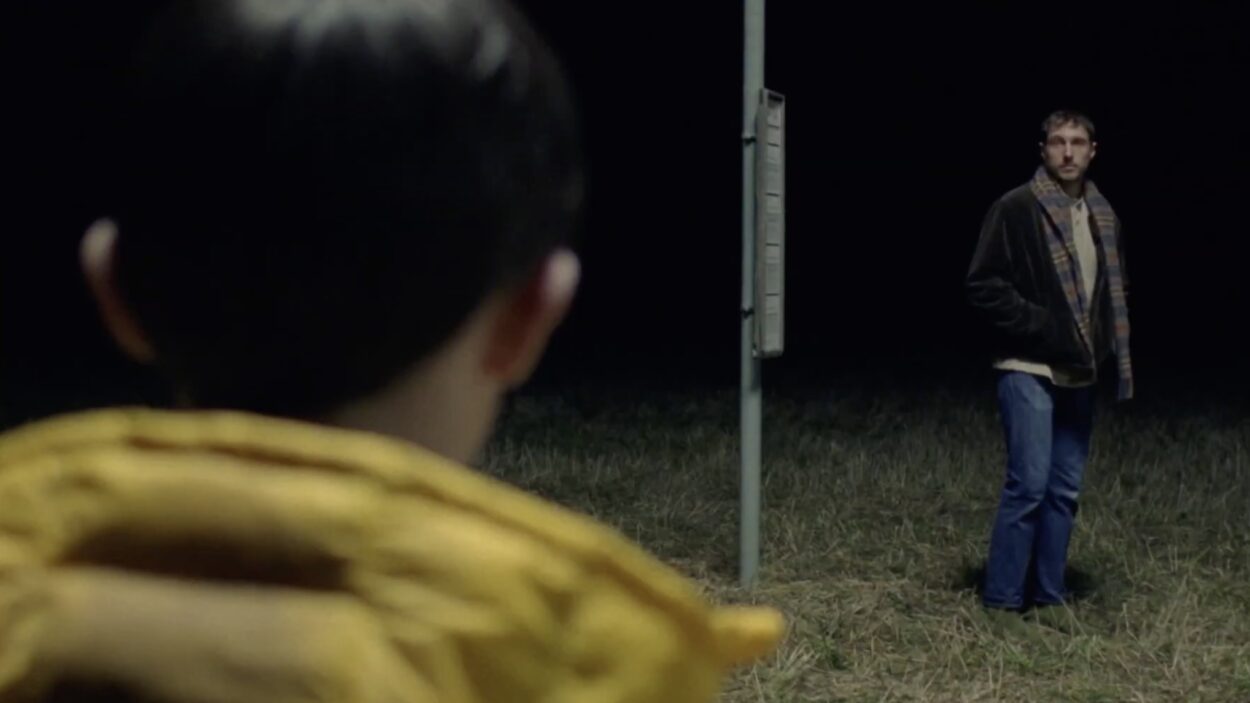
The dream I had was very yellow, and the textures were quite volcanic. I saw a solid black sky, Rory in a field, and there was a child he was responsible for. And I could feel a certain texture — It felt like rocks, like meteor rocks. Yellow — very yellow. I woke up and drew a sketch on my phone of what the dream felt like, and wrote down a few words. It was like 4:00 am, and I must’ve gone back to sleep. That was the beginning of this film.
After In Camera finished, I had COVID, and I was away, so I had to self-isolate and sit in a hotel room for a week, and I just couldn’t shake the colours and textures of this dream. So I wrote the script. And a year later, I was still thinking about the dream. I was saying to everyone, “I can’t make a second feature and not make this film. Everything needs to stop. I need to make this film.”
Then I found all the right people for it — Theo [Prod Co producer Theo Hue Williams] was an essential part of getting things moving. Because when you say you want to make a short film after you’ve made a feature, a lot of people are like, “Oh, come on… no. You made a feature — why would you want to make a short?” But I had very supportive people around me, and was persistent about needing to do this. It’s such a privilege to be able to somehow wrangle a film together, every time. This was made with the backing of BBC Film, Rope Ladder Fiction, Intermission, and ProdCo.
Where did that feeling come from for you personally? Was it rooted in something autobiographical, or something more unconscious?
I like playing in unconscious spaces.. Even when I’m directing, I’ll often give brand new dialogue while we’re rolling a scene. I want to be as present as possible, like a scene-partner. I’m unusually as close to the actors as possible so I can feed new dialogue and be in the scenes, almost. I like the flexibility of being able to change everything from the inside because that’s where you’re most in touch with your instincts.
I think cinema, as a medium, is so close to the language of dreams and the unconscious that sometimes it’s good not to fully interrogate those things. And I think once you’re making a film, you become a collective unconscious — a collective body. You’re also in the unconscious mind of other people as well. So it’s always difficult to say where a certain thing comes from.
But I do think FLINT feels like a dream masquerading as a memory — that’s how I’d put it.

You described seeing “yellow, meteor rocks, jagged steel, meat, a severed hand” in that dream. What did those textures and images tell you about the world of the film?
The world of any film — anything I’ve ever made — usually starts in colour and texture, and then presents itself in narrative later on. I don’t know why that is.
So it’s like a tone?
Yes — it’s tone. Image. Colour. Smell. I end up assigning a perfume and scent to every film or character in the writing stages and that becomes a big part of the process. With FLINT, it was yellow, meteors, lava, FLINTy rocks, and the smell of a wet winter, pink pepper, rose, earthy notes – the perfume I had for this had base notes of moss, patchouli, pine needle oil.
When you’re working on a film, it’s so collaborative. You invite other people in, and they stretch what that might mean. I talked about FLINT with Rory for two years, from having the idea to getting to make it, so he’d read drafts and we’d talk a lot about the ideas. It felt like we kind of grew it together. This film wouldn’t exist without Rory.
I was thinking about that, because there’s a continuous feeling all the way through it — and how difficult it must be to access and hold onto that feeling because of, as you say, all those layers that then come into making the film. When you later tried stretching FLINT into a feature and felt it snapped back, what did that resistance teach you about the story’s true shape?
I wrote a 70-page document that resembled what would traditionally be seen and read as a treatment for a feature film. And I was like, “But it doesn’t want to be a feature.” I think I was internalising a lot of ideas around what it means to have a career. I don’t think about that a lot, but it made me think a lot about form.
In this capitalist world we live in, everything’s about growth — how to be bigger, how to build bigger. And I think I maybe internalised this idea of, like, “Oh, I’ve made a feature film, and now I need to make another feature film.” That was the conventional logic. But I guess the artist version of me was like, “No — it’s a short film. This is what it wants to be.” A lot of the time, ideas tell you what they want to be, and it just wouldn’t have worked as a feature.
And I think how I’m navigating all of this is to be really truthful to what I want to do, and what I want to say — and to interrogate everything I’m inheriting. I think I was doing that here too, with this idea of an imagined career based on growth.
I don’t see short films as a stepping stone, or a calling card, or a vehicle to prove you can do bigger things. I think the short form is its own space — and it should be a space where you can experiment, and play with an idea in a different way than you would in a feature. And if I’m being really honest, I don’t think there is a difference between a short and a feature — sometimes, sure — but I could tell I was trying to stretch something into a feature because that’s how I could see it getting made. And it didn’t want that. It was short form, and it felt like it didn’t want to be stretched out. It wanted to be lived.
The core of the narrative is about a man returning home with a trauma that’s not revealed. How did you arrive at that single, concentrated idea?
I don’t like knowing everything about the characters. I need to live in a space of discovery — of asking questions. If I know everything, it becomes uninteresting to me. I don’t think it’s interesting to talk about it either. Making a film is inviting an audience into a feeling. I’d rather they just engage with the film on their terms.
So when we were making this film, I was fascinated to experience the information I was receiving through Rory’s performance, and the choices he was making. I feel like I gave that character to him, and it was his decision to create anything around the backstory — or why he was coming home. It was me trying to discover that through him.
But I think it’s also a very simple story: if something bad happens to you, your first instinct is to want to go home — whatever that means. And I liked meeting this character at a point where he’s an adult man, but he just wants to go home. I thought that was a really interesting place to begin a film — and then, yeah, to hang in that space.
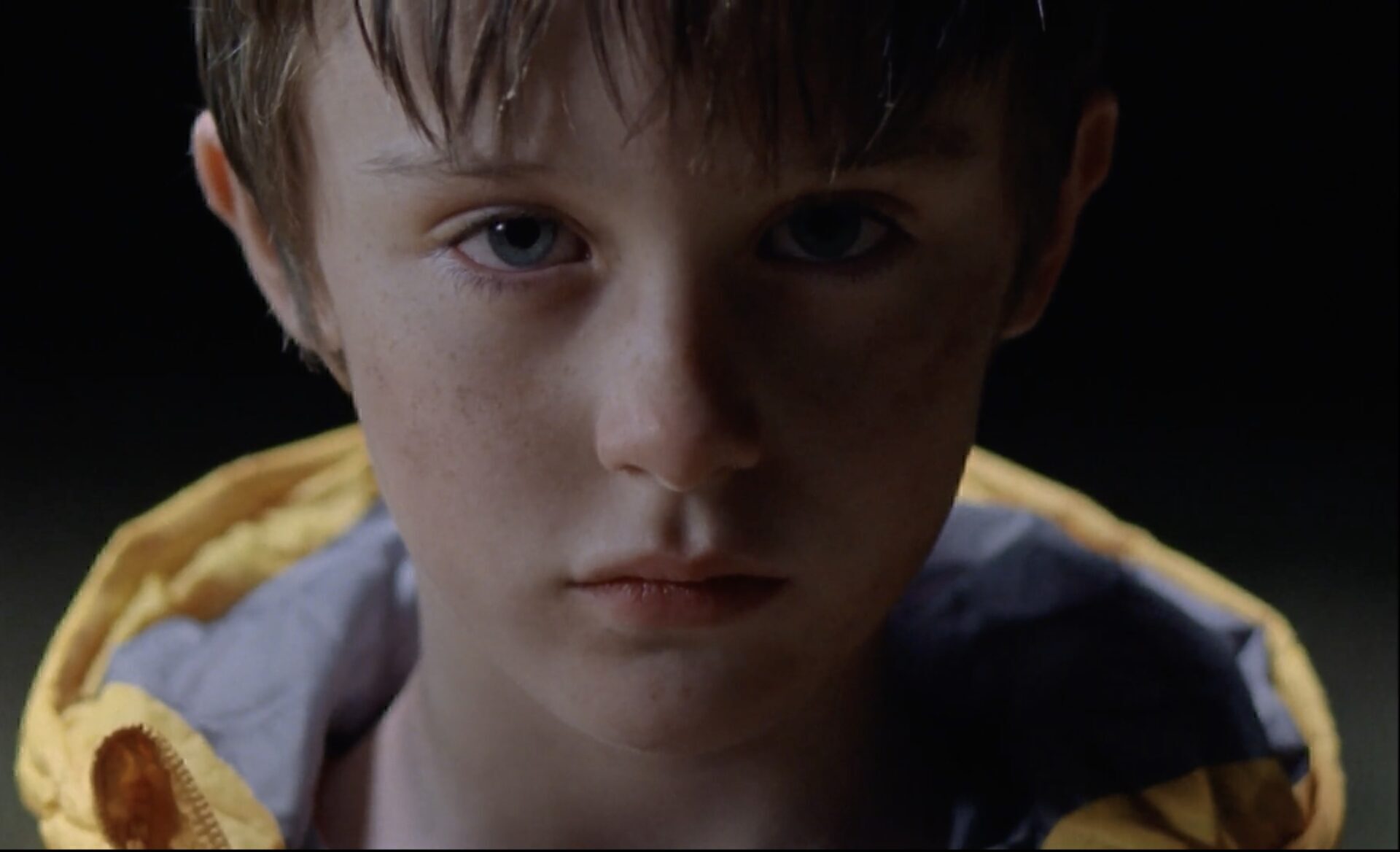
So in your mind, do you know what happened to him — or did you intentionally keep it undisclosed, even for yourself? There’s a real intrigue: was it self-inflicted, was he imprisoned for an act of violence, or did something happen to him at the hands of others? Did you always intend for the reason to remain hidden?
Art-making is full of secrets. It’s like you know everything and nothing about what you’re inventing – and those things exist at the same time. You have to be so intentional about what you’re making but be able to throw all your preparation away to live in the present of the thing. I think it’s uninteresting to talk about what films are about. To me, that’s the role of the audience, it’s their film.
Do you think a filmmaker needs to have experienced trauma or a strong psychological state personally to write about it truthfully, or can it come from research, empathy and conversations?
No.
I see my role a bit like an actor’s work. It’s like you’re revealing something about yourself, but it’s not necessarily the literal truth of your life, but the feeling of an experience you might’ve had. To me, cinema is all about invention based on truth.
Like a universal truth — an emotion that we can all identify with?
Yes — an emotional truth. And I don’t think it can be stated enough: this is a collaborative medium. When you’re working with actors, especially, everything that person has been through is going to bleed into the work. It’s this artistic melding of at least two brains — the writer/director and the actor.
I’m always looking for something in someone. And the best work is when you can’t distinguish what’s coming from me and what’s coming from the other person, because you’re in this collective dance together. I think that’s a really beautiful space to make work from.
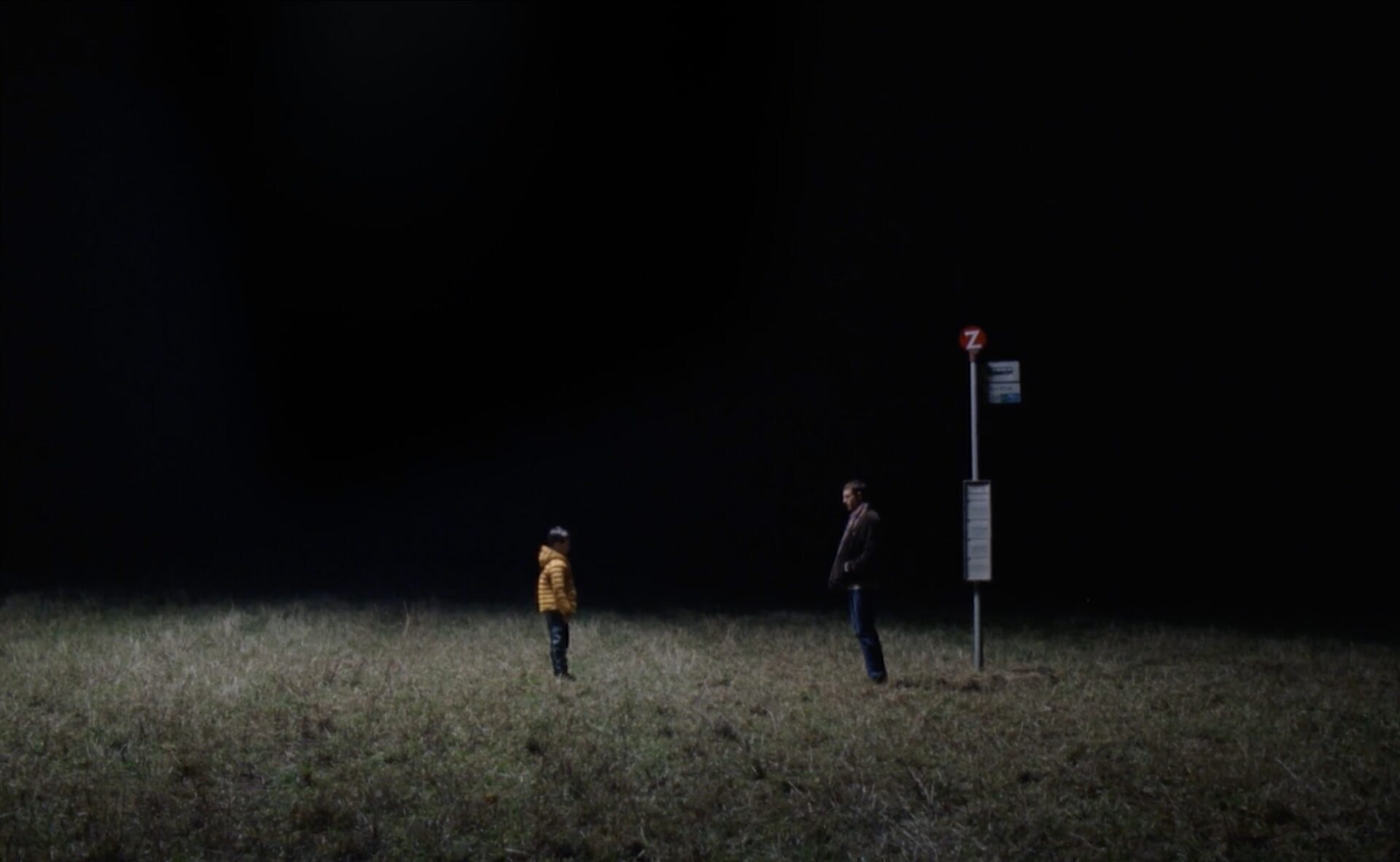
How did you arrive at the particular energy of the character? He’s not angry, he’s not overtly violent — he’s almost suspended between states. Where did that tone come from?
That’s really interesting. A lot of the time, I’d make Rory run around, get his heart rate really up, ask him to dance and get out of his body — to the point where he was almost sweating, exhausted before takes. And then we’d roll and he’d contain all that very physical energy. It had a direct impact on the character’s body and tone.
So much of directing is really sensitive. It’s about being really connected with someone, being truly present with them. You’re inventing something together. For FLINT, I knew Rory was quite sensitive to music in his process so we’d also play a lot of music on set, and I’d change the tracks a lot, and Rory’s energy would change with it. I’d play mad electronic music — like you’re at a rave — and then really quiet songs, atmospheric music, then we’d be playing 80s bangers and have everyone dancing.
So yes — music, colour, and physical energy were a lot in that film. I’d make sure Rory was really adrenalised, then we’d shoot a scene where he’s got it out of his system — but you can still see the residue of energy. And I think that works really well when you become really in sync with that person.
Again, I think a lot of the work is the things you don’t see that inform the things you do see. It’s essential to have a collaborative producer and 1st AD who understand the thing you’re building together and can work with you to redesign the schedule and circumstances in real time to best help the film. We had a tight schedule, but Theo and Ty Hack were constantly adapting and collaborating with me so I could move where the film needed to go.
The film relies on minimal dialogue. Emotions are carried through nuance, silence, and internalised performance. How did you write these visceral, largely wordless scenes — as words, images, sketches, or something else?
The reason I want to make films is because I’m really interested in interiority and, to me, cinema is the most interior medium.
My job as a writer-director is to facilitate the perfect conditions where the best performance can happen – everything else from sound to colour to music is in dialogue with that performance.
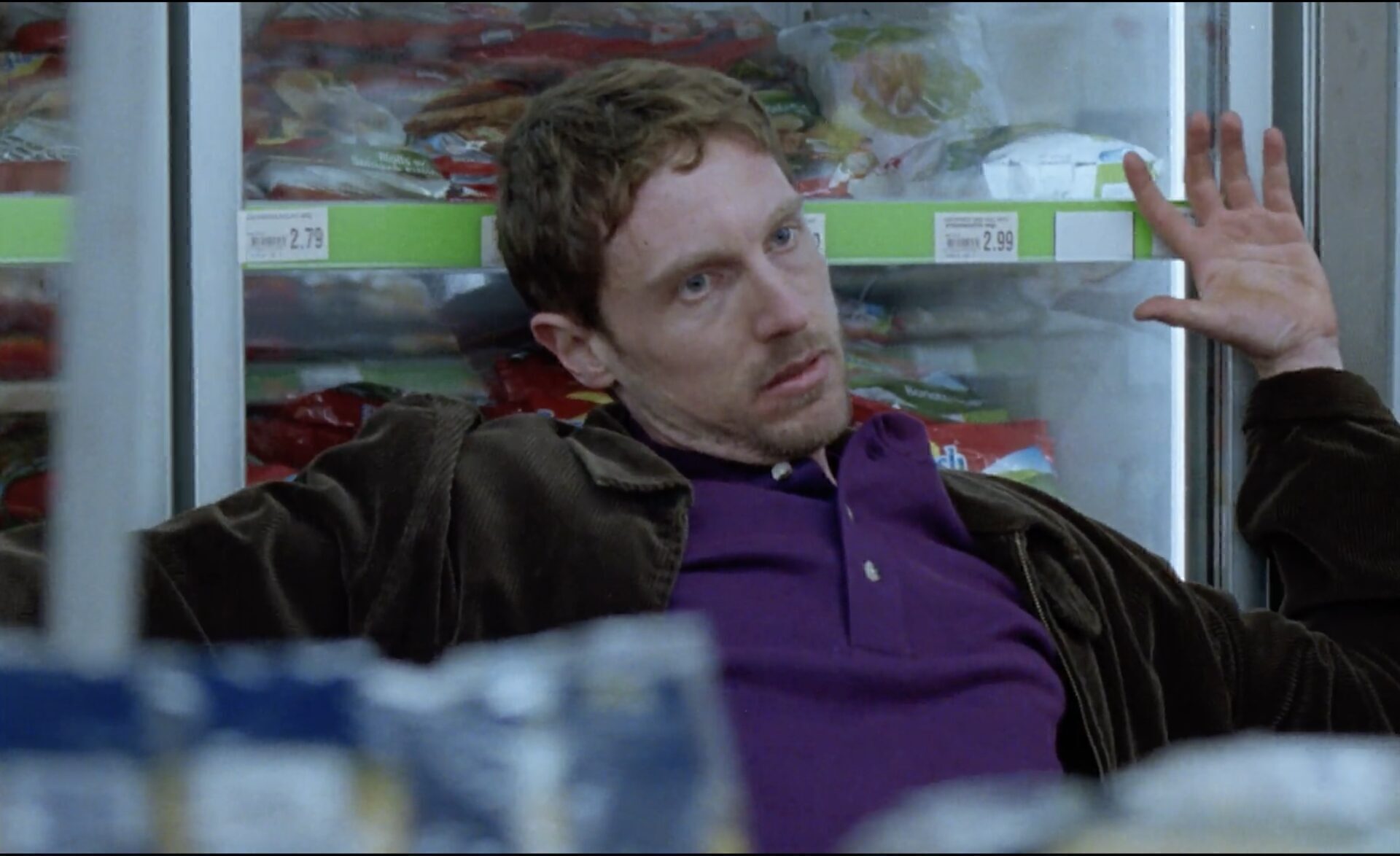
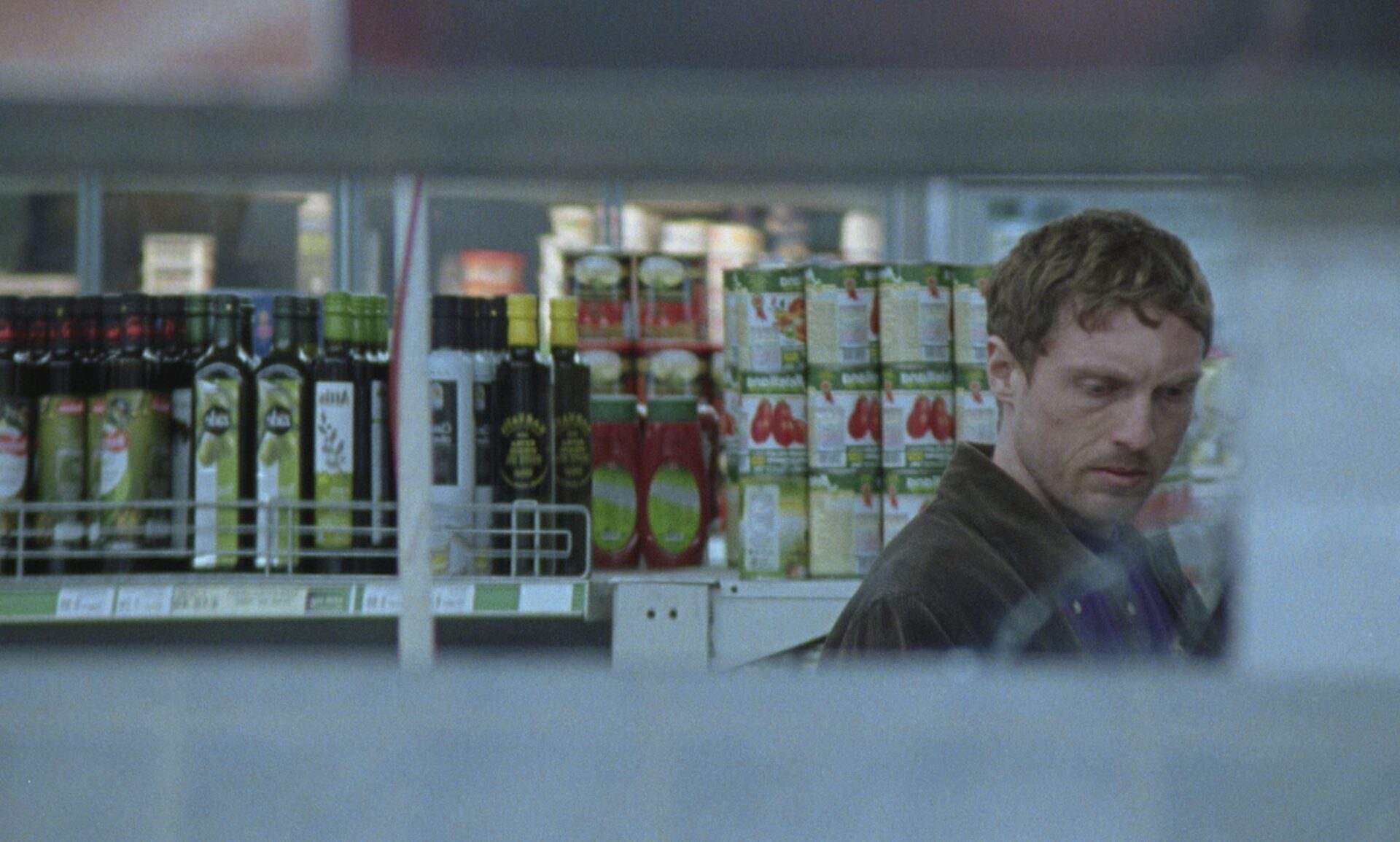
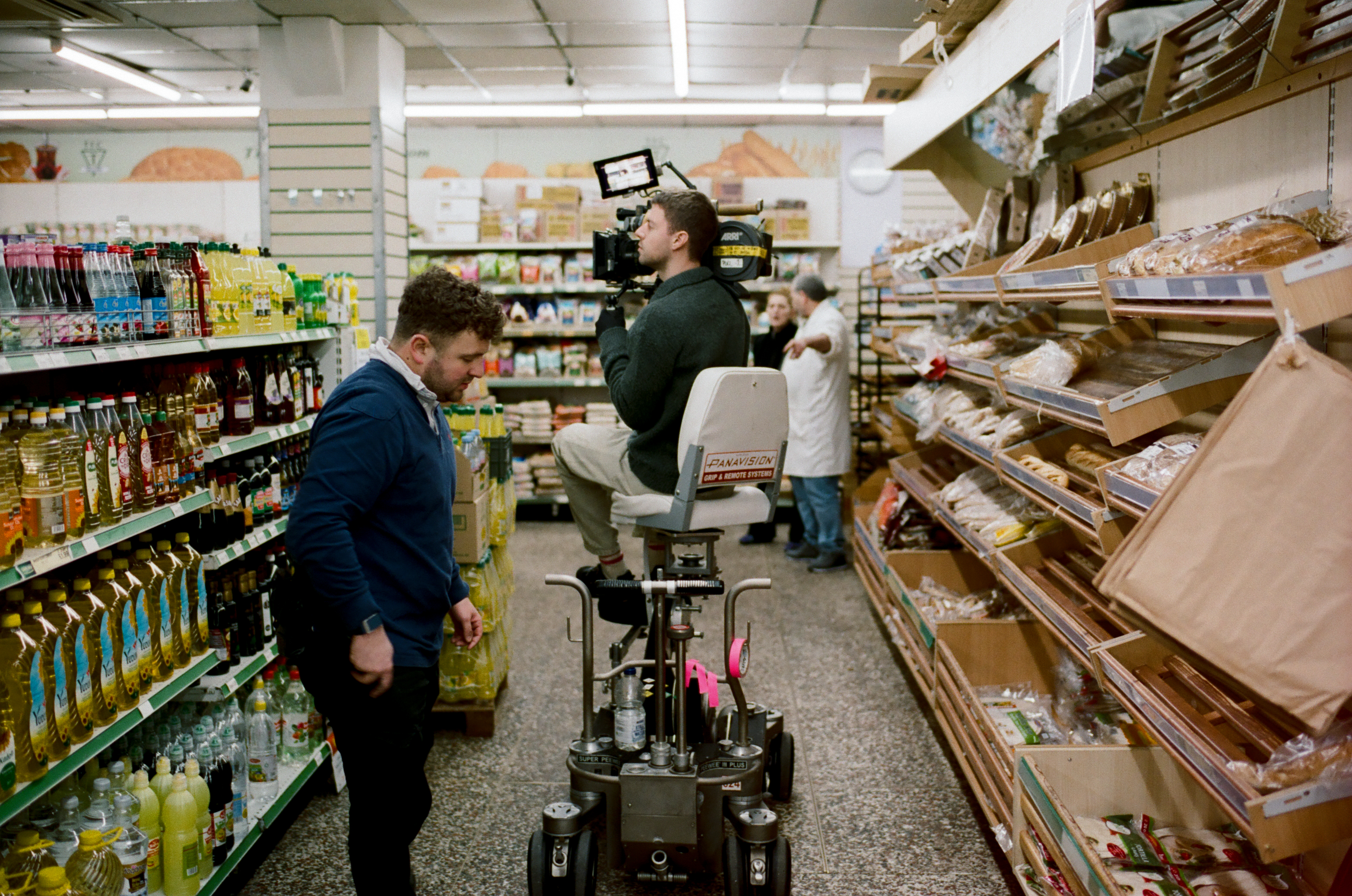
Dance became quite a big thing with this film — I’d get Rory to do a lot of improvised movement work because it felt like this character had so much to say and that words they had were not in the right language, almost. So Rory, Max (DP) and me would improvise these movement sequences where it felt like FLINT could really communicate something. Like the supermarket scene, that movement stuff was not planned. It came out of an improvisation. I asked Rory to move up and down the aisle, and for Max to go with him wherever he felt. That’s how we got to that scene. I played some music on set and I was like, “Rory, I need you to dance down this aisle.” He tuned into this frequency that was so nonverbal — such physical energy — so I asked him to do that in lots of different spaces to see what else we could unlock. It’s about considering the body, when making a film, and the energy of the body, of a character.
I loved how they ended up dancing together in FLINT.
The dance at the end was scripted but it’s really those three that take over. I asked them to dance for around 30 minutes —and I skipped around with lots of different tones. And Eileen was like, “This is the song — ‘Echo Beach’. As soon as she played it for me, I knew it was right.
What does inventing an atmosphere mean to you, in practical terms, during the writing stage?
It means making a lookbook of lots of different images — usually mainly paintings and photography. With FLINT, there weren’t that many film images in the original lookbook. And then, over the period of two years, I made a very long playlist — I think it was six hours — and Rory and I would listen to that.
So with all of those images and paintings, and all of the music I had, it felt like that was the atmosphere. And this is quite new, to be honest. Usually I just do a lot of free-associative typing, and that often reveals what the film is too.
You mentioned wanting to return to a kind of innocence and experiment with new ways of working after In Camera. What new approaches did you bring to FLINT?
I wanted to hit reset — and I was very rigorous on FLINT. I storyboarded every shot of the film, which is something I didn’t do on In Camera. With FLINT, I wanted to explore methods and processes that were new to me. So I was like: let me storyboard all of this. Let me prep this in a way that’s different for me.. And then the narrative ambiguity of the script was able to breathe more, becauseI was doing a lot of the writing with the camera.
When I made In Camera, I didn’t even know what a gaffer was. I knew creatively exactly what I wanted to do, I had a vision for every scene, but all of the practical knowledge came later. All the stuff you can only learn on a set.
And then you do press, you travel around the world, you go to festivals — and it’s like your innocence goes. You become very aware of what it means to sit in a room with 700 Czech people watching your film — that’s an experience. Or sitting in a room full of an Egyptian audience — you learn so much about your work from the reception to it.
But part of me was like: after endlessly talking about In Camera and intellectualising it, I need to go back to basics. I need to reinvent myself and become someone brand new. I was like, I need to dye my hair. I need to wear different kinds of clothes and find new shapes and methods of doing this.
A lot of that is probably psychological, but there’s something exciting about a film marking a chapter of your life. After something finishes, I just want to hit reset and be like: okay, not only what is this film going to be but who am I going to be?
Basically, I’m just a big kid — that’s what it is, isn’t it? It’s endless play. Some people grow up, and some people just continue playing forever.
At what point did you begin collaborating with producers and crew and your core creative partners? Did the narrative shift once others entered the process?
This film had a lot of new collaborators. I was excited about working with new people and reinventing my patterns of work. I feel like a film finds its people. A film is completely different depending on how you crew and cast it.
Working with new people really challenged me in a way that I was hungry for — and it was really exciting as an experience. And then there’s the familiarity with Rory at the centre, who I know very well. Making a film with someone you know so well is a very different experience — there’s so much trust.
The cinematography is incredibly intimate — angles and close-ups that feel like they get under the character’s skin. How did you and your cinematographer design this visual language?
Maximilian Pittner — he was an incredible collaborator on this. We talked a lot about the tone and feeling of the film, and the things that were really important for me to communicate through the visual language. And we just built from there. We’d trade a lot of references, and I storyboarded every single shot in advance to provide the foundation of that— we made sure we were in sync in our prep.
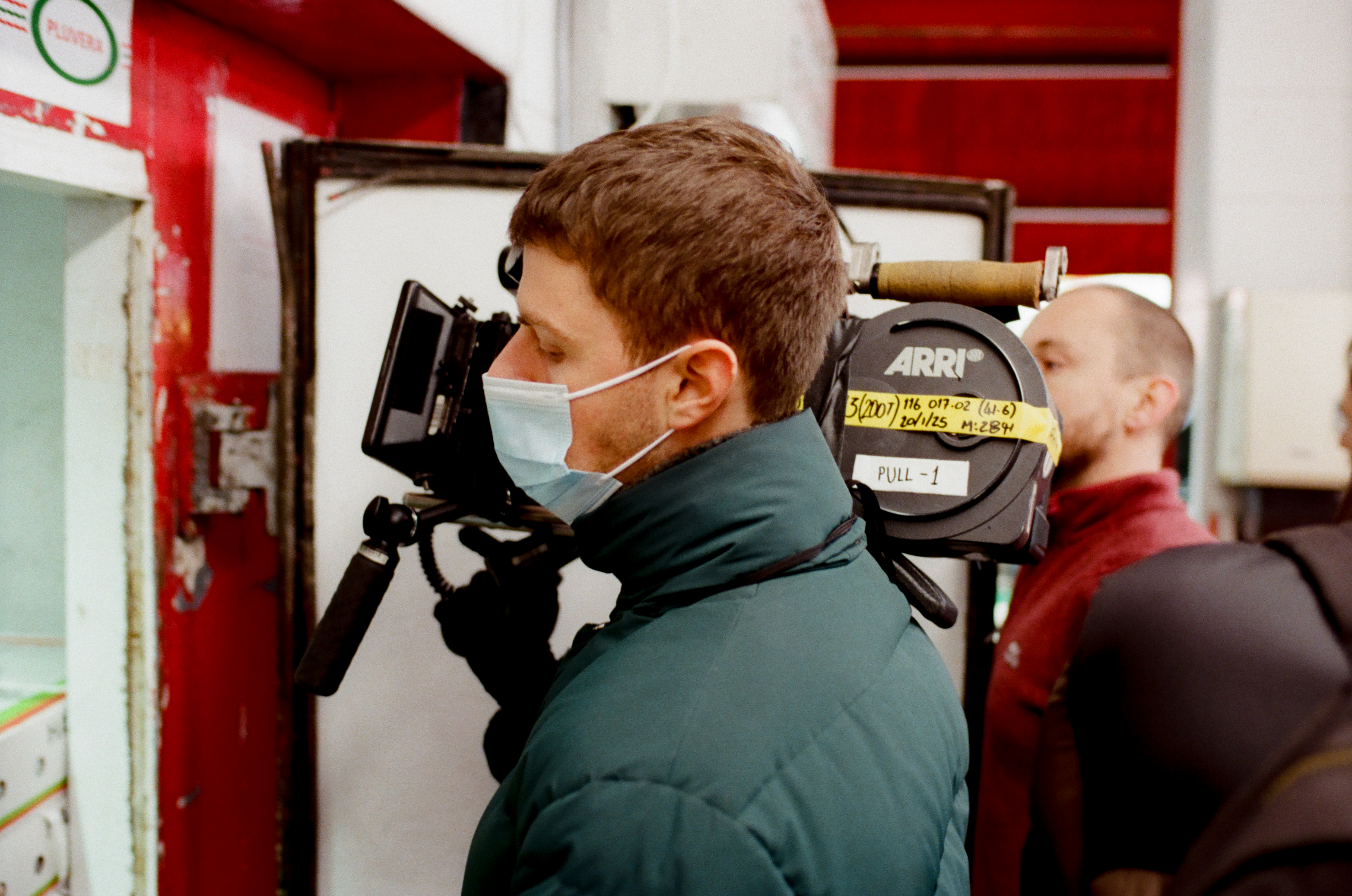
I’d never shot on film before — this was shot on Super 16, by the way – and because I knew I wanted to shoot on film, I was doubly prepared.
When you’re working with a new person, you have to learn what their visual language is. And Max was really fast at intuiting what I liked and didn’t like — what I was responding to.
I think in prep with the DP, you’re inventing a language that has a set of rules but is ultimately underpinned by a feeling.
When you’re working on a film, is the process totally consuming, or can you compartmentalise and detach from it? Or are you absorbed in it the entire time?
Absorbed. But I feel a sense of responsibility when I’m making a film, because so many people have lent me their time and labour. So I think a lot about how I want people to feel when they’re working on the film with me. That’s really important.
I think when you’re writing — and then all the way through to when you’re editing — I’m seeing the film in the real world a lot. I feel like I’m in dialogue with everything going on in my life, and it somehow feeds the film. Making a film is like dreaming out loud. You’re looking for clues everywhere.






After finishing the film, what happened for you emotionally and creatively? Did you need time to decompress, or did the next idea immediately start forming?
I think my brain just doesn’t stop, and whatever I’m working on is informing the next one. I wrote my second feature while making this film — it was creatively an incredibly fertile time.
I also find post-production to be a really rich space for new ideas. You’re processing what you’ve just made, and then you’ve unlocked things in yourself that are going to help on the next one.
I feel like everything you do is in dialogue with everything you’ve done — if that makes sense.
So when you’re working on a project, you’re finding new ideas and tangents emerging — things you know you’ll explore later?
In the edit of In Camera, I remember Ricardo [Saraiva] — who edited the film — towards the end, he was like, “Your brain has gone somewhere new, and you’re exploring all these ideas that are not In Camera.”
I do find the act of making a film, and being in collaboration with other people, an incredibly rich, fertile space for new ideas.
Everything I’ve ever written has come from me writing notes in my Notes app — things I’ve said to a friend, or said to someone in passing — and you kind of Frankenstein it all together and you’re writing the script.
I think that’s exciting too: this idea that you’re always building towards something. I don’t know if you ever arrive at the Thing — but there’s this constant desire and need to build on it.
And to contextualise it, there’s something exciting about still stumbling, and not feeling like you know everything. I’m very confident about my vision and the things I want to say — but what I’m excited about, in myself, are the things I don’t know how to do or how to say yet.
The sound design is unusual. You resisted having a film score telling you how to feel in the background …
I think sound design is so vital. It’s my second favourite thing about making a film, after working with actors. Tim Burns, who did the sound design on this film, and also worked on IN CAMERA, did an incredible job.
There are lots of elements in the sound design that are kind of whimsical and dreamy in opposition to the naturalistic image of the cinematography— we played with using sound that didn’t necessarily match the image, it expanded the sense of atmosphere: playing with bird and horse sounds and meteor sounds in the dream sequence, enhancing things like the sound of a rip, creating absence. And I think that’s kind of where a lot of the dreaming happens: sound.
You’re now working on your next feature — do you have daily rituals and disciplines?
I have to get up early, and I have to schedule everything I’m doing, and I have to be really rigorous. Otherwise, I’d probably just dream in the notes app forever.
Link here to the LSFF programme showing FLINT