Thế Giới
Can you tell us a little about your background and your route into directing?
I was born in the suburbs of Paris in the early 90s, raised by Vietnamese parents who were boat people refugees. Classic diasporic experience, I grew up with a blurred sense of identity and belonging. My route into directing is strongly intertwined with music.
In middle school, my friends offered me a bass on my birthday – I didn’t know what a bass was before that day – and I started to shoot my everyday life with a cheap digital camera. From there, the two seeds in music and images were planted. It was peaktime myspace, forums and music blog period, I played in bands and wrote about music, sharing MP3 mixtapes on mediafire and photos online. A digital music zine found me and I later became an “editor-in-chief” of a team of couple online writers, it was a pure passion project and totally DIY, we were not journalists, just passionate amateurs. I got to cover music festivals and interview artists like Sebastien Tellier, M83, Connan Mockasin… I don’t have any degree and started to freelance with many hats in a pure yes-man and self-taught spirit. I had the chance to meet people entrusting me to try things I’d never done before, photo assistant, camera operator, editor, fixer, tour manager, graphic designer, art director… I’d be called a swiss army knife, yet despite the variety, I was mostly in service of others’ visions rather than crafting my own.
In my mid-twenties, after a spontaneous trip to Vietnam, I quit everything in Paris and moved to Saigon. I needed to reconnect with my roots, to understand where my parents came from – and, in doing so, understand myself better. There, I collaborated with local creatives and cut my teeth directing in advertising and fashion which was also a lot of learning on the spot.
I started getting commissions in the region, shooting in Shanghai, Bangkok, Tokyo… Did a film for Nowness x Cartier, short-docs for Highsnobiety, Uniqlo Vietnam’s launch film, creative direction for a HIV awareness campaign … For the anecdote: I co-directed a fashion film for an independent concept store in Saigon that got nominated as “Best Fashion Film from Asia-Pacific” at Berlin Fashion Film Festival. So we flew to Berlin, it was our first festival. We attended the awards night, then when it ended, they hadn’t announced our category. We were with Indian filmmakers who were puzzled as well. The staff onsite told us that this category would be announced online… I didn’t react much at the moment and partied right after, but looking back, I realize I buried that feeling of being erased, taken advantage of, and dismissed through a eurocentric lens.
Then COVID hit. It was time to slow down and focus back on what truly speaks to my heart. I made the first music video I was truly proud of, “Đôi Khi‘” for Nodey and Suboi, an ode to Vietnamese culture and spirit with a collaborative process. Around the same time I co-founded a rave collective and label with my friends which eventually brought a new local music scene into global spotlights. At one point, I spent a year in Shanghai to be with my partner there and being exposed to forward-thinking sounds and new approaches. I eventually lived off DJing touring around underground clubs across China for a year while the borders were closed. I started to carve my space within the global left-field club scene that relies more on pushing boundaries of sound rather than functional or commercial dance music, where risks are encouraged.
After seven years in Asia – a cycle that grounded me and helped resolve my once-blurred sense of identity and belonging – I’m now in Berlin for new challenges, learnings and unlearnings. I joined Iconoclast Germany as a new talent director, finally learning in a professional, structured environment, where I’ve also been doing art direction, learning with their top-tier directors. Now back in Europe, I’m quite curious to see how I can express myself beyond the prism of Asia, to evolve without necessarily being confined to a singular cultural narrative.

Thế Giới
You’ve variously been involved in the Saigon club scene, music production and more. Where do you think this multi-directional approach to creativity springs from?
The multi-direction approach to creativity springs first from my parents’ inner-strength and ability to navigate through adversities. They started their life with nothing, had to learn a new language and culture, went through ups and downs, had to reinvent themselves many times, yet found their ways. They gave me that unconditional trust that I’d find my ways too as long as I’d keep my mind open and learn from failures. “No mud, no lotus” as Thích Nhất Hạnh would say.
But all directions are interconnected and influence each other. New things I’d learn in music production would influence how I approach filmmaking, nonlinear editing and rhythms, like going off-grid and creating frictions, playing on contrasts between noise and silence. In turn, my djing in clubs is influenced by storytelling in cinema, creating plot twists and cliffhangers, not seeking for functional dance music but rather immersive landscapes. Community work helped to be more grounded in advertising contexts but advertising also teaches you how to work in a pressure cooker.
And how far do you feel growing up in Paris has influenced your aesthetic?
Paris influenced me on how to cross bridges, build worlds, blending unconventional and the common. The city pushes you to be thoughtful about your own output, in both forms and function, while learning how to engage within a global context. Our heroes were dudes dressed as robots making emotional dance music crafted to its finest details.
However, living in Asia definitely allowed me to challenge that and decolonize my own eye. I’ve been quite interested in the notion of exoticism and clichés, analyzing how a western eye unfamiliar with the East fixates on selective cultural memory: “exotic” elements, “mystical East”, tropical trees, gritty textured walls, colorful neons, street barbecues. People would seek that Wong Kar-wai, Blade Runner or Lost In Translation aesthetic because it’s their only reference point. So for me an aesthetic is often a toolbox that you always need to tune in with the DNA of your subject rather than a total copy-pasting it from somewhere.

Thế Giới
You said you spent a chunk of time from 2016-23 living in Saigon deeply involved in the club scene – can you tell us more about that experience and the LGBTQIA+ scene there more generally? Queer spaces are so often these incredible artistic hotbeds and spaces where new modes of creativity are expressed – is there something specific or unique you think Vietnamese queer culture adds to the mix?
Pouring love and effort into community-driven, grassroots initiatives is always as fulfilling as it is draining. I’m so grateful to have been able to contribute to the Saigon club scene during my time there. With my friends we threw DIY parties for ourselves then it eventually turned into a collective and label called Nhạc Gãy which is often described as pioneering a new local club scene. I was doing creative direction and curation, we were throwing raves, releasing music and leading mental health initiatives. One night we had a punk band dressed as pikachu highschool girls playing peak time at the rave, the energy was wild. Someone from the audience jumped on the stage and threw a bloody lamb head across the dancefloor which eventually broke glasses at the bar.
I can’t speak for the personal experiences of LGBTQIA+ individuals, but I support and listen to their voices, many of whom are friends. Vietnamese queer culture is definitely thriving, growing in multiple directions, energies and sounds. They are fearless, chaotic, yet with a very playful energy.
They’re keen on reinterpreting or honoring Vietnamese queer culture from past generations. In the Boiler Room short doc, you can see short clips of a woman performing with fire. She’s usually really doing it on a crowded street by night by street barbecue joints, and there’s this pure cathartic self-expression when they perform, making a ring of fire around them while motorbikes drive through it (that’s not her here but here’s how it is ).
Đôi Khi
Your music videos blend a sumptuous mix of cinematography, performance and styling. How far does fashion influence your work ?
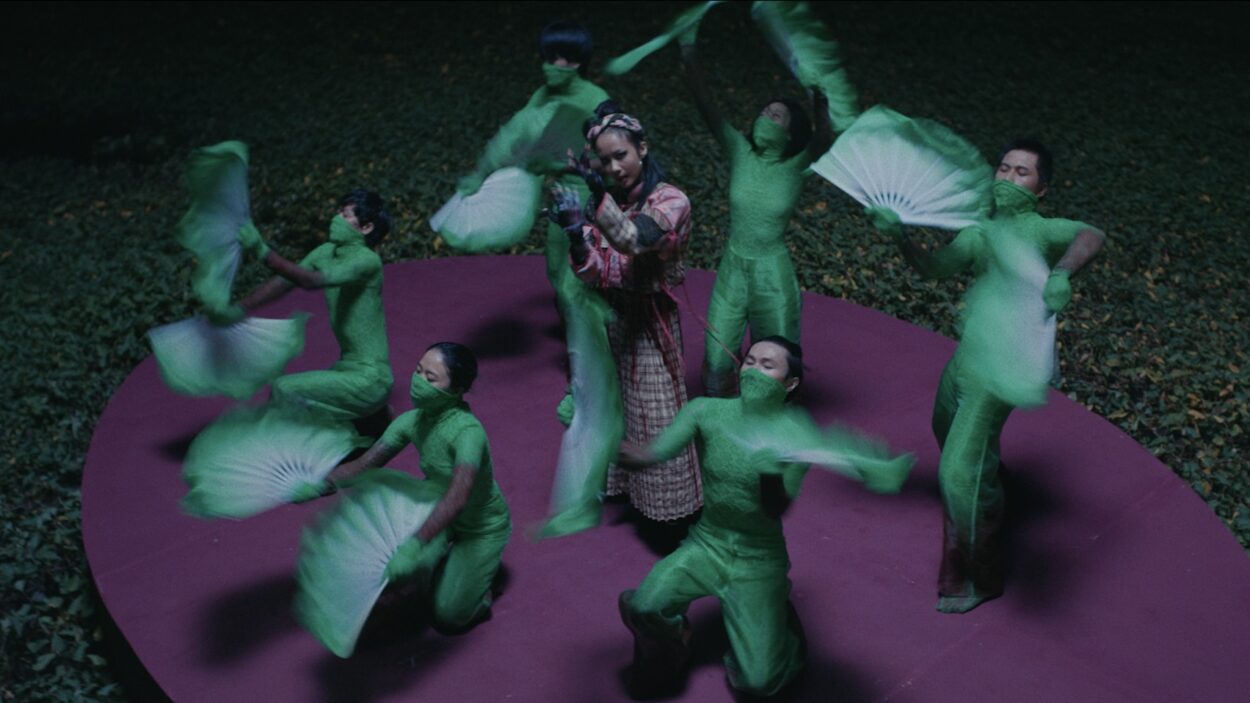
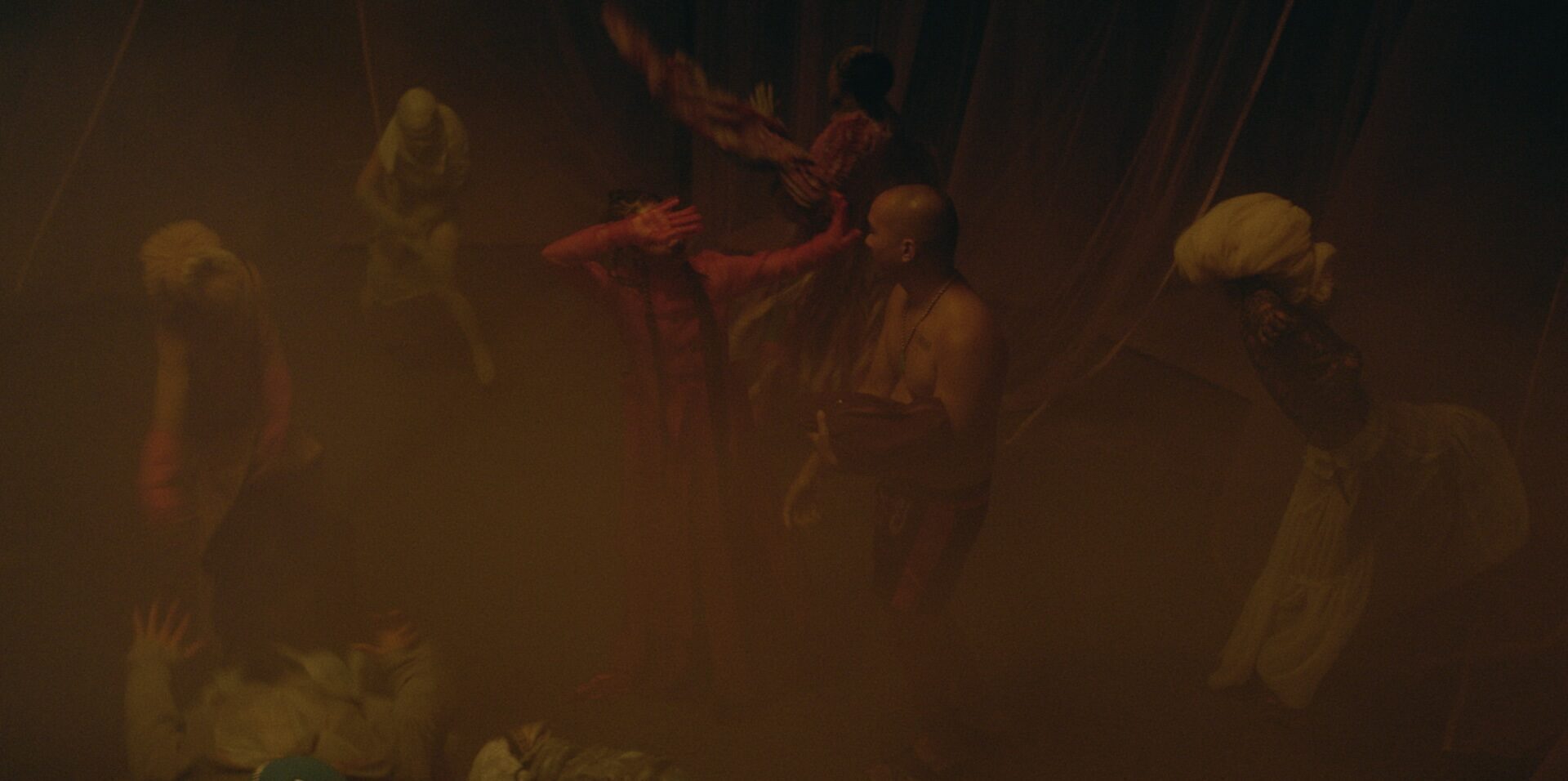
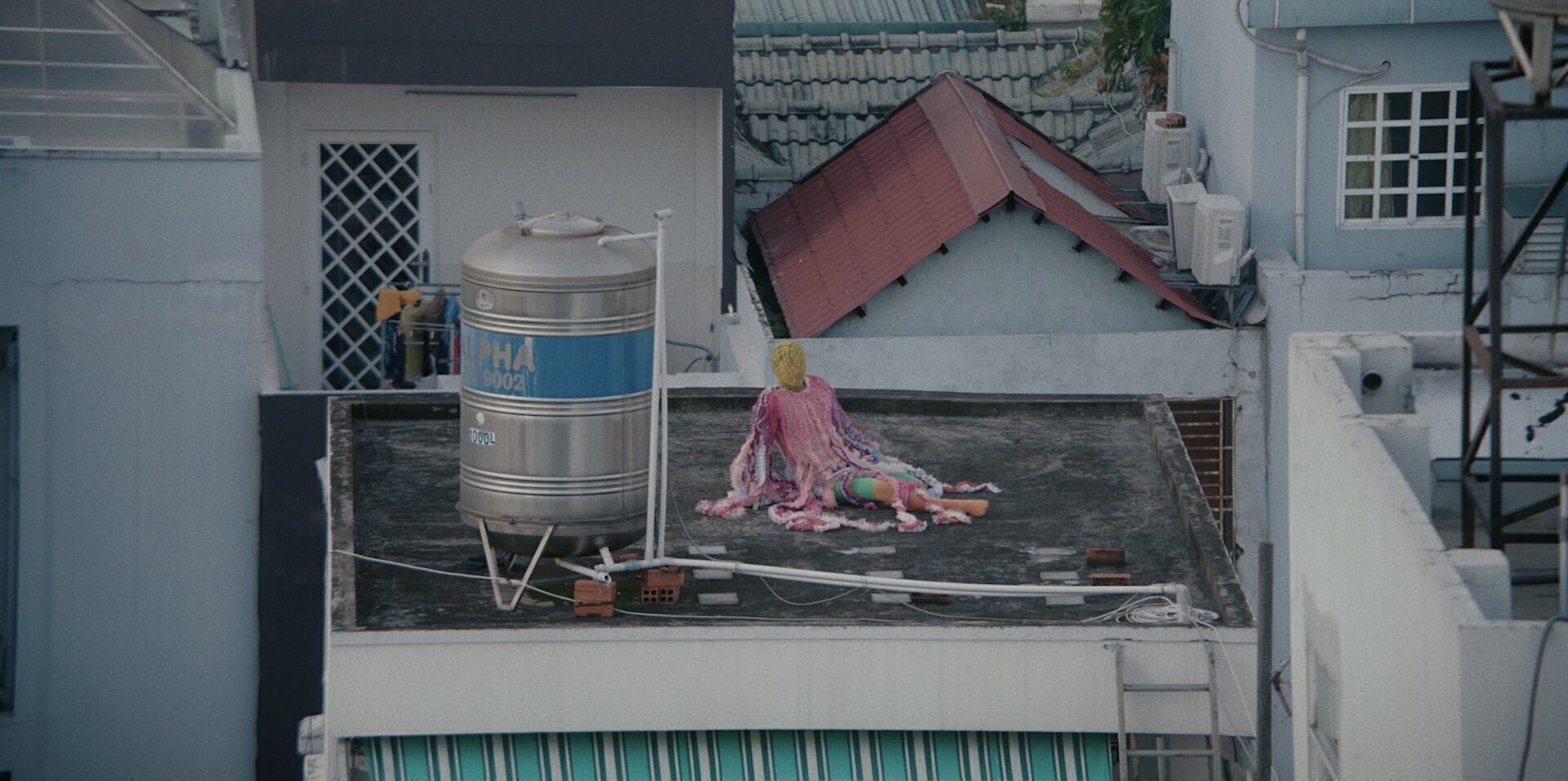
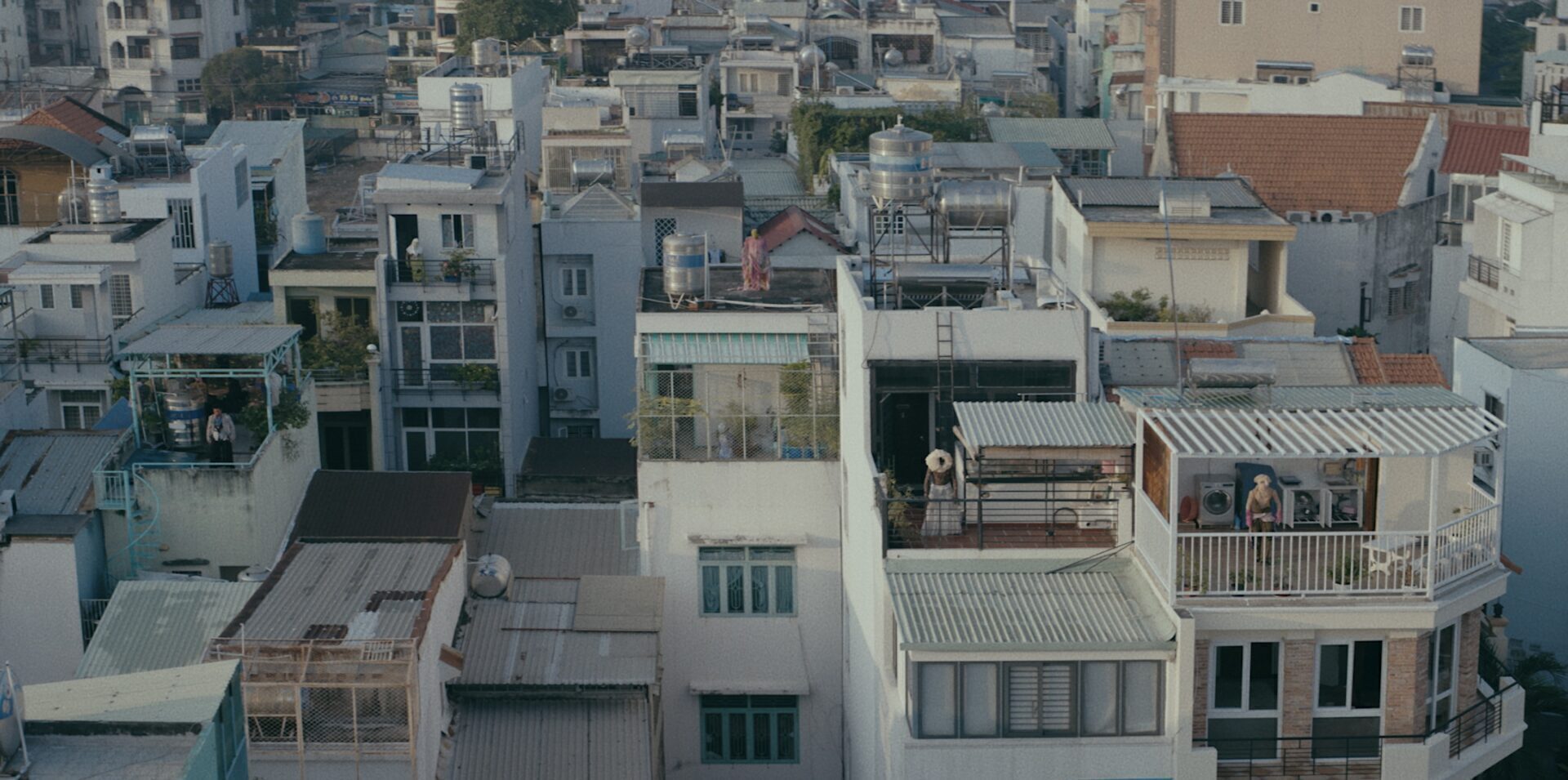
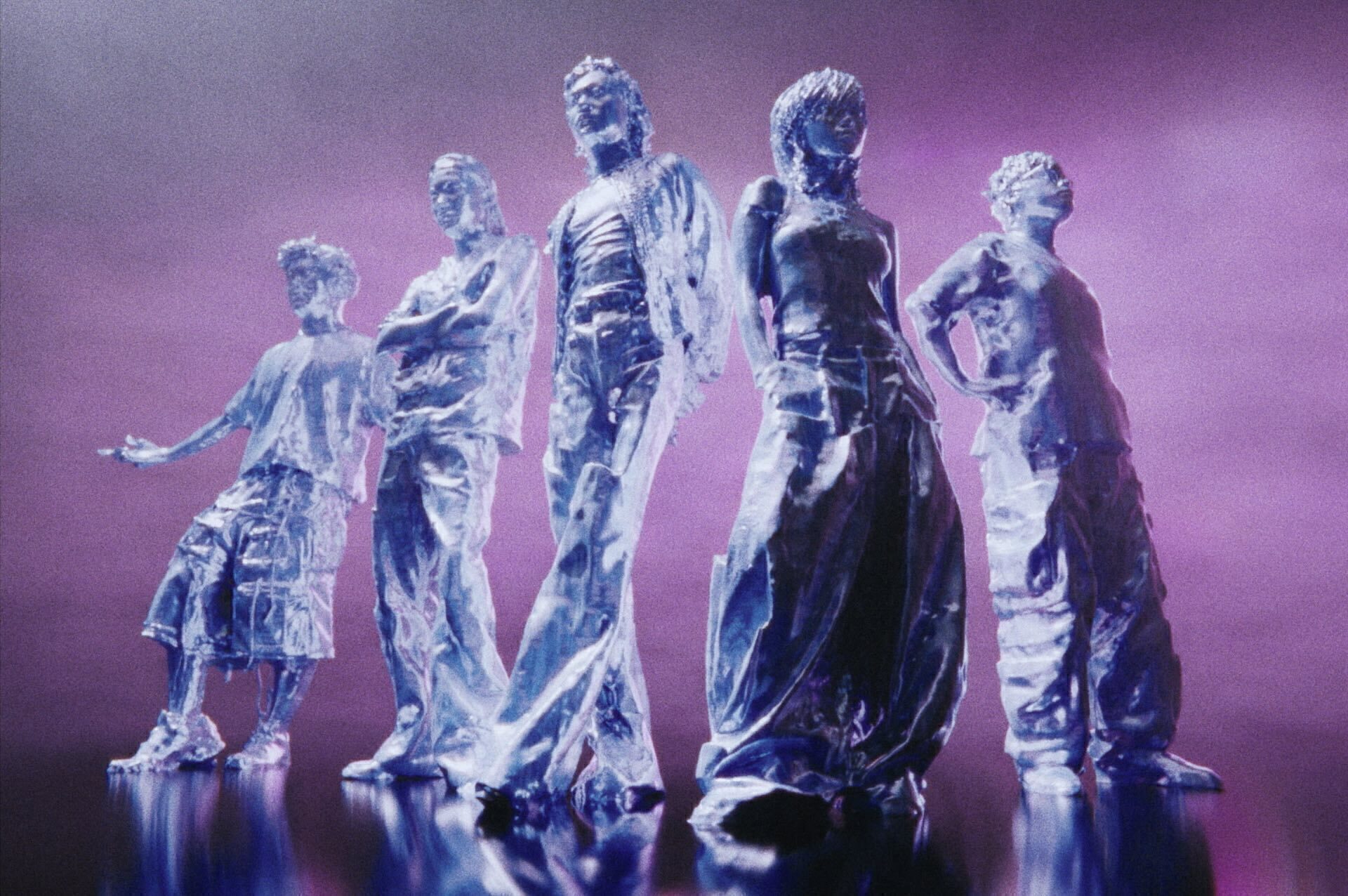
In Đôi Khi, for example, styling is played into the themes of remixing heritage, modernity, and identity, helping shape the film’s visual language. Fashion is part of the storytelling but it’s always in service of the bigger picture.
How important is it for you to focus the eyes of the world on Vietnamese creativity?
Knowledge about Vietnam in the West tends to be surface-level, often tied to the war, cheap food, or tropical climates. So, it’s become a heart-mission of mine to showcase the multicultural sides of its culture. Vietnam has blended influences from China, India, the USA, France, and others throughout its history. In many fields I believe there are interesting things that can resonate beyond its own borders. Take bánh mì, for example: in the 1950s, the Vietnamese took the French colonizers’ baguette and infused it with their own ingredients. It’s a perfect symbol of resilience, adaptability, and cultural creativity. In fashion, designers from La Lune or Fanci would dress-up K-pop stars. Or in architecture, studios like Vo Trong Nghia and A21 Studio merge tradition with innovation, with an incredible use of bamboo and wood, and well digested influences from mid-century tropical modernist architecture.
Đôi Khi
Do you have a recurring team of collaborators you work with across your projects (choreographer / stylist / DOP) or do you flex your crew around the needs of the project you’re working on at the time?
As I’m recently based in Berlin I don’t have any recurring team of collaborators yet in Europe. In Vietnam, I do have recurring collaborators. Booncha as my go-to production company. Cinematographers Thinh Pham and Ray Lavers. Choreographer Ngo Thanh Phuong, a real genre-bender.
Your work has a really unique and very consistent approach to shot composition – almost as though you’re thinking in terms of every frame working on its own as a still. Can you tell us a bit about how you approach connecting and executing such rich visuals?
I often seek out beautiful rawness, a balance between simplicity and chaos. Within the current rise of AI and over-crafted content overload, I feel leaning more into infusing real life into images, avoiding sterile overly perfect looks. Nature over algorithms. Allowing happy accidents and imperfections instead of boxed-in ideas. Listening to your team’s perspectives. Being aware of your own privileges, ego and gaze. Trying to avoid tricks and gimmicks. Asking questions, researching. Then I guess it is about following my intuition to process all of those and create a specific harmony.
Đôi Khi
Diving into your latest project for Boiler Room – Thế Giới which has just been picked Vimeo Best of the Year – how did this collaboration come about? And did you feel an extra weight of responsibility to the community and scene you’ve helped build in Saigon knowing this film was going to bring eyes into that world that may not otherwise have had a chance to see inside it? Were there any specific challenges you faced bringing this piece to life?
I collaborated with Boiler Room three years ago with my own collective, where I also performed.
When they wanted to come back, they reached out to me. I shared recommendations for the curation and supervised the event production. The short-documentary was then proposed. I appreciate Boiler Room’s approach in finding people close or within the scene. It was a planet alignment to get to make a film about my friends and the local community I’ve taken part in. There’s definitely a sense of both responsibility and challenge because a film can never represent the intricate complexities of a community and scene, yet it can only capture the essence of it, but I had the confidence in my knowledge about the topic and the people I was shooting.
The whole process was really smooth actually. The Boiler Room team gave me full creative trust and I’m very grateful for that because it’s rare in branded contexts. It was essential to kickstart this project by interviewing each artist to understand their respective perspectives. Treatment V1 got approved right away, except no motorbike driving scene because the sponsor was Absolut. There was however no consumption nor product shot to do, just some in situ branding from the party to show. On the shooting days, no one was on my back and I had total freedom in whatever we shoot and how we’d shoot it.
For the club scenes, I wanted to use in the edit as many diegetic sounds as possible. I’ve always been frustrated on club music documentaries where they’d overlay music in post over shots of people dancing and it’d be totally dissociated. So I wanted to be able to feel as much as possible inside the club, within the ravers, hence a very raw and abrupt editing flow, like flashing memories.
There was a lot of material to digest, we had 6 cameras for the party, more than 3 hours of group conversations to derush and lots of interesting bits that didn’t make it to the final cut but yeah, short-attention span audience. Shoutout to Dang Duy Nguyen, my assistant editor. During that post-production, I was also juggling with a local beer TVC and music direction for ELLE Man’s first fashion show in the country, so my brain was constantly shifting between very different spheres and aesthetics. Here’s a photo of my editing that I took during the preparation of the fashion show that happened on a karting race track.
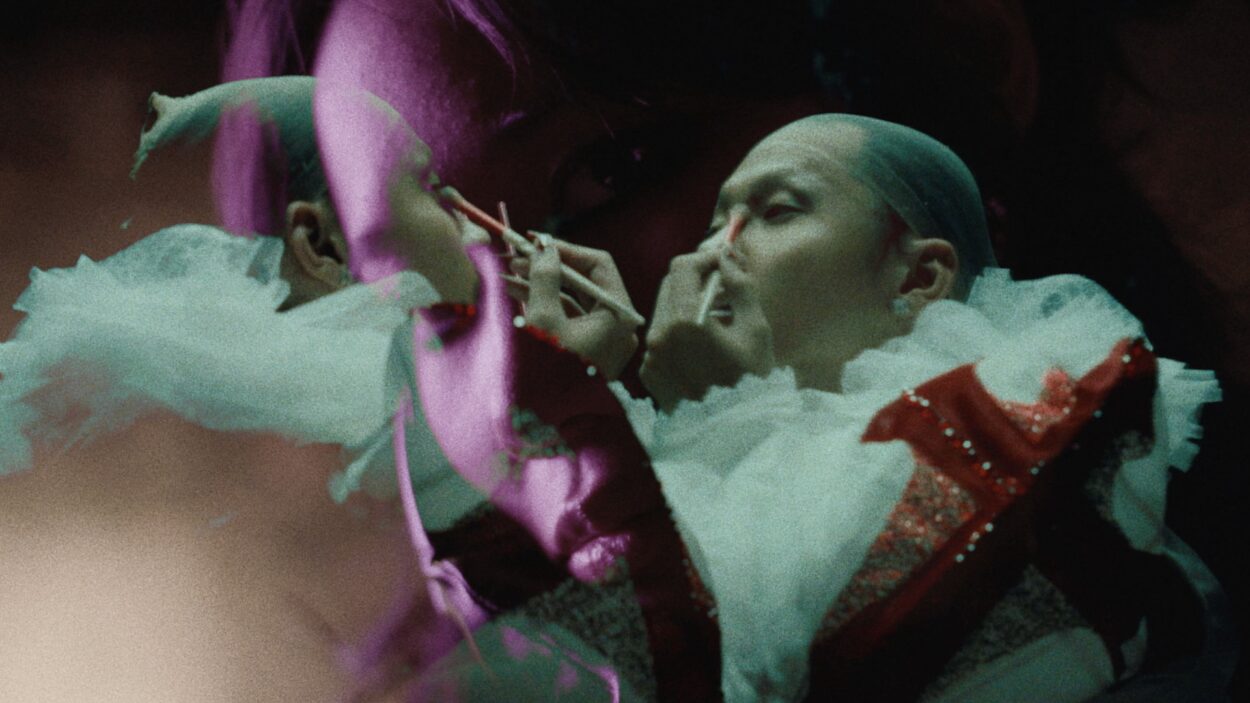
Thế Giới
Are you working on any other projects at the moment that we should keep an eye out for?
For the first time I’m seeking to join both of my music and film practices for a personal project, developing my first short film along my own OST.
In parallel, I still enjoy working on a variety of outputs in spheres with different mindsets, whether it is music direction in fashion, branding an investment fund or redesigning a club.