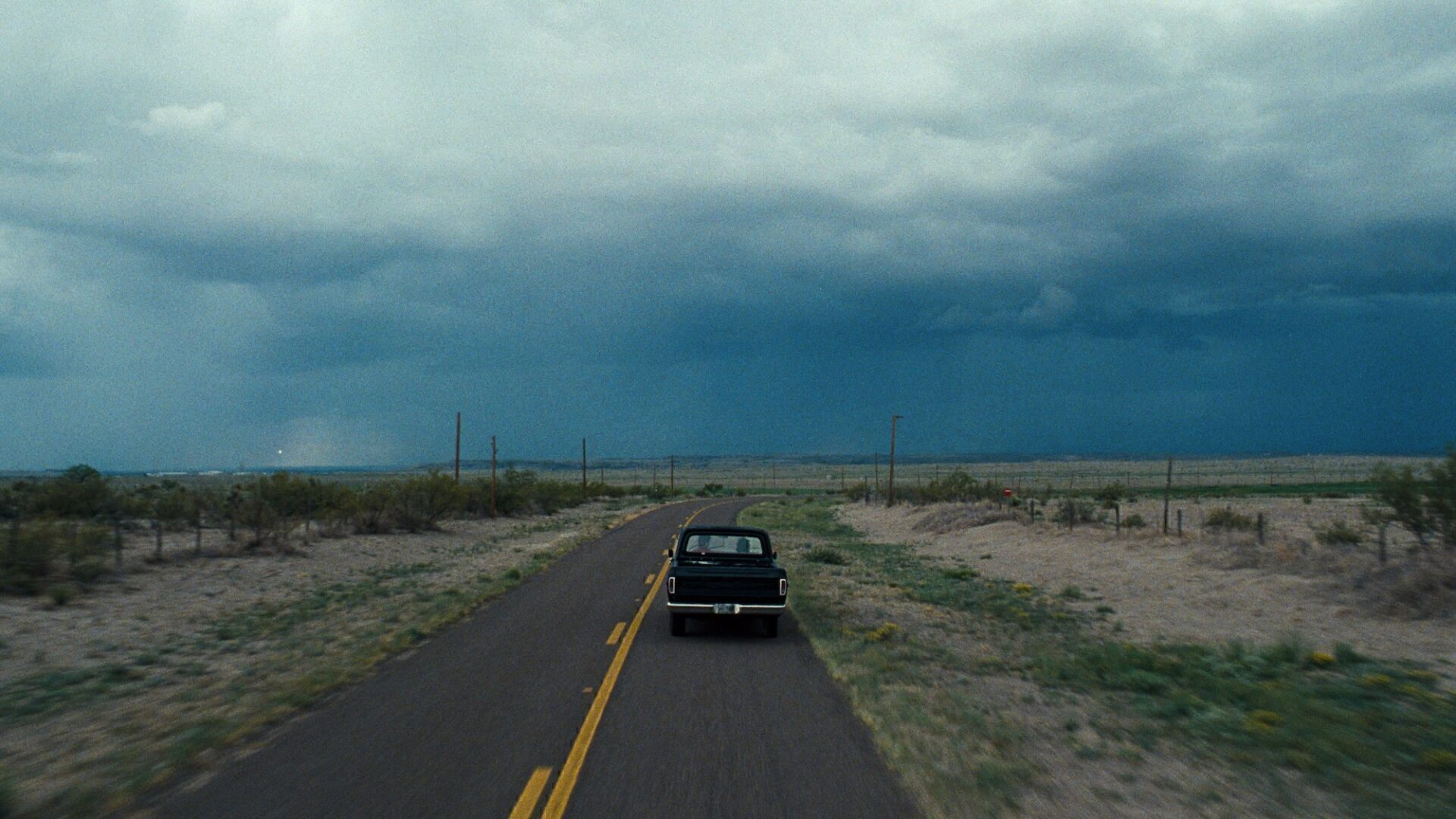
All stills taken from across Danica Kleinknecht’s trilogy for Conan Gray
You’re of Dominican and German descent, born in Detroit, raised in New Jersey, and now split your time between NYC and LA. How have those shifts in place and culture shaped your voice as a filmmaker? Or is your work more about creating a world outside all of that?
I was born in Detroit, but I don’t really remember much about it. We moved to New Jersey pretty early, and I grew up in a couple of small towns outside of New York City. First in a very diverse one, mostly Jewish, Italian, Korean, and Hispanic families, and later in a more WASPy suburb. At home, my parents’ cultures were total opposites, the music, the food, the whole way of being. My house was mixed by default: merengue blasting next to The Beatles, quinceañeras in a Bronx church basement one weekend, farming in rural Pennsylvania the next.
Most of my friends’ parents were immigrants who worked all the time, so the kids kind of ran free. This was pre-9/11 and pre-cell phones, very much “knock on the door and ask if so-and-so can come out and play.” That freedom and the constant connection to other people’s homes made me really open-minded and curious.
Later we moved to this idyllic suburb that felt almost like the 1950s, with homecoming parades, keg parties, and everyone knowing everyone.That’s where a lot of my ideas about suburban life, or the corruption of suburban fantasy, come from. I loved it but was also restless there, always looking for something to do or get into.
I’ve always connected more with my Dominican roots than my German side. My mom came from an island where people often had to make do with what they had, and I think Dominicans are naturally resourceful and creative in that way. She used to say, “If you don’t have a hammer, use a stick,” and that has had a huge effect on how I approach filmmaking, and really everything. When I first started, I had very little money, maybe a thousand dollars, so I would just find a world and shoot in it. That is how I developed a doc-narrative style in my music videos that became my signature.
How would you sum up your childhood? Was it particularly creative?
My dad was a writer and journalist, covering crime, the mafia, and politics, so the house was always full of books. I grew up watching gritty crime films from the ’70s and listening to Frank Zappa. Across music, film, and literature, there was always an intensity in the art I was exposed to.
My mom had just come to America from the Dominican Republic, so she was discovering a lot alongside me as I grew up. I’d go back with her to visit family, to the Bronx, or to the Dominican Republic, where my grandmother’s neighborhood still barely had electricity. And then on the other side of my family, my other grandmother was like something out of Mad Men, cocktails, manicured lawns, the whole thing. So I grew up moving between extremes.

You’ve said you love finding “beauty in the normal and uniqueness in the commonplace.” Where did that instinct come from, was there a moment early on when you realized the mundane was magic?
I don’t think there was one moment, it’s just how I’ve always looked at things. I’ve never liked small talk, so even when I was a kid I was more interested in what was underneath. I think if you really look at someone or something, even the most ordinary, it becomes interesting.
That’s why I love portraits, not just close-ups, but people with their dog, their car, their kid, their house, whatever makes up their world. When you film someone like that, something always breaks through: a smile, some pride, a bit of shyness. Some of my favorite shots have been strangers I’d only talked to for two minutes.
I also tend to see people as characters. Sometimes I’ll turn to my boyfriend and say, “Look at those classics.” And by classic I don’t mean glamorous, I mean someone who looks like they belong in a story, someone carrying a detail from another time.
Casting is probably my favorite part of the whole process. A good face, a strong presence, that’s enough to build a film around. A lot of my early work is basically portraits of people I just asked if I could film. For me, that’s where the magic is: giving people and experiences the grace to move you in some way, good or bad, and letting those moments live on screen.

There’s a calm, almost meditative pulse to your films — even when there’s heat and action onscreen. Is that something you chase consciously, or is it just how your eye naturally frames the world?
That’s funny you say that, because I’m actually a super anxious person. I think that’s why I’m drawn to slower cinema and long takes. I love having the time to sink into a feeling, to reflect, to create space. Films like Sátántangó and Taste of Cherry do this so beautifully-they give you permission to sit with a mood until it seeps in.
For me, that’s one of the most powerful parts of filmmaking and something I’ll always chase in my work. When you’re not rushing, the audience can fall into a deeper state, really digging into the character, the world, the feeling. And that’s the goal for me: not just to watch something, but to really live in it.
You write, direct, and edit. How does wearing all three hats shape the way you approach storytelling? Do you find yourself “editing” mentally while you’re writing or shooting?
Honestly, it all came from necessity. When I first started out, you had to do everything yourself, so writing, directing, and editing just naturally became part of my process. Over time, I really fell in love with editing- I can sit with it for hours, even though it sometimes drives me crazy because I’ll end up with six different versions of the same piece.
In the beginning, my work was more collage-like. I was interested in how two shots could communicate something just by being placed next to each other. Now, I think more about continuity and building a scene shot by shot.
For me, editing is where the shape of something really comes to life. It’s all in the editing. That’s why I encourage everyone to learn it.

Let’s talk about your trilogy with Conan Gray — This Song, Vodka Cranberry, and Caramel. How did your collaboration with Conan begin, and what were those first conversations about the story like?
Conan and his team reached out, and he already knew he wanted to do a coming-of-age love story. When I first heard This Song, I loved it immediately-it has such an unusual time to it, almost like a waltz, which you don’t often hear in pop. A friend, Ethan Gruska, produced it with Conan, and I’d collaborated with Ethan before and think he’s incredibly talented.
It was one of those projects that just checked all the boxes-good people, a great song, and something I felt connected to. What really pulled me in was how passionate Conan was and how much the project meant to him. I felt honored that he trusted me to help tell this story with him. That’s all you can really ask for-people who truly care. It’s rare these days, and I’m always drawn to that passion and integrity. And of course, I love a good coming-of-age story.
Did you and Conan work from a detailed narrative outline across all three videos, or did the story evolve organically from track to track?
It was never a strict outline-more of a loose, general feeling. The idea was basically: what if two people were in a room, wanting to say something, but feeling like they couldn’t? We built everything around that tension. It was really sweet and vulnerable.
I remember the very first shot, and immediately thinking, oh my god, that’s it. The tension was so palpable. And because there’s no dialogue, it all had to live in the blocking, the framing, the small glances between them. That challenge was actually the fun of it-telling the story entirely through images and realizing that those little details could carry so much emotion.

Corey Fogelmanis as Brando feels like such a perfect foil to Conan’s Wilson. How did you help shape that chemistry between them?
Honestly, they made it easy for me. Corey and Conan are old friends, so they already had a comfort and shared history that came through naturally. They’re both so talented- I just put them in the right situations and let them shine.
From there, it was about fine-tuning together. We’d talk through what a moment might feel like- maybe hold a beat longer, maybe glance up at just the right second and then let those tiny gestures carry the weight. I love collaborating like that, shaping things as we go. It keeps the work alive and layered. And Corey… he’s just incredible. He’s a star.
The trilogy was shot in Texas, Conan’s home state. How much did location shape the intimacy and authenticity of the story?
Texas can feel personal, timeless, and almost anywhere at the same time. That’s why it was perfect for this project. We wanted that universal coming-of-age feeling-something that could exist in any small town in America and Texas really has that. But it also has this larger-than-life, epic quality, with its fields and skies and open landscapes. It never gets old to me.
For Conan, being back in his hometown made it especially meaningful. It gave the trilogy this diary-like quality, like memories brought to life. And for me, I’ve always loved Texas, so many of my favorite films were shot there: Badlands, Texas Chainsaw Massacre, The Sugarland Express, Bottle Rocket, Paris, Texas.
Some moments I’ll never forget: both shoots had the most incredible heat lightning. After long days, we’d be driving down dark country highways, telling scary stories and the whole sky would light up.
And that’s part of why I love travel shoots-everyone’s away together, living in the same houses, inspired by the place. Conan said he wanted it to feel like summer camp, and it really did.


What were the biggest creative or production challenges across the trilogy, and how did you overcome them?
Time was the biggest challenge, it always is. I wanted to shoot almost everything during magic hour, like Days of Heaven, which of course is impossible, so we were constantly chasing the good light. On top of that, Texas makes you drive forever between locations, so half the day feels like it’s spent on the road. And because we were shooting on film, we had to be really careful not to overshoot, otherwise you run out in the middle of nowhere… which happened to us once.
My DP Emerson, my producer Hope and I would show up hours before the crew, map out every shot, and then once everyone arrived, we could just fly. It was all about making the most of that precious light and that very precious film.
You’ve directed for artists like Sabrina Carpenter, BADBADNOTGOOD, Dijon, and Gracie Abrams. How do you adapt your storytelling to match such distinct musical voices while still keeping your own signature style?
For me, it always starts with the song and the artist. I’ll ask, what’s this about, what were you going through when you wrote it? Do you want to tell that story, or do you want to play a character? If it’s a character, then it’s, what kind of movie are we making, and what world do they belong in?
From there, I pull from the films and references I love. Sometimes I even think, if this song was on a soundtrack, what movie would it fit into? My own style comes through either way, but the song and the artist always lead the way.

Coming-of-age is central to your work. What is it about that liminal space — messy, awkward, electric — that keeps you hooked?
What I love about coming-of-age is how many emotions can live in the same moment. Everything feels heightened because you’re experiencing it for the first time-dramatic, emotional, messy, full of possibility. Kids move through the world differently: if you see a kid in the middle of nowhere, it feels like an adventure. If it’s an adult, it just looks like they’re on their way to work.
Looking back, what’s the biggest lesson you’ve learned on set so far — maybe a mistake that turned into a breakthrough?
I’ve learned not to be rigid. Some of the best things happen when everything falls apart and you have to improvise. Once, a whole scene collapsed and we had to replace it with something totally unplanned-we ended up shooting in the doorway of a bus, on the way to the second location, on the very last day. That video turned out to be the best thing I’ve ever made.
A DP friend once told me: scout the location, then turn around and look at what’s behind you, that’s usually more interesting. That’s how I like to work.

Beyond this trilogy, you’re editing a short film, writing a feature, and developing TV projects. How do you balance commercial, music video, and long-form work, and do you see them feeding into each other creatively?
For me it’s all just different sides of the craft. Music videos are where I learned the most- you get to be on set all the time, meet your people, and try things out. I’ve been pushing toward narrative music videos lately, because they let me practice continuity and story while still having that freedom to play.
Commercials are the opposite, everything has to be so planned out and exact. You have to be confident in every choice, which is great training for clarity and prep.
With long-form, it feels like the place where I can slow down and let the actors and the story carry the weight. Music videos gave me space to experiment, but features and TV are more about stripping it back to what really matters. I think they all feed each other in different ways.